Walk through Hayes Valley on a weekday afternoon in 2026 and you will notice something that would have seemed unlikely three years ago: converted storefronts full of engineers, coffee shops doubling as pitch venues, and “For Lease” signs disappearing faster than they appear. San Francisco AI startups are no longer clustered only in the glass towers of SoMa and the Financial District. They are moving into smaller neighborhoods, and in doing so they are quietly shifting the economic center of one of the world’s most-watched cities. This article examines what is driving that migration, what the data says about its scale, and what founders, investors and workers around the globe can learn from it.
Why San Francisco AI Startups Are Leaving the Towers
The story starts with the pandemic-era office collapse. By late 2023, San Francisco’s downtown office vacancy rate had climbed above 35 percent according to CBRE, the highest of any major U.S. city. Tech giants shed millions of square feet, and pundits declared the city’s “doom loop” irreversible. Then generative AI arrived. OpenAI, Anthropic, Databricks, Scale AI and hundreds of smaller labs chose San Francisco as their home base, and by 2025 AI companies accounted for roughly a quarter of all office leasing activity in the city, per JLL research.
But the second wave of AI founders behaved differently from the first. Rather than signing ten-year leases on 100,000-square-foot floors, they wanted flexible, human-scale spaces near where their teams actually lived. Hayes Valley earned the nickname “Cerebral Valley” as early as 2023, when hacker houses and small AI labs began filling Victorian flats and ground-floor retail. By 2026 that pattern has spread to the Mission, Dogpatch, Potrero Hill, the Design District and even parts of the Richmond and Sunset districts.
Three practical forces explain the shift. First, cost: neighborhood retail and light-industrial space often rents for 30 to 50 percent less per square foot than Class A downtown towers. Second, speed: a founder can sign a two-year lease on a former yoga studio in days, whereas a downtown tower deal can take months of negotiation. Third, culture: small AI teams of five to twenty people want a walkable, lively environment that helps recruit engineers who increasingly prefer to live car-free.
How Neighborhood Clusters Are Reshaping the San Francisco Office Market
The numbers behind the migration are striking. Real-estate brokerage Colliers estimated in early 2026 that AI companies had absorbed more than 5 million square feet of San Francisco office space since 2023. Downtown vacancy has begun to fall from its peak, dipping toward the high-20-percent range, but the more interesting data is in smaller submarkets. Hayes Valley retail vacancy fell below 5 percent in 2025, and asking rents for ground-floor space in the Mission rose by double digits year over year, a reversal of the neighborhood’s post-pandemic decline.
Residential markets are responding too. Zillow and Redfin data show that rents in Hayes Valley, the Mission and Dogpatch grew faster than the citywide average through 2025 and into 2026, with one-bedroom asking rents in Hayes Valley topping $3,800 a month. Landlords who once struggled to fill units are now marketing “walk to your AI lab” as a selling point. That has consequences: longtime residents and small businesses face displacement pressure, reviving debates that San Francisco has fought since the first dot-com boom.
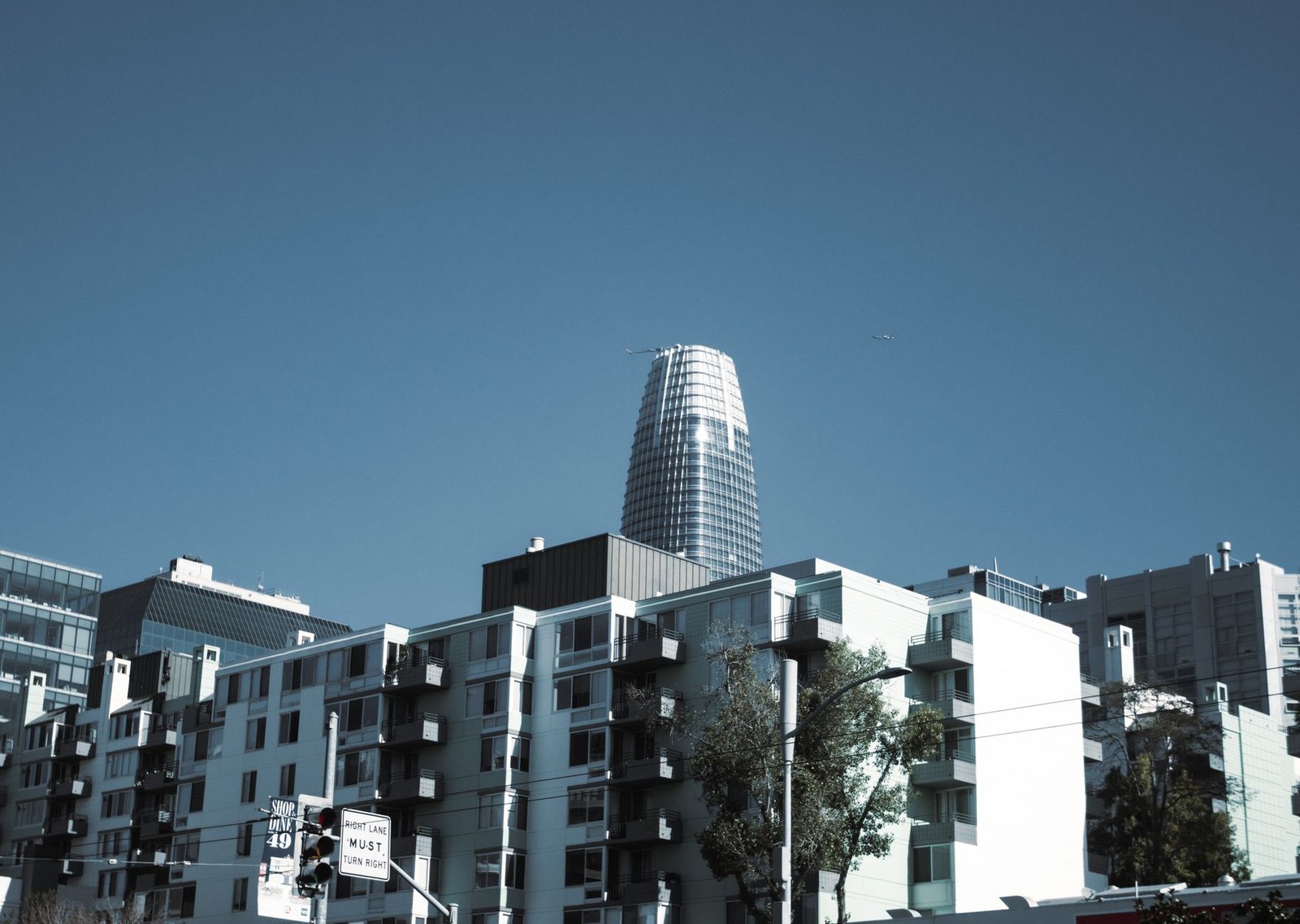
Meanwhile, the city’s traditional core is adapting rather than dying. Salesforce Tower and the Transbay district still host the largest AI headquarters, and OpenAI’s multi-building campus in Mission Bay anchors a southern hub. What has changed is that economic gravity is now distributed across a corridor stretching from Mission Bay through Potrero Hill, the Mission and Hayes Valley, rather than concentrated in a few blocks around Market Street.
The Venture Capital Engine Behind the Boom
None of this would be happening without extraordinary capital flows. According to PitchBook, Bay Area startups captured more than half of all U.S. venture funding in 2025, and AI companies took the lion’s share. San Francisco alone attracted well over $50 billion in venture investment last year, and 2026 is on pace to match or exceed that figure as megarounds for foundation-model labs, AI infrastructure firms and applied-AI companies continue. Crunchbase data indicates that roughly 40 percent of global AI funding in the first half of 2026 went to companies headquartered within a 50-mile radius of the city.
Crucially, that capital is being spread across more companies than in previous cycles. Y Combinator’s recent batches have been dominated by AI startups, and more than 70 percent of its 2025 and 2026 cohorts chose to base themselves in San Francisco proper rather than the Peninsula or South Bay. Each of those companies needs a few thousand square feet, a handful of apartments for founders, and access to a dense talent pool, which is exactly what the neighborhood model provides.
“What we’re seeing is the return of the urban startup. In the 2010s, growth companies fled to giant suburban campuses. In the AI era, the most valuable asset is proximity to other researchers, and that density only exists in a few square miles of San Francisco,” says Maria Chen, a partner at a Bay Area venture firm focused on early-stage AI. “Founders will pay a premium for a neighborhood where they can bump into a potential co-founder at the coffee shop.”
Jobs, Wages and the New Urban Economy
The AI migration is showing up in employment data. California’s Employment Development Department reported that San Francisco added tens of thousands of tech jobs between 2024 and 2026, reversing the losses of the 2022 to 2023 layoff wave. Lightcast job-posting data shows that listings mentioning machine learning, LLMs or generative AI in the city more than doubled between 2023 and 2026. Median advertised salaries for AI research engineers in San Francisco now exceed $250,000, with top labs offering total compensation packages well above $1 million for senior researchers.
The effects extend beyond software. Restaurants, gyms and retailers in AI-heavy neighborhoods report rising foot traffic. The San Francisco Chamber of Commerce noted that sales-tax receipts in the Hayes Valley and Mission corridors rose faster than the citywide average in 2025. Hotels, which suffered from the collapse of convention travel, are benefiting from a steady stream of AI conferences, hackathons and investor visits. The Moscone Center’s 2026 calendar is the busiest it has been since 2019, largely thanks to AI-focused events.
At the same time, the boom is uneven. Many of the new jobs require advanced technical skills, and workers in service industries face rising housing costs without proportionate wage gains. City officials are attempting to balance the two through expanded housing approvals, with San Francisco’s 2025 rezoning plan targeting 82,000 new homes by 2031 under state mandates. Whether construction can keep pace with demand will determine how inclusive the AI economy becomes.
What San Francisco AI Startups Teach Other Global Hubs
Cities from Dubai to Seoul to Cape Town are racing to build their own AI startup ecosystems, and the San Francisco experience offers concrete lessons. The first is that density beats infrastructure. Grand purpose-built startup campuses can help, but the organic clustering happening in San Francisco neighborhoods demonstrates that founders value walkable proximity to peers, investors and talent more than gleaming facilities.
The second lesson concerns flexibility. Landlords who converted retail and light-industrial space into small offices captured the AI wave; those who held out for long-term corporate tenants did not. Cities that streamline permits for adaptive reuse, allow mixed-use zoning and encourage short-term leasing can replicate that dynamic. Seoul’s Coupang, which this month announced $84 million in investments for global AI startups, and Dubai’s new startup campus are both explicitly trying to import this founder-first model.
The third lesson is a warning. San Francisco’s earlier tech booms produced housing shortages, displacement and political backlash that ultimately slowed growth. Emerging hubs in Saudi Arabia, the UAE, South Africa and Ethiopia have an opportunity to plan housing and transit alongside startup incentives rather than after the fact.
Practical Advice for Founders, Investors and Workers
If you are a founder considering a move to the Bay Area, or an investor evaluating the region, the neighborhood shift changes your calculus in specific ways.
- For founders: Look beyond downtown listings. Ground-floor retail in Hayes Valley, the Mission or Dogpatch can be leased for far less than tower space, often with month-to-month flexibility. Coworking operators such as WeWork successors and AI-focused hubs like Founders Inc and Frontier Tower offer sub-500-square-foot suites that scale as you hire.
- For investors: Map your portfolio geographically. Companies located within the Mission Bay to Hayes Valley corridor benefit from talent spillover and higher hiring velocity, factors that increasingly correlate with follow-on funding success.
- For workers: Consider proximity. Living within walking distance of the AI corridor commands a rent premium, but the networking benefits are real. Many hiring managers say the majority of their 2026 hires came through in-person meetups, hackathons and neighborhood events.
- For landlords and cities: Prioritize adaptive reuse. Converting vacant storefronts and small offices into flexible workspaces has proven more effective than waiting for anchor tenants.
- For policymakers abroad: Pair startup incentives with housing supply. San Francisco’s rent surge shows what happens when demand outruns construction.
Risks on the Horizon
The AI-driven revival is not guaranteed to last. Investor concerns about an AI bubble have intensified in 2026, and if funding for foundation-model companies slows, the hundreds of small labs filling neighborhood storefronts could contract quickly. Analysts at Moody’s and others have warned that San Francisco’s economy is now more concentrated in a single sector than at any point since the dot-com era. A sharp correction would hit neighborhood landlords with short-term tenants first.
Political tensions are another risk. Rising rents have revived activism around displacement, and proposals for new taxes on AI companies or restrictions on office conversions are circulating at City Hall. How the city manages the relationship between its newest economic engine and its longtime residents will shape whether the current boom becomes a durable transformation or another boom-and-bust cycle.
Conclusion
The migration of San Francisco AI startups into smaller neighborhoods is more than a real-estate story. It signals a shift in how innovation economies organize themselves in the AI era: dense, walkable, flexible and intensely human. The city’s economic center is spreading from a handful of downtown blocks into a corridor of neighborhoods where founders, researchers and investors live and work side by side.
- AI companies have absorbed more than 5 million square feet of San Francisco office space since 2023, with growth increasingly in neighborhoods like Hayes Valley, the Mission and Dogpatch.
- San Francisco captured well over $50 billion in venture funding in 2025 and roughly 40 percent of global AI investment in early 2026.
- Neighborhood rents and retail activity are rising quickly, bringing both prosperity and displacement pressure.
- Global hubs from Dubai to Seoul can replicate the model by prioritizing density, flexible leasing and housing supply.
- The biggest risks are sector concentration and political backlash if housing fails to keep pace.
For a global audience watching the AI economy unfold, San Francisco remains the clearest laboratory for what comes next, and its neighborhoods are where the experiment is now being run.