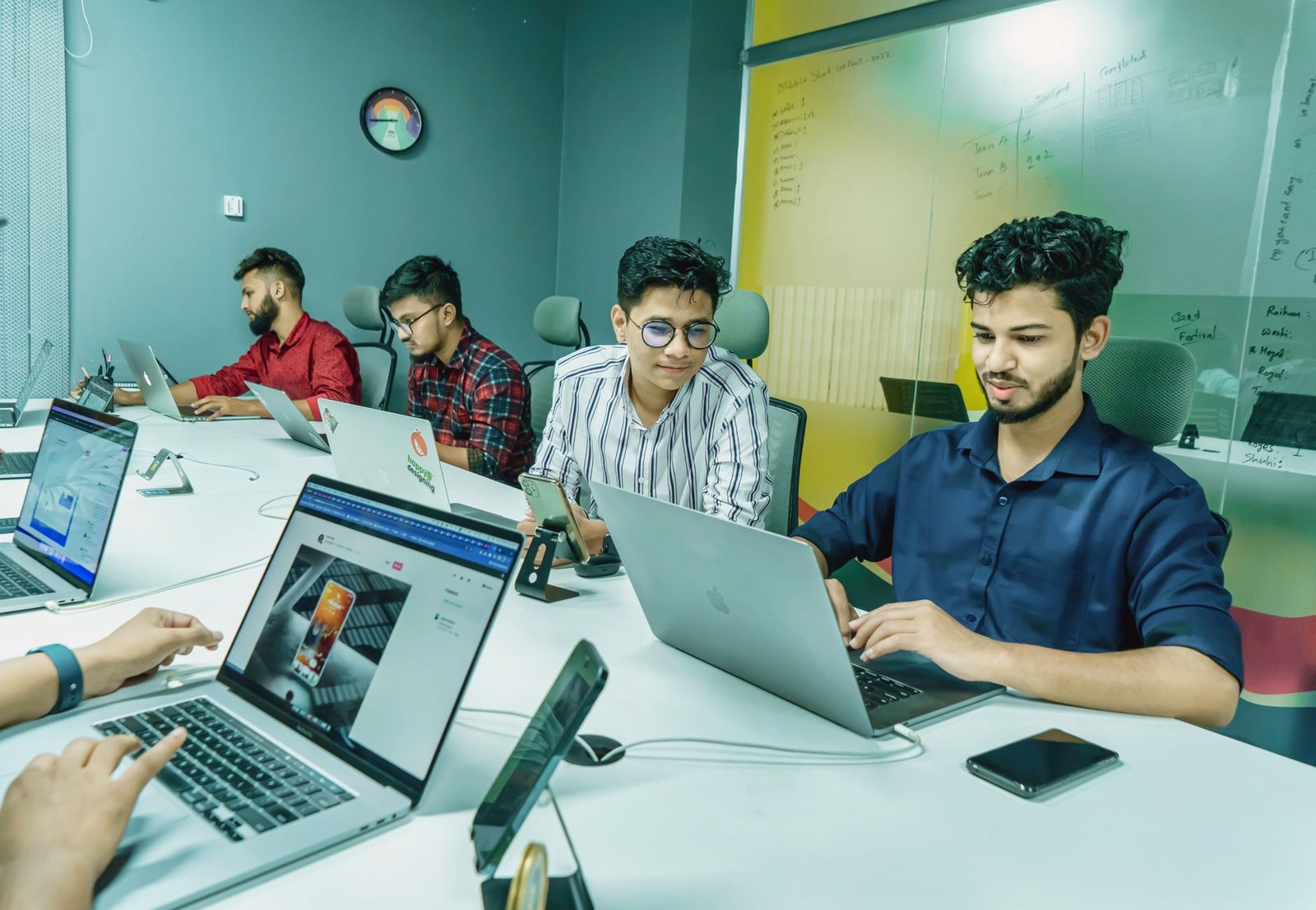
In a move that could reshape Bangladesh startup funding for the next decade, 39 of the country’s commercial banks have jointly launched a $35 million venture capital fund aimed squarely at early-stage technology companies. The announcement, made in Dhaka this week, marks the first time the country’s banking sector has pooled capital at this scale to back founders rather than lend to established corporates. For a startup ecosystem that has long complained of a funding drought after the seed stage, the fund is being hailed as a turning point—and a signal that South Asia’s second-largest economy by population is finally serious about building a venture-backed innovation economy.
The timing is not accidental. Across emerging markets in 2026, from Riyadh to Addis Ababa to Manila, governments and financial institutions are racing to build startup ecosystems that can create jobs, attract foreign capital, and reduce dependence on legacy industries. Bangladesh, with a population of roughly 175 million, a median age under 28, and one of the fastest-growing digital consumer bases in Asia, has all the raw ingredients. What it has lacked is patient, risk-tolerant capital. This article explains what the new fund is, why it matters, how it compares to regional peers, and what founders and investors should do next.
What the $35M Bangladesh Startup Funding Vehicle Actually Is
The fund is structured as a bank-sponsored venture capital company, with each of the 39 participating banks contributing capital in proportion to its size. Regulatory groundwork was laid by Bangladesh Bank, the central bank, which in recent years relaxed rules that previously restricted commercial lenders from making equity investments in unlisted companies. Under the revised framework, banks may allocate a small percentage of their capital to venture and private equity vehicles, provided the investments are made through a professionally managed fund rather than directly from the balance sheet.
According to the announcement, the fund will target ticket sizes between $250,000 and $2 million—the so-called “missing middle” in Bangladesh startup funding. Angel networks and accelerators such as the government-backed Startup Bangladesh Limited, which was seeded with roughly BDT 500 crore (about $42 million) in 2020, have covered the pre-seed and seed stages reasonably well. Foreign investors, meanwhile, have occasionally written large cheques for late-stage winners: ShopUp raised over $75 million in a Series B in 2021, and bKash, the mobile financial services giant, attracted SoftBank in the same year. But the Series A gap between those two poles has swallowed hundreds of promising companies.
The fund’s mandate covers fintech, agritech, logistics, healthtech, edtech, and software-as-a-service, with a stated preference for companies that already have revenue and a clear path to profitability. A professional fund manager with prior venture experience is being appointed, and the banks have committed to a ten-year fund life—an important detail, because short investment horizons have crippled earlier state-linked funds in the region.
Why Bangladesh Startup Funding Has Lagged Its Neighbours
To understand why this launch is significant, it helps to look at the numbers. According to data compiled by LightCastle Partners, a Dhaka-based consultancy, Bangladeshi startups raised approximately $72 million in 2023 and a similar figure in 2024, down sharply from a 2021 peak of over $400 million. By comparison, Pakistan’s startups raised more than $350 million in 2022 before their own downturn, Vietnam routinely attracts $500 million to $1 billion per year, and India crossed $10 billion in 2024 alone.
Several structural factors explain the gap. First, foreign exchange controls and repatriation rules historically made it cumbersome for overseas investors to exit. Second, the taka lost more than 25% of its value against the dollar between 2022 and 2024, spooking dollar-denominated funds. Third, the country’s political transition in 2024–2025 introduced a period of uncertainty during which many international investors paused new commitments. And fourth, there was simply no deep pool of domestic institutional capital willing to take equity risk.
That last point is exactly what the bank consortium addresses. Bangladesh’s commercial banks collectively hold deposits exceeding BDT 18 trillion (roughly $150 billion). Even a fraction of a percent redirected toward venture investing dwarfs the entire historical inflow of foreign startup capital. The $35 million first close is modest by global standards, but the organisers have publicly stated that a second, larger tranche is planned once the initial portfolio demonstrates results.
How It Compares: Emerging Market Startup Ecosystems in 2026
Bangladesh is not building in a vacuum. The same week this fund was announced, headlines from around the world underscored how competitive the race for founders has become:
- Saudi Arabia: Global investor interest in Saudi startups continues to accelerate, with the kingdom’s venture funding topping $750 million in 2024 according to MAGNiTT, making it the largest market in the MENA region.
- Dubai: A newly opened startup campus positions itself as a “front door” for founders relocating to the Gulf, offering visas, office space, and investor access under one roof.
- South Korea: E-commerce giant Coupang announced $84 million in investments aimed at global AI technology startups, illustrating how corporates are becoming venture players.
- Ethiopia: Policymakers are calling for investment in city-level startup ecosystems to drive a private-sector-led economy in one of Africa’s fastest-growing nations.
- Philippines: Startups are betting on the “experience economy,” pitching human connection as the next big business as AI automates routine services.
What unites these stories is a recognition that startup ecosystems are now a matter of national economic strategy. The World Bank estimates that emerging-market digital economies could add more than $1 trillion in GDP by 2030, and countries that fail to nurture domestic founders risk becoming pure consumers of foreign platforms. Bangladesh’s bank-led model is distinctive because it mobilises local capital first, rather than waiting for Silicon Valley or Singapore to arrive.
“For years, the story of Bangladesh startup funding was that the money had to come from outside. This fund flips that narrative. When your own banks are willing to take equity risk in your own founders, that’s the strongest possible signal to foreign investors that the market is investable,” said Bijon Islam, co-founder of LightCastle Partners, in comments on the launch.
Sectors Most Likely to Benefit From Venture Capital in Bangladesh
The fund’s sector focus aligns closely with where Bangladesh already shows traction. Fintech remains the crown jewel: mobile financial services accounts exceed 230 million registrations, and bKash alone processes transactions worth more than $10 billion per month. The next wave—digital lending, insurance, and wealth management for the newly banked—is where Series A capital can unlock rapid scaling.
Agritech is the second obvious winner. Agriculture employs roughly 40% of the workforce but suffers from post-harvest losses estimated at 20–30%. Startups such as iFarmer and Fashol have proven that connecting smallholders to financing and buyers via smartphone works; what they need is growth capital to expand beyond a handful of districts. Logistics and e-commerce enablement, led by companies like Paperfly and ShopUp’s B2B platform Mokam, form a third cluster where the fund is expected to be active.
Healthtech and edtech round out the list. With only about six physicians per 10,000 people—among the lowest ratios in Asia—telemedicine platforms have an enormous addressable market. In education, the country’s 40 million school-age students and rising smartphone penetration (now above 60% of adults) make digital learning a natural fit. The key question for the fund manager will be discipline: backing companies with real unit economics rather than chasing headline user numbers, a lesson learned painfully during the 2021 boom.
What Founders Should Do Now to Access Bangladesh Startup Funding
For entrepreneurs, a new pool of capital is only useful if you are ready to absorb it. Based on how similar bank-backed funds in Vietnam, Indonesia, and Egypt have operated, here is practical advice for founders preparing to pitch:
- Clean up your cap table and corporate structure. Bank-sponsored funds face stricter compliance than angels. Ensure your company is properly registered with the RJSC, has audited financials, and has resolved any informal equity promises.
- Demonstrate revenue, not just downloads. The fund has explicitly prioritised companies with a path to profitability. Monthly recurring revenue, gross margins, and customer acquisition costs should be at your fingertips.
- Prepare for a longer diligence cycle. Expect three to six months from first meeting to term sheet. Use that time to keep growing—the metrics you present at closing matter more than the ones at first contact.
- Think about exits from day one. Bangladesh’s stock exchange has a nascent SME board, and regional acquirers from India, Singapore, and the Gulf are increasingly active. Articulating a credible exit path helps a bank-backed fund justify its risk.
- Build relationships with the participating banks now. Beyond capital, these institutions can become customers, distribution partners, and sources of working-capital credit—an advantage pure financial VCs cannot offer.
Founders should also register with Startup Bangladesh Limited and the ICT Division’s programmes, since the new fund is expected to co-invest with existing public vehicles rather than compete with them. A syndicated round combining government seed money, bank venture capital, and a foreign lead investor is the template most likely to emerge.
Risks and Open Questions for Investors
Optimism should be tempered with realism. Bank-led venture funds have a mixed track record globally. Japan’s regional banks poured money into startups in the 2010s with underwhelming returns, largely because credit-trained analysts struggled to evaluate equity risk. The Bangladesh fund’s success will hinge on whether the professional manager is given genuine independence from the banks’ risk committees.
Currency remains a concern. Although the taka stabilised in 2025 after Bangladesh Bank moved toward a more market-based exchange rate, foreign co-investors will want assurance that profits can be repatriated smoothly. Recent reforms allowing startups to hold foreign-currency accounts and simplifying outbound remittance of dividends are steps in the right direction, but implementation at the branch level often lags policy on paper.
Governance is the third watch item. With 39 shareholders, decision-making could become slow or politicised. The organisers have addressed this by establishing an independent investment committee, but investors will be watching the first five or six deals closely to judge whether capital is being deployed on merit. Finally, there is the question of scale: $35 million spread across perhaps 20–25 companies is a meaningful start, but Bangladesh needs several hundred million dollars in annual venture funding to match its economic weight. The fund is best understood as a catalyst, not a solution.
The Bigger Picture: South Asia’s Next Growth Story
Bangladesh’s economy grew at an average of over 6% annually for the decade before the pandemic, and the IMF projects a return to growth above 5% in fiscal 2026–27. Per capita income has more than tripled since 2010. The garment industry, which accounts for more than 80% of exports and roughly $47 billion in annual revenue, provided the first economic miracle. The bet behind this fund is that digital services and technology can provide the second.
There is precedent for the optimism. Indonesia in 2015 and Vietnam in 2018 were both dismissed as too small, too risky, or too bureaucratic for venture capital—until a handful of local wins attracted a flood of regional and global money. Both countries now host multiple unicorns. Bangladesh has one clear candidate in bKash and a deep bench of companies that could follow if the Series A gap closes. The 39-bank fund is the most concrete attempt yet to close it.
Conclusion: Key Takeaways
The launch of a $35 million bank-backed venture capital fund is the most important development in Bangladesh startup funding since the creation of Startup Bangladesh Limited in 2020. It mobilises domestic institutional capital, targets the critical Series A gap, and sends a credibility signal to international investors who have been waiting on the sidelines.
- 39 commercial banks have pooled $35 million into a professionally managed, ten-year venture fund targeting early-stage tech companies.
- The fund fills the “missing middle” between seed funding and large foreign-led rounds, with ticket sizes of $250,000 to $2 million.
- Fintech, agritech, logistics, healthtech, and edtech are the priority sectors, with an emphasis on revenue and profitability.
- Founders should prepare audited financials, clear cap tables, and credible exit narratives to compete for capital.
- Risks include governance complexity, currency volatility, and whether bank culture can adapt to equity investing—but the potential upside mirrors the trajectories of Indonesia and Vietnam.
For global investors surveying emerging-market startups in 2026, Bangladesh has just moved from the watch list to the shortlist. The next twelve months will reveal whether local banks can do what foreign capital has hesitated to do: back the country’s founders at scale.