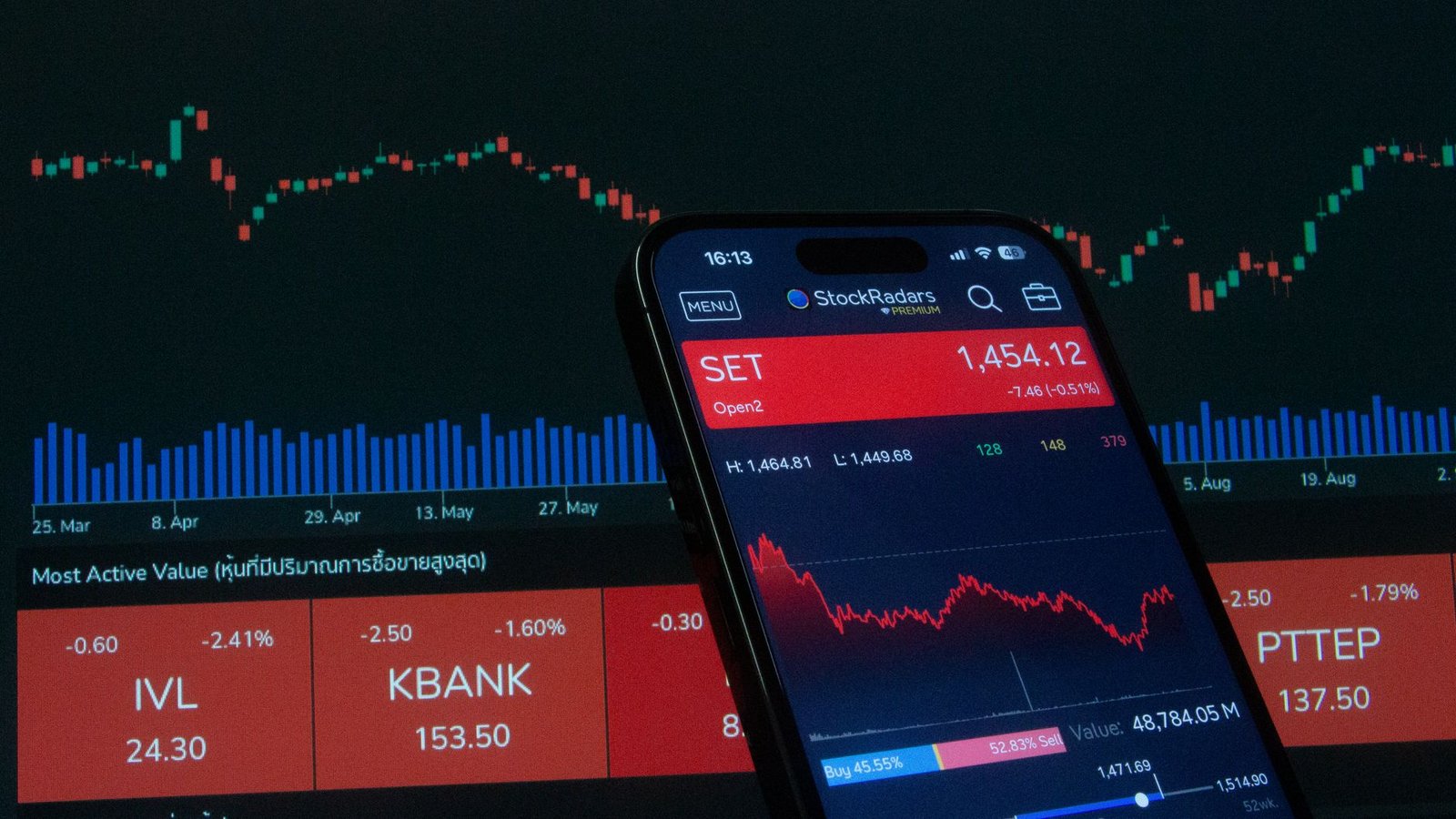
Wall Street has a long habit of confusing observers, but few puzzles have been as stark as the one facing investors in late August 2026: stocks at record highs while the standoff with Iran remains unresolved, oil tankers still reroute around the Strait of Hormuz, and diplomats trade warnings rather than signatures. The S&P 500 has notched multiple closing records this month, the Nasdaq is up more than 20% year to date, and global equity indices from Tokyo to Frankfurt are following suit. For anyone watching the headlines, the disconnect feels irrational. For anyone watching the flows, it is entirely explainable. This article unpacks why markets are climbing through a geopolitical crisis, what history teaches about conflict-driven volatility, and how investors worldwide should think about positioning when prices and risks both seem elevated at once.
Stocks at Record Highs: The Numbers Behind the Rally
Consider the scoreboard. The S&P 500 has gained roughly 14% in 2026 through August, extending a bull market that began in October 2022 and has now delivered a cumulative return of more than 90%. The Nasdaq Composite has outperformed on the back of AI infrastructure spending, while the MSCI All Country World Index sits near its own record. Even Europe’s Stoxx 600, historically more sensitive to energy shocks given the continent’s import dependence, is within 2% of its all-time peak.
Meanwhile, the Iran situation has produced real economic effects. Brent crude spiked above $95 per barrel in the spring before settling into a volatile $80–$90 range. Shipping insurance premiums for Gulf routes have roughly tripled since January, according to Lloyd’s market data. Yet the CBOE Volatility Index, Wall Street’s so-called fear gauge, has spent most of August below 16, a level associated with calm rather than crisis. Investors, in other words, are pricing the Iran standoff as a manageable regional problem rather than a systemic threat.
The rally is also broader than a handful of megacaps. Equal-weighted versions of the S&P 500 have participated this summer, industrials and financials have hit new highs, and emerging markets outside the Middle East have attracted their strongest inflows since 2021. That breadth matters: it signals the market’s confidence rests on earnings and liquidity, not on a single narrative.
Why Geopolitical Risk Rarely Derails Bull Markets
The historical record is remarkably consistent. Research from LPL Financial covering 25 major geopolitical events since Pearl Harbor found the S&P 500 fell an average of just 4.6% from peak to trough, and recovered those losses in a median of 22 trading days. The 1990 Iraqi invasion of Kuwait was among the sharper cases, with a 17% drawdown, but stocks were back at record highs within a year. The 2003 Iraq invasion actually marked the beginning of a multi-year rally. Russia’s 2022 invasion of Ukraine coincided with a bear market, but most analysts attribute that decline primarily to Federal Reserve rate hikes rather than the war itself.
The reason is structural. Equity prices reflect the discounted value of decades of future corporate earnings. A regional conflict, however tragic, rarely changes the ten-year earnings trajectory of Microsoft, Nestlé, or Toyota. What does move that trajectory is the cost of capital, the direction of inflation, and the health of consumer demand. Unless a geopolitical event transmits through one of those channels, typically via a sustained oil shock, markets tend to look past it.
That transmission is precisely what has not happened in 2026. Oil has been volatile but not catastrophic, in part because US shale output remains near record levels above 13 million barrels per day, OPEC+ has spare capacity, and strategic reserves across the OECD stand at roughly 1.5 billion barrels. Iran’s own exports, heavily sanctioned, account for a smaller share of global supply than they did a decade ago. The energy-price shock absorber that failed in 1973 and 1990 has, so far, held.
The Real Drivers: Earnings, Liquidity, and AI Capex
If geopolitics is not driving markets, what is? Three forces dominate. First, corporate earnings. S&P 500 companies reported second-quarter profit growth of roughly 11% year over year, with forward estimates for 2026 now implying full-year earnings growth in the low double digits. Margins have proven resilient despite higher input costs, helped by pricing power and productivity gains.
Second, liquidity. The Federal Reserve began cutting rates in late 2024 and has continued a measured easing path, with the federal funds rate now sitting near 3.5%. The European Central Bank and Bank of England have followed, and the Bank of Japan has kept its tightening gradual. Lower rates lift the present value of future earnings and push money out of cash and into risk assets. Money market fund balances, which peaked above $7 trillion, have begun to trickle back into equities, a reservoir that remains far from empty.
Third, the artificial intelligence investment cycle. The largest technology companies are on track to spend more than $400 billion on data centers, chips, and power infrastructure in 2026 alone. That spending flows directly into the revenues of semiconductor makers, utilities, construction firms, and industrial suppliers, creating an earnings engine that operates almost independently of events in the Persian Gulf. Whether this cycle proves durable or bubble-like is a legitimate debate, but for now it is the single most powerful bid under global equities.
Stocks at Record Highs Do Not Mean Risk-Free Markets
Complacency is the danger that critics highlight, and they have a point. Valuations are stretched by most measures: the S&P 500 trades at roughly 22 times forward earnings, well above its 30-year average of about 17, and the cyclically adjusted price-to-earnings ratio sits near levels last seen in 2000 and 2021. High valuations do not cause crashes, but they reduce the cushion when shocks arrive. A market priced for perfection has less room to absorb an imperfect outcome.
The Iran situation also carries tail risks that are difficult to price. A direct strike on Gulf energy infrastructure, a closure of the Strait of Hormuz through which roughly 20% of global oil consumption passes, or a cyberattack on financial infrastructure could transmit the crisis into the earnings channel within days. Markets are effectively assigning a low probability to these scenarios, and that assessment may be correct, but low probability is not zero.
There is a further, quieter concern. Positioning data from surveys of fund managers shows cash allocations near multi-year lows and equity exposure at the upper end of historical ranges. When most participants are already invested, the marginal buyer becomes scarcer and the market becomes more sensitive to disappointment. Record highs built on crowded positioning tend to produce sharper corrections when sentiment turns, even if the fundamental picture remains intact.
“Markets are not ignoring Iran, they are pricing it correctly for now. The mistake investors make is assuming that a calm VIX means a safe market. It means a market where the consensus is confident, and consensus confidence is exactly the condition under which surprises hurt the most.” — Elena Marchetti, Chief Global Strategist, Halcyon Asset Management
How Oil Prices and Stocks Interact in a Prolonged Standoff
The relationship between oil prices and stocks is the hinge on which this entire question turns. Economists generally estimate that a sustained $10 rise in oil shaves roughly 0.2 to 0.3 percentage points off global GDP growth over a year and adds about 0.3 points to headline inflation in advanced economies. At current levels, oil is elevated but not at the $120-plus threshold that has historically triggered recessions.
The sector-level effects are uneven. Energy producers have been among the best-performing groups in 2026, with the sector up more than 18%. Airlines, cruise operators, and chemical companies have lagged as fuel costs bite. European industrials remain vulnerable to any renewed spike given the region’s gas import reliance, while India, which imports more than 85% of its crude, has seen its rupee and current account come under periodic pressure.
For a prolonged standoff without resolution, the base case is continued range-bound energy prices with episodic spikes on headline risk. That environment favors companies with pricing power and low energy intensity, which is precisely the profile of the technology and services businesses leading the market. It is not a coincidence that the sectors driving record highs are the ones least exposed to the crisis.
How to Invest During a Crisis Without Panic or Complacency
The practical question for readers is not whether markets are right but how to act when prices are high and risks are visible. The answer lies in disciplined process rather than prediction. Here are steps investors around the world can take immediately:
- Rebalance rather than retreat. If equities have grown from 60% to 70% of your portfolio during the rally, trim back to target. This locks in gains mechanically without requiring a market call.
- Check your energy exposure both ways. A modest allocation to energy equities or commodity funds acts as a natural hedge against an oil spike. Conversely, heavy exposure to airlines or energy-intensive industrials deserves a second look.
- Hold quality, not just momentum. Companies with strong balance sheets, consistent free cash flow, and low debt have historically outperformed during geopolitical drawdowns. Screen for net cash positions and interest coverage above five times.
- Keep a liquidity buffer. Six to twelve months of expenses in cash or short-term government bonds means a correction becomes an opportunity rather than a forced sale. With short-term yields still above 3%, the cost of holding that buffer is modest.
- Diversify geographically. The 2026 rally has been global. Japan, South Korea, India, and parts of Europe offer valuations well below US levels and reduce concentration in a single market’s sentiment.
- Consider inexpensive protection. With the VIX below 16, put options and volatility hedges are historically cheap. For larger portfolios, spending 0.5% to 1% annually on downside protection is reasonable insurance.
- Automate contributions. Dollar-cost averaging removes the paralysis of deciding whether today is the wrong day to buy. Over decades, timing has mattered far less than time in the market.
What to avoid is equally important. Do not liquidate a diversified portfolio because headlines are alarming; the historical cost of sitting out has consistently exceeded the cost of riding through volatility. Do not chase the highest-flying names simply because they are rising. And do not confuse the absence of a resolution with the presence of a catastrophe.
What Could Change the Picture
Investors should watch several signposts that would indicate the market’s benign assessment is breaking down. The first is oil sustaining above $100 for more than a few weeks, which would begin to erode consumer spending and corporate margins simultaneously. The second is a widening of credit spreads, particularly in high-yield bonds, which often signals stress before equities react. The third is a reversal in earnings revisions; if analysts begin cutting 2027 estimates, the valuation argument weakens rapidly.
On the positive side, a diplomatic breakthrough would likely produce a sharp but short-lived relief rally in energy-sensitive sectors and emerging markets, while the broader index might barely react, precisely because it never priced the crisis heavily in the first place. That asymmetry is itself instructive: the market’s upside from resolution is smaller than its downside from escalation, which argues for measured rather than aggressive positioning.
Conclusion: Key Takeaways
The sight of stocks at record highs with no Iran resolution is less a paradox than a lesson in how markets actually work. Equities respond to earnings, liquidity, and the cost of capital; geopolitical events matter only when they transmit through those channels, and in 2026 the oil shock absorber has held. History suggests conflicts produce brief, shallow drawdowns far more often than lasting bear markets.
That said, elevated valuations, crowded positioning, and genuine tail risks in the Gulf mean this is not a moment for complacency. The right response is neither to flee nor to chase, but to rebalance, hold quality, keep liquidity, diversify globally, and consider cheap protection while it is available.
- Record highs are driven by double-digit earnings growth, easing central banks, and a $400 billion AI capex cycle, not by any resolution in the Middle East.
- Historically, geopolitical shocks cause an average 4.6% drawdown recovered within about a month; only sustained oil spikes have changed that pattern.
- Valuations near 22 times forward earnings leave little cushion, so risk management matters more now than at the start of the bull market.
- Watch oil above $100, widening credit spreads, and falling earnings revisions as signals that the calm assessment is failing.
- Act through process: rebalance, diversify, maintain cash reserves, and stay invested rather than trying to time headlines.