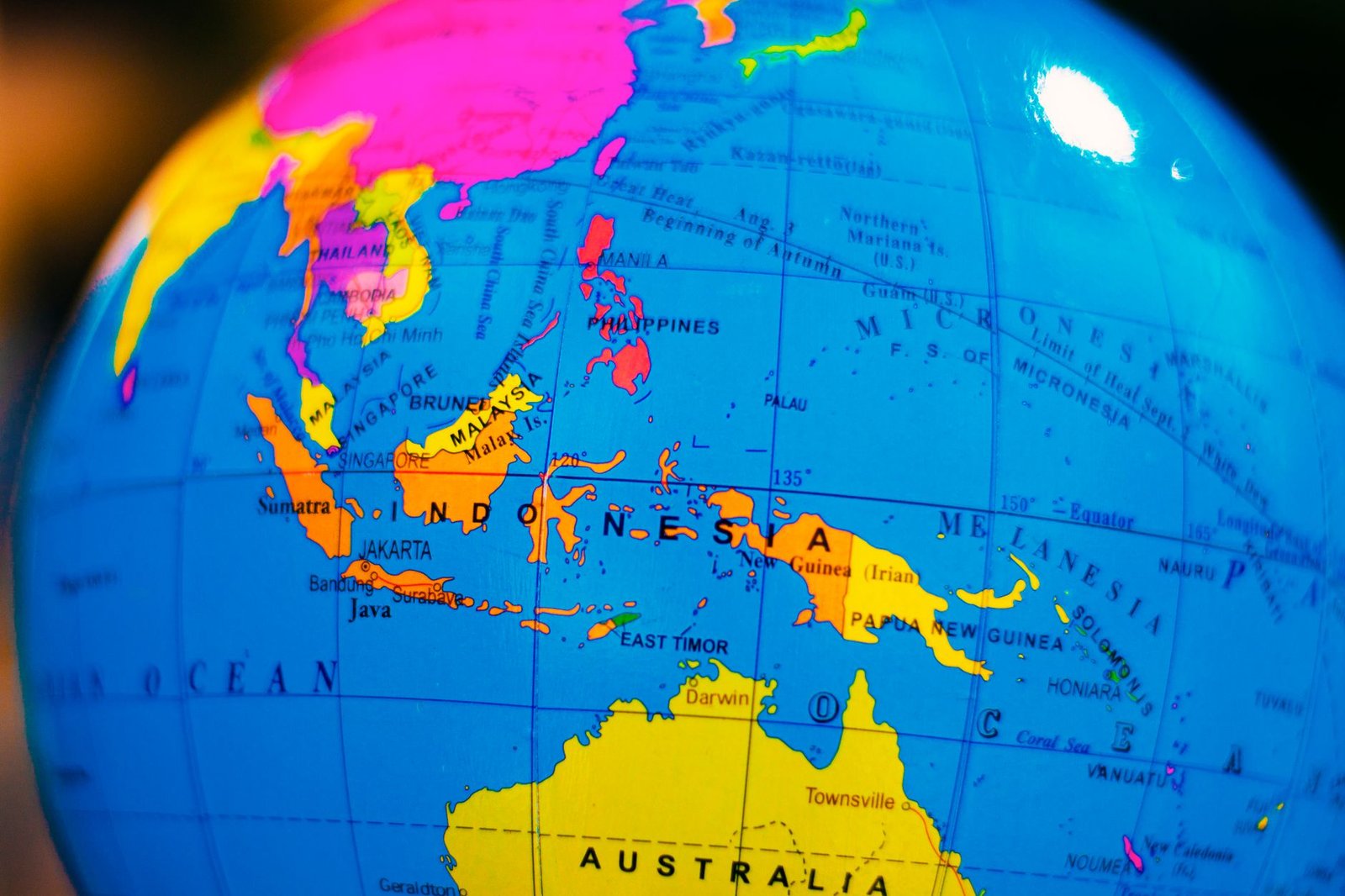
The BBC global audience has crossed a threshold no other news organisation has ever reached: more than half a billion people now engage with BBC content every week, according to the corporation’s latest Global Audience Measure. The figure, revealed this week, confirms the British broadcaster as the world’s most-consumed news brand at a moment when trust in media is fragile, misinformation is rampant, and the geopolitical order feels, in the words of Canadian Prime Minister Mark Carney, like it is undergoing “a global rupture”. For a worldwide audience trying to make sense of record-breaking heat, a looming Super El Niño, and a fractured G7, the story of how one public broadcaster reached 500 million people says a great deal about where international news consumption is heading.
How the BBC Global Audience Reached Half a Billion
The BBC’s Global Audience Measure (GAM) is an annual estimate combining survey data from more than 100 countries with digital analytics across the BBC’s websites, apps, YouTube channels and partner platforms. In 2019, the GAM stood at 426 million. It rose to 468 million in 2020 during the pandemic surge, dipped slightly to 447 million in 2023 as some markets lost access, then climbed to 450 million in 2024 and roughly 453 million in 2025. Passing 500 million in 2026 represents growth of more than 10 percent in a single year — the largest annual jump in the measure’s history.
Three drivers explain the surge. First, digital consumption has exploded: BBC News on YouTube alone now reaches well over 100 million weekly users, and short-form video on TikTok and Instagram has pulled in younger audiences the broadcaster struggled to attract five years ago. Second, a run of enormous global stories — the FIFA World Cup in North America, the Iran crisis and internet shutdown, the extreme-weather summer across Europe and Asia — sent people looking for a source they recognised. Third, the BBC World Service’s language services, which broadcast in more than 40 languages, saw sharp growth in Africa and South Asia, where mobile-first news consumption is rising fastest.
Notably, more than 70 percent of the BBC global audience now lives outside the United Kingdom. India remains the single largest international market, with an estimated weekly reach above 60 million, followed by Nigeria, the United States, Kenya and Bangladesh. The BBC’s Hindi, Hausa, Swahili and Urdu services each reach tens of millions of people, often on basic smartphones, FM relays and shortwave radio in regions where the local press is constrained.
Why the BBC Global Audience Record Matters for World News
A single organisation reaching one in sixteen people on Earth every week is more than a corporate milestone. It reshapes how global news is framed. When a heatwave scorches southern Europe or an Ebola treatment trial enrols its first patients in the Democratic Republic of Congo, the BBC’s editorial choices about what to cover — and how — influence what hundreds of millions of people believe is important. This week’s viral lists of “global news stories the rest of the world is talking about but the US isn’t” underline a growing divergence between American and international news agendas; the BBC sits squarely in the international camp.
The record also lands in a challenging environment for public-interest journalism. The Reuters Institute’s 2025 Digital News Report found that only 40 percent of people worldwide say they trust most news most of the time, and that news avoidance has risen to 40 percent of respondents, up from 29 percent in 2017. Against that backdrop, the BBC’s growth suggests that when trust in the general information ecosystem falls, audiences consolidate around a small number of brands they perceive as reliable — a phenomenon media scholars call the “flight to quality”.
It matters geopolitically too. The World Service has long been described as one of the UK’s most effective instruments of soft power. Russia’s RT and China’s CGTN have invested billions in international broadcasting, yet neither comes close to the BBC’s reach. In markets where the BBC has been blocked — Russia since 2022, and periodically Iran — audiences have migrated to VPNs, shortwave and satellite feeds, which the BBC has expanded in response.
The Digital Shift Behind the BBC Global Audience Growth
The composition of the audience has changed as dramatically as its size. In 2015, around 80 percent of the BBC’s international reach came from television and radio. In 2026, digital platforms account for well over half. BBC News is now the most-followed news publisher on YouTube globally, its podcast catalogue — including Global News Podcast and The Global Story — generates tens of millions of monthly downloads, and BBC Verify, the fact-checking and open-source investigation unit launched in 2023, has become one of the brand’s most-shared outputs.
The broadcaster has also invested in artificial intelligence, though cautiously. It uses AI for translation and transcription across language services, allowing a story reported in Lagos to reach Swahili, Hindi and Arabic audiences within minutes. At the same time, the BBC has publicly pushed back against AI assistants that summarise its journalism inaccurately: a 2025 BBC study found that more than half of AI-generated answers about news contained significant errors. That research shaped the EU AI Act’s transparency provisions and the broadcaster’s own licensing negotiations with technology companies.
- YouTube: BBC News channels combined reach more than 100 million weekly viewers.
- Language services: 42 languages, with the fastest growth in Hausa, Swahili, Hindi and Telugu.
- Podcasts: Global News Podcast consistently ranks in the top ten news podcasts in more than 50 countries.
- BBC Verify: Over 40 percent of its investigations are now consumed by audiences under 35.
Funding Pressures Threaten the BBC World Service
Success has not insulated the BBC from financial strain. The World Service was funded by the UK Foreign Office until 2014, when most of the cost shifted to the licence fee paid by UK households. That fee has risen more slowly than inflation for more than a decade, and the number of households paying it has fallen as viewers switch to streaming. In 2024 the BBC cut 130 World Service jobs; in 2025 the UK government agreed a temporary funding uplift of about £32 million a year, but BBC executives have warned that without a long-term settlement, further language services could close.
The stakes are clear: when the BBC reduced Arabic and Persian radio output in 2023, rival state-backed broadcasters quickly filled the vacated frequencies. Director-General Tim Davie has argued repeatedly that the World Service costs the British taxpayer roughly the price of a cup of coffee per person per year while delivering influence that “no aircraft carrier can match”. The Royal Charter that governs the BBC expires at the end of 2027, and the review now under way will decide whether the licence fee survives, is replaced by a household levy, or is supplemented by direct government funding for international services.
“Reaching half a billion people is remarkable, but reach is not the same as resilience. The BBC’s international audience has grown precisely because independent, well-resourced journalism is becoming rarer. The real question is whether the funding model can keep pace with the demand.” — Professor Rasmus Kleis Nielsen, former director of the Reuters Institute for the Study of Journalism, University of Oxford
What the Record Reveals About Global News Consumption
The BBC’s figures echo broader shifts documented across the industry. Audiences increasingly consume news on smartphones, through video, and via platforms rather than home pages. Younger people are more likely to encounter a BBC clip on TikTok than to open a BBC app. That creates opportunity — the audience is larger than ever — but also dependency, because platform algorithms decide who sees what. Meanwhile, print and linear television continue to shrink in most developed markets: global newspaper circulation has fallen by roughly a third since 2015.
The record also reflects what audiences want during crises. Traffic to BBC News spiked during the Iran internet shutdown, the 2026 World Cup final, and the peak of this summer’s heat emergencies in Europe and South Asia. Analysts at Enders Analysis note that international audiences turn to the BBC when domestic media are compromised, censored or overwhelmed — meaning the BBC’s growth is partly a symptom of declining press freedom elsewhere. Reporters Without Borders’ 2026 World Press Freedom Index classified the situation in 36 countries as “very serious”, a record.
Practical Takeaways: How to Consume Global News Wisely
For readers, the BBC milestone offers a moment to reassess how they follow world events. A few practical steps help build a more balanced, reliable news diet:
- Use at least two trusted international sources. Pair the BBC with Reuters, AP, AFP, Al Jazeera or a quality regional outlet to check framing and coverage gaps.
- Follow primary sources on big stories. For weather and climate news, consult the WMO or Copernicus; for health trials, the WHO; for economic data, the IMF or national statistics offices.
- Subscribe to a daily briefing. Podcasts such as Global News Podcast or newsletters from established outlets reduce reliance on algorithmic feeds.
- Verify viral clips. Before sharing dramatic footage, check whether BBC Verify, AFP Fact Check or Reuters Fact Check have examined it.
- Support independent journalism where you live. Global brands cannot replace local reporting on councils, courts and communities.
- Be wary of AI summaries of the news. Independent testing has repeatedly found factual errors; read the original report when the stakes are high.
Conclusion: A Milestone With Warnings Attached
The BBC global audience reaching more than 500 million people a week is a genuine landmark in the history of media — evidence that demand for credible, international journalism is rising, not falling, in an age of misinformation and geopolitical fracture. It is also a reminder of how concentrated the world’s trusted news supply has become, and how vulnerable that supply is to funding decisions made in a single national parliament.
Key takeaways:
- The BBC now reaches over half a billion people weekly, up more than 10 percent in a year and the highest figure ever recorded by any news organisation.
- Digital video, podcasts and language services in Africa and South Asia are the main growth engines; more than 70 percent of the audience lives outside the UK.
- Growth coincides with falling global trust in news and record declines in press freedom, suggesting a “flight to quality”.
- Funding remains the central risk: the World Service faces cuts unless the 2027 charter review secures a sustainable model.
- Readers should diversify sources, check primary data, and treat AI-generated news summaries with caution.
As the world confronts a Super El Niño, a shifting alliance system and an information environment increasingly shaped by machines, the question is not whether people want reliable global news — the BBC’s numbers answer that emphatically — but whether the institutions that provide it will be funded to keep delivering.