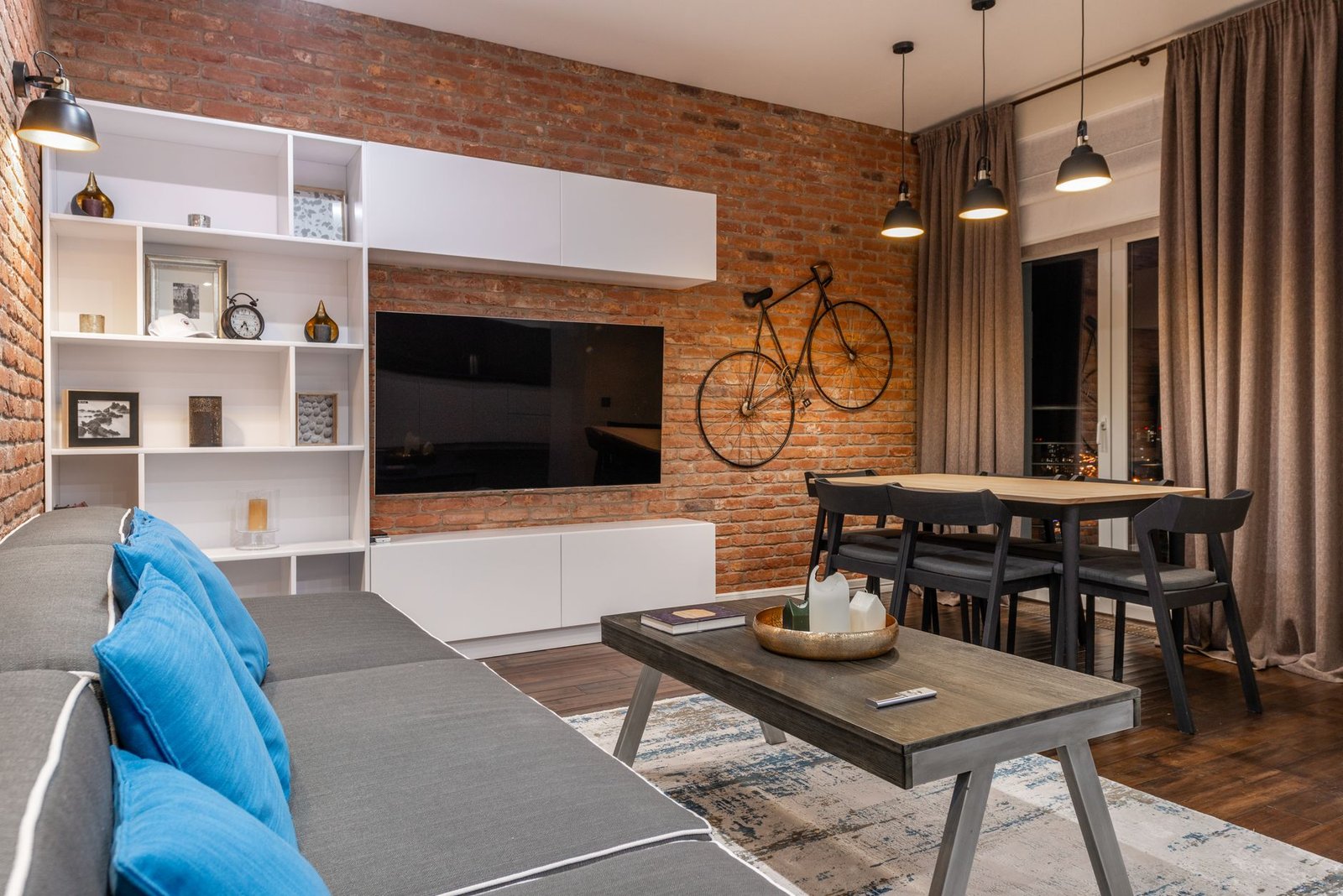
If your social feeds, favorite hotels and even your neighbor’s renovation all suddenly look softer, warmer and a little more personal, you are not imagining it. The biggest interior design trends 2026 has delivered so far amount to a quiet revolution in how the world thinks about home. After a decade dominated by cool grey minimalism and rooms designed to photograph well rather than live well, 2026 is the year living spaces turned inward — toward comfort, wellness, flexibility and sustainability. From Mumbai apartments to Melbourne townhouses, homeowners are asking the same question: not “what looks impressive?” but “what makes daily life genuinely better?” This article breaks down the defining shifts of the year, the data behind them, and practical ways to bring each trend home without a full renovation budget.
Why Interior Design Trends 2026 Feel So Different
Every era’s homes mirror its anxieties and aspirations, and 2026 is no exception. Years of hybrid work have permanently changed how much time people spend at home — global surveys consistently show that hybrid and remote arrangements have stabilized at roughly 25–30% of knowledge-work days in major economies, compared with under 5% before 2020. When your home doubles as an office, gym, cinema and occasional classroom, design stops being decoration and becomes infrastructure.
Economics play a role too. With mortgage rates still elevated across much of the world and housing affordability stretched from Toronto to Sydney to Bengaluru, fewer people are moving. Instead, they are investing in the homes they already have. The global home improvement market, valued at over $1 trillion in 2025, is projected to keep growing at around 4–5% annually through the end of the decade, according to industry analysts. Renovation, not relocation, is the defining housing behavior of 2026 — and it is fueling a design boom focused on longevity rather than trend-chasing.
There is also a cultural undercurrent. In a year when so much of pop culture has embraced playfulness and “unserious” aesthetics, homes have become the counterweight: places of calm, texture and rootedness. Designers describe it as a swing from performative interiors to restorative ones.
Warm Minimalism: The End of the Grey Era
The single most visible shift in interior design trends 2026 is chromatic. The greige-and-white palette that ruled the 2010s has been decisively replaced by warm, earthy tones: ochre, terracotta, clay, olive, mushroom brown and buttery creams. Paint brands saw it coming — recent “color of the year” selections across major manufacturers have clustered around warm browns, soft mochas and earthen reds, and search interest in “warm neutrals” has more than doubled since 2023 on Pinterest and Google Trends.
Crucially, this is not maximalism. The clean lines and clutter-free ethos of minimalism remain; what has changed is the temperature. Designers call it “warm minimalism” or “soft minimalism”: fewer objects, but every one of them tactile. Think bouclé and linen instead of leather and lacquer, limewash walls instead of flat white paint, and travertine, walnut and rattan instead of glass and chrome.
- Start with textiles: Swapping cool-toned cushions, throws and curtains for linen, wool and bouclé in earth tones transforms a room for under $200.
- Limewash one wall: The cloudy, mineral finish adds depth that flat paint cannot, and DIY limewash kits are now widely available.
- Layer lighting: Replace single overhead lights with two or three warm (2700K) lamps at different heights — the fastest way to make any space feel intentional.
The Rise of the Wellness Room
Perhaps no trend captures 2026 better than the wellness room — a dedicated space, or corner, designed purely for physical and mental restoration. What began as a luxury-property feature has gone mainstream: real estate portals in the US, UK and UAE report that listings mentioning “wellness room,” “meditation space” or “home sauna” have grown by double digits year over year, and the global wellness real estate sector — valued at around $584 billion by the Global Wellness Institute in its most recent estimates — is one of the fastest-growing segments of the entire wellness economy.
The form varies by budget and geography. In larger homes, it might be a converted spare bedroom with an infrared sauna panel, a cold plunge tub and a yoga area. In compact urban apartments from Tokyo to Amsterdam, it is often a “wellness corner”: a floor cushion, soft lighting, plants, a sound machine and a firm rule that no screens enter the zone. The principle is the same — carving out physical territory for rest signals to the brain that rest is legitimate.
“Clients used to ask for a home theatre; now they ask for a room that lowers their heart rate. The most requested feature of 2026 isn’t a finish or a fixture — it’s a feeling. People want their homes to actively repair them after the day, not just contain them.” — Elena Marchetti, Milan-based interior architect and wellness design consultant
The practical entry point is simpler than most people think: choose the quietest corner of your home, remove everything stimulating from it, add one comfortable seat, one plant, and one source of warm light. Consistency of use matters far more than square footage.
Flexible, Multi-Use Living Spaces
The open-plan layout — the great orthodoxy of early-2000s design — has been quietly revised. In 2026, the buzzword is “broken-plan” living: spaces that remain connected and light-filled but can be zoned on demand. Sliding partitions, glazed internal doors, bookshelf dividers, level changes and even heavy curtains are being used to let a single room serve as office by day, dining room by evening and guest space by weekend.
The driver is straightforward arithmetic. Average urban dwelling sizes have shrunk in many global cities — new apartments in London, Hong Kong and Mumbai frequently come in under 60 square meters — while the number of functions a home must perform has grown. Furniture makers have responded aggressively: the global multifunctional furniture market is projected to exceed $13 billion by 2030, growing at roughly 6% annually, with wall beds, expanding tables and modular sofas leading demand.
- Zone with rugs and lighting before spending on construction — a distinct rug plus a dedicated lamp visually creates a “room” within a room.
- Buy furniture that earns its footprint twice: ottomans with storage, desks that fold flat, nesting tables and sofa beds with genuine mattresses.
- Keep one surface sacred: designers recommend that at least one table or counter in a multi-use home stays permanently clear, preserving a sense of order amid flexibility.
Sustainable Interiors Go From Niche to Default
Sustainability in interior design trends 2026 is no longer a marketing angle — it is a purchasing filter. Surveys of global consumers consistently find that a majority now consider environmental impact when buying furniture, and the secondhand and vintage furniture market has become one of the sector’s growth engines, projected to grow more than twice as fast as new furniture sales through 2030. Platforms for pre-owned design pieces have seen record transaction volumes, and “vintage” was among the fastest-rising home-related search terms of the past year.
Materials tell the same story. Reclaimed wood, recycled metals, natural fibers like jute, hemp and seagrass, low-VOC paints and mycelium-based composites are moving from experimental studios into mainstream retail. Several major furniture retailers now run buy-back and refurbishment programs, and the EU’s tightening eco-design regulations are pushing manufacturers globally toward repairable, longer-lasting products — a regulatory tailwind that will shape what appears in showrooms for years.
There is also a durability mindset shift. The fast-furniture backlash — fueled by estimates that millions of tonnes of furniture end up in landfills annually, over 12 million tonnes in the US alone — has made “buy once, buy well” the mantra of 2026. Design editors increasingly talk about “heirloom thinking”: choosing pieces you could plausibly hand down, and repairing rather than replacing.
Technology That Disappears: The Quiet Smart Home
Smart home adoption keeps climbing — the global smart home market surpassed $150 billion in 2025 and is forecast to roughly double by 2032 — but the aesthetic of technology has reversed. The 2026 ideal is the “quiet smart home”: automation that works invisibly rather than announcing itself with screens and gadgets. Speakers hide inside lamps, televisions masquerade as framed art, sensors adjust lighting and temperature without being seen, and AI-driven systems learn routines so thoroughly that residents rarely touch a control.
Lighting is the standout category. Circadian lighting systems — which shift color temperature through the day to support natural sleep-wake cycles — have moved from offices and hospitals into homes, aligning neatly with the wellness movement. Energy management is the other growth story: with electricity prices elevated across Europe and Asia, smart thermostats and monitoring plugs that cut consumption by 10–15% are being adopted for savings first and convenience second.
For anyone starting out, designers recommend automating just three things: lighting warmth in the evening, heating or cooling schedules, and one “scene” (a single command that sets the whole home for morning or night). Beyond that, restraint is the trend.
Personal Over Perfect: The Return of Character
Underneath all of these shifts runs a single thread: the death of the showroom home. The algorithmically identical interiors of the late 2010s — same grey sofa, same slogan cushions, same fiddle-leaf fig — have given way to what designers call “personal maximalism within minimal bones.” Gallery walls of family photographs are back. Inherited furniture is being restored rather than hidden. Handmade ceramics, local crafts and travel finds are displayed with pride, and regional traditions — from Japanese wabi-sabi to Indian handloom textiles to Scandinavian craft revival — are shaping homes in their own countries rather than one global template flattening everything.
Pinterest’s 2026 trend predictions and multiple design-week showcases this year pointed the same direction: rising searches for “collected home,” “vintage eclectic” and “sentimental decor.” The common advice from professionals is refreshingly cheap to follow — before buying anything new, shop your own home. Rearrange, reframe and rediscover what you already own. The most on-trend object of 2026 is one with a story only you can tell.
Conclusion: Key Takeaways for Your Home in 2026
The interior design trends 2026 has crowned are less about a look and more about a philosophy: homes that restore rather than perform. The warm-minimalist palette, the wellness room, flexible broken-plan layouts, sustainable and secondhand furnishing, invisible technology and unapologetically personal decor all point to the same destination — living spaces built around human wellbeing rather than external approval.
- Warm it up: shift your palette toward earth tones and layered, tactile textiles.
- Claim a wellness zone: even one screen-free corner with soft light changes how a home feels.
- Design for flexibility: zone open spaces with rugs, lighting and dual-purpose furniture.
- Buy less, buy better: favor vintage, secondhand and repairable pieces over fast furniture.
- Let tech disappear: automate lighting, climate and one daily scene — then stop.
- Prioritize personal: the most future-proof interior is one that reflects your own history, not this year’s feed.
Trends will keep cycling, but 2026’s core lesson has staying power: the best-designed home is not the one that impresses visitors in the first thirty seconds — it is the one that makes the people who live there measurably calmer, healthier and more themselves every single day.