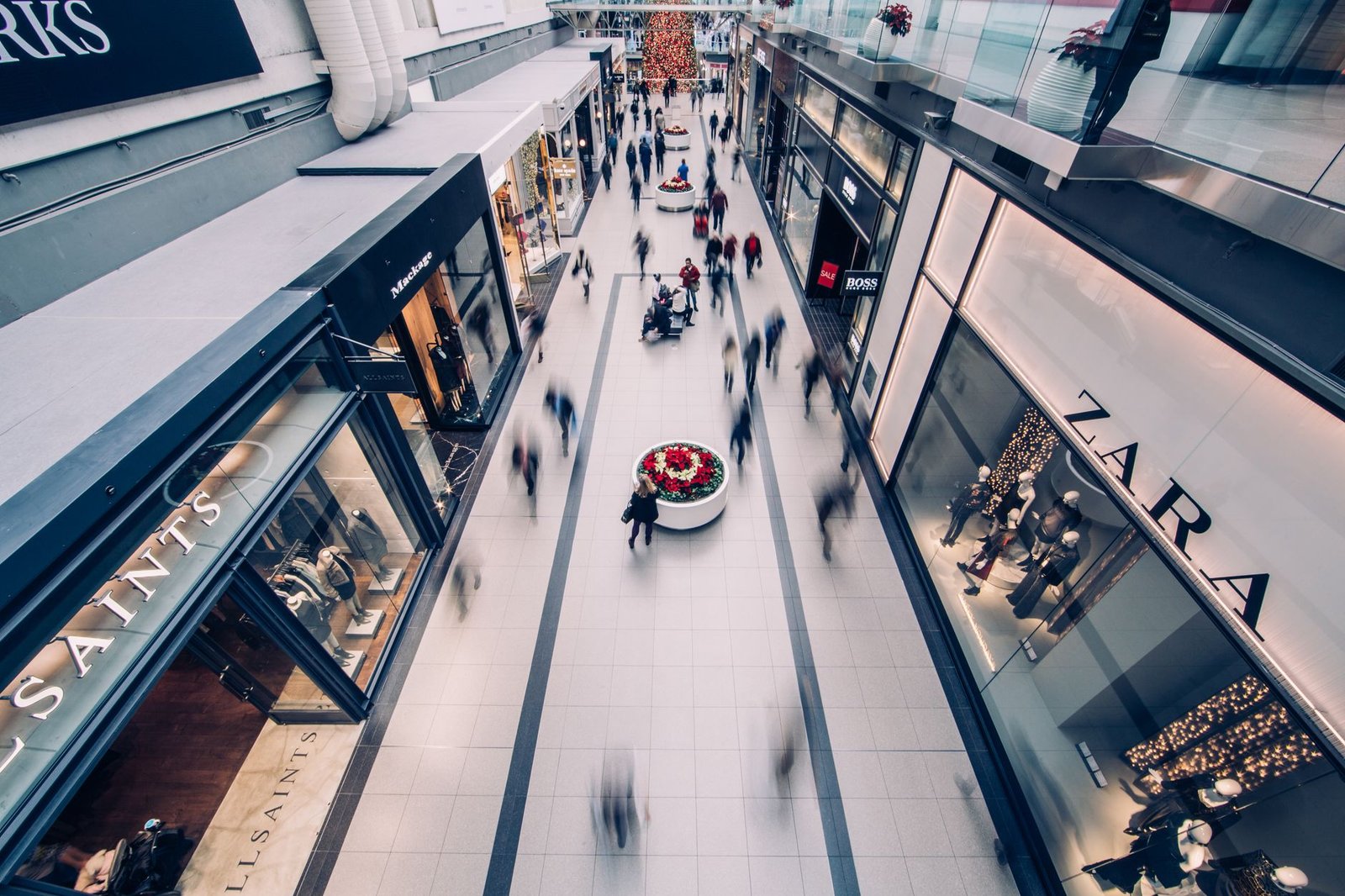
Walk through any major shopping district this September and you will notice something has changed. Stores no longer just sell things. They host football viewing parties, run coffee bars, stage climbing walls and build sets that look more like film studios than sales floors. This is experiential retail, and in 2026 it has moved from a marketing buzzword to the central strategy of the world’s biggest brands. Nordstrom’s World Cup pop-ups this summer, which blended football fashion with immersive fan zones across its flagship stores, were only the most visible example of a shift that is redrawing high streets from Toronto to Tokyo.
The logic is simple. Online shopping has won the battle for convenience. If you want the cheapest price and the fastest delivery, your phone beats any store. So physical retail has stopped competing on convenience and started competing on feeling. The question every retailer is now asking is not “how do we move product” but “why would anyone leave the house for this?” The answers are producing some of the most creative retail spaces in decades, and they are changing how a whole generation shops.
What Experiential Retail Actually Means in 2026
Experiential retail describes any physical shopping environment designed primarily to deliver an experience rather than a transaction. That can mean a pop-up shop that exists for three weeks, a permanent flagship with a restaurant and gallery inside, or a brand activation at a sporting event where nothing is sold at all. The common thread is that the visit itself is the product. Sales happen, but they are the result of the experience, not its purpose.
The concept is not new. Apple’s stores pioneered hands-on retail in the early 2000s, and department stores were built as theatrical spaces a century before that. What is new in 2026 is scale and sophistication. According to research firm Storefront, the global pop-up retail industry was valued at roughly 80 billion dollars in 2025, up from about 50 billion in 2019, and is projected to keep growing at double-digit rates through 2028. Landlords who once viewed short-term tenants as a stopgap now design entire floors of malls around rotating activations.
Technology has also matured. Augmented reality mirrors, RFID-tagged garments that trigger content when picked up, and app-linked loyalty systems mean a store can now know who walked in, what they touched, and what they bought online afterward. That closes the measurement gap that made experiential retail hard to justify to finance teams a decade ago. In 2026, a good pop-up is a data engine as much as a stage set.
Why Pop-Up Shops Are the Fastest-Growing Retail Format
Pop-up shops are the sharpest expression of experiential retail because they are built around scarcity. A store that will be gone in a month creates urgency that no permanent location can match. Brands from luxury houses to direct-to-consumer startups have discovered that a well-timed pop-up generates social media content, press coverage and foot traffic worth far more than its rental cost.
The numbers support the enthusiasm. A 2025 survey by Capital One Shopping found that 80 percent of retailers that ran a pop-up considered it successful, and 58 percent said they would do another. Shopify data from the same year showed that pop-ups run by online-native brands lifted their web sales in the surrounding region by an average of 37 percent during and after the event. The store is a billboard that also takes payment.
Costs have also come down. Flexible leasing platforms like Appear Here and Storefront let a brand book a space in London, New York or Paris for a week with the same ease as booking a hotel. Modular fixtures, prefab installations and rental furniture mean a convincing shop can be built in 48 hours. That has opened the format to independent labels, food brands and even musicians, who now treat pop-ups as a standard part of a launch campaign.
- Seasonal pop-ups tie into a moment, like a World Cup, a film release or a holiday, and run for two to six weeks.
- Test-and-learn pop-ups let online brands trial a city before signing a long lease.
- Collaboration pop-ups bring two brands together, such as a fashion label and a coffee roaster, to share audiences.
- Traveling pop-ups move a single installation across several cities, building anticipation as they go.
The World Cup Effect: Sport Meets Experiential Retail
The 2026 FIFA World Cup, hosted across the United States, Canada and Mexico, turned into the largest experiential retail moment in history. Nordstrom’s approach was typical of the new playbook. Instead of simply stocking jerseys, the retailer built immersive fan spaces in its flagship stores with match screenings, styling sessions that mixed football kits with streetwear, limited-edition collaborations and appearances by athletes. The stores became places to gather rather than places to buy.
The results were striking. Retail analysts at Placer.ai reported that foot traffic to major department stores in host cities rose between 18 and 25 percent during the tournament’s group stage compared to the same weeks in 2025. Sportswear giants Adidas, Nike and Puma all ran city-center activations, and adidas reported that its World Cup-related revenue exceeded 1.5 billion euros, its best tournament ever. Much of that lift came from experiences rather than shelves: kit customization stations, penalty shootout simulators and street football courts built inside stores.
The lesson extends beyond football. Any global event, from the Olympics to a Formula 1 weekend, now comes with a retail layer designed to convert fan emotion into loyalty. Brands that treated the World Cup as a merchandise opportunity did fine. Brands that treated it as a chance to host people did far better, and those relationships persist long after the trophy is lifted.
Retail Trends 2026: How Stores Are Being Rebuilt Around Experience
The pop-up boom is only one piece of a broader set of retail trends in 2026. Permanent stores are being rebuilt too, and the changes reveal where the industry believes the future lies. The first shift is toward hospitality. Cafes, wine bars and restaurants inside stores are no longer a novelty. Luxury groups including LVMH and Kering now operate dining venues in dozens of flagships, and mid-market brands are following. Time spent in store correlates directly with spending, and food is the most reliable way to extend a visit.
The second shift is toward community programming. Bookshops host reading groups, running stores lead weekly club runs, beauty retailers run masterclasses and outdoor brands organize hikes. Lululemon’s community events model, refined over more than a decade, is now widely copied because it turns customers into members. A McKinsey study published in 2025 found that shoppers who attended a brand event in the previous year spent 2.3 times more with that brand than those who had not.
The third shift is toward hybrid design. The line between physical and digital is disappearing inside the store. Shoppers scan a shelf to see reviews, try on virtually before trying on physically, and have items delivered home rather than carrying bags. Stores are being designed with fewer racks and more open space because inventory increasingly lives in warehouses. What remains on the floor is there to be touched, tested and photographed.
“The store is no longer the end of the funnel. It is the beginning of the relationship. When we redesign a space now, the first question is what people will do there for an hour, not what they will carry out in ten minutes,” says Melissa Gonzalez, founder of retail design studio The Lionesque Group and author of The Pop-Up Paradigm.
The Psychology Behind the Immersive Shopping Experience
Why does an immersive shopping experience work so well? Behavioral research offers several answers. The first is the experience economy thesis, articulated by economists Joseph Pine and James Gilmore in 1998 and now fully realized. As goods become commoditized, consumers place greater value on memorable experiences. A survey by Eventbrite found that 78 percent of millennials would rather spend money on an experience than a product, and Gen Z research from 2025 shows an even stronger preference.
The second is social currency. A visit to a well-designed pop-up produces content. Shoppers post photos, tag friends and share stories, giving the brand free reach and giving the visitor a form of status. Retail designers now build specifically for this, with lighting, backdrops and moments engineered to be photographed. The term “Instagrammable” has aged, but the principle has only intensified in the TikTok era, where a single viral store clip can draw queues around the block.
The third is what psychologists call the endowment effect. When people touch, wear or use a product, they begin to feel ownership of it and value it more highly. Experiential stores maximize touch. Running shoes are tested on treadmills, skincare is applied at a sink, headphones are worn in a quiet room. Each interaction raises the likelihood of purchase and, just as importantly, reduces returns, which have become a major cost for online retailers.
Global Hotspots for Experiential Retail
Experiential retail looks different in each market, and the variation is instructive. In Seoul, department stores like The Hyundai have turned entire floors into indoor parks and art galleries, drawing millions of visitors a year who may never buy anything but who return again and again. In Tokyo, brands like Muji and Ginza Six combine hotels, restaurants and retail in a single building so the store becomes a destination for a full day.
In Dubai and Riyadh, retail development is being planned around experience from the ground up, with mega-malls that include ski slopes, aquariums and immersive digital art. London’s Oxford Street and New York’s SoHo are now dominated by rotating pop-ups, with landlords reporting that short-term activations often generate higher rents per square foot than traditional leases. Canada, which the trend reports highlighted this year, has seen Toronto and Vancouver emerge as testing grounds for North American pop-ups because of their dense, walkable retail districts and diverse consumer base.
Emerging markets are moving quickly too. In Mumbai and Bengaluru, homegrown fashion and beauty brands that started on Instagram are opening pop-ups in malls as their first physical step, often selling out within days. Across Southeast Asia, shopping malls in Bangkok, Jakarta and Manila serve as air-conditioned community spaces, and experiential programming is a natural fit for cultures where the mall already functions as a public square.
How Shoppers Can Make the Most of the In-Store Experience
For consumers, the shift toward experiential retail is mostly good news. Stores are more interesting, more generous and more useful than they have been in years. But it pays to shop with awareness. Here is practical advice for getting the most from the new in-store experience without overspending.
- Follow brands on social media for pop-up alerts. Most activations are announced only days in advance and many offer exclusive products or early access to registered followers.
- Book appointments where available. Styling sessions, fittings and workshops are often free but fill quickly. A reserved slot means better service and shorter waits.
- Use the experience, then compare prices. There is nothing wrong with trying products in store and buying online later. Many retailers now match their own online prices in store if you ask.
- Watch for scarcity tactics. Limited editions and countdown clocks are designed to trigger impulse buying. Decide your budget before you walk in.
- Take advantage of free programming. Talks, classes, run clubs and tastings are genuinely valuable and cost nothing. They are the best part of the experiential model.
- Ask about returns. Pop-up purchases sometimes carry different return policies than the brand’s regular stores. Check before you pay.
What Comes Next for Experiential Retail
The next phase of experiential retail will be shaped by three forces. The first is artificial intelligence, which is already personalizing store visits in real time. Pilot programs at retailers including Zara and Sephora use app data to greet shoppers with tailored recommendations the moment they enter. Expect this to become standard within two years.
The second is sustainability pressure. Pop-ups have been criticized for waste, since temporary builds often end up in landfill. Leading agencies now design with rental fixtures, recyclable materials and reusable modular systems, and some cities are beginning to require waste plans for temporary retail permits. Brands that ignore this will face reputational risk with the very audience they are trying to reach.
The third is the blurring of retail with entertainment, hospitality and culture. The most ambitious projects of 2026 are not stores with experiences attached. They are experiences with stores attached, from immersive theater productions with merchandise to hotel lobbies that double as showrooms. Retail is becoming a layer that can be added to almost any physical space, and the winners will be those who understand that people come for the moment, not the merchandise.
Conclusion: The Store Is Back, but It Is Not the Same Store
Experiential retail has answered the question that haunted physical stores for two decades: why would anyone visit when they can order from bed? The answer is that people still crave places to gather, things to touch and moments worth sharing. The World Cup summer of 2026 proved that on a global scale, and the pop-up boom shows no sign of slowing.
Key takeaways for readers and retailers alike:
- Experiential retail is now the dominant strategy for physical stores, with the pop-up market alone worth around 80 billion dollars.
- Pop-up shops work because of scarcity, social currency and the ability to test markets cheaply, lifting online sales by more than a third in surrounding areas.
- Major events like the 2026 World Cup have become retail moments, rewarding brands that host fans rather than simply selling to them.
- Stores are being rebuilt around hospitality, community programming and hybrid digital design.
- Shoppers can enjoy the new experiences freely, but should set budgets and be alert to scarcity tactics.
Physical shopping did not die. It evolved into something closer to entertainment, and in 2026 the best stores in the world are places you would visit even if there were nothing to buy.