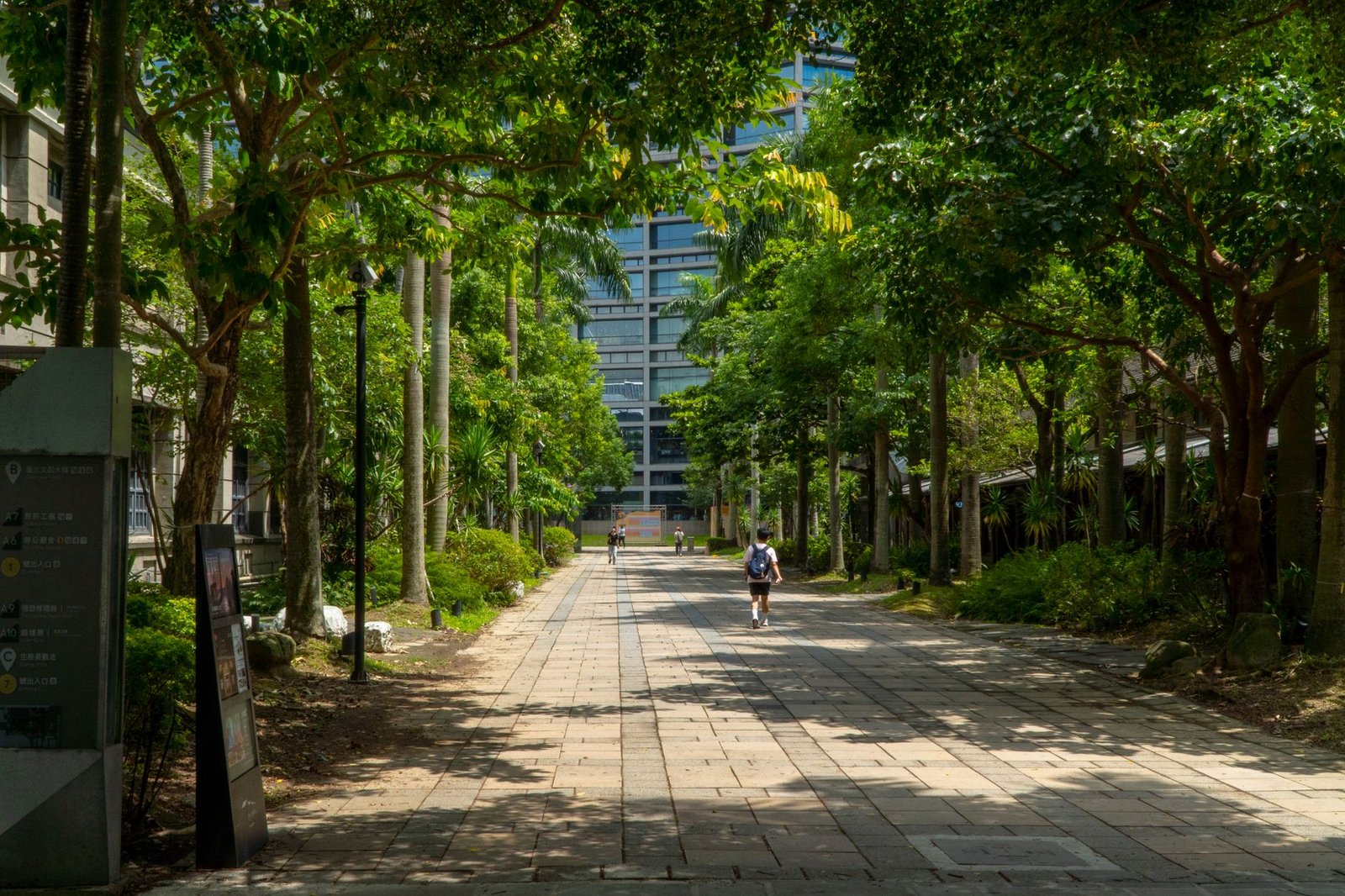
The green campus has moved from a marketing slogan to a measurable engineering project. In September 2026, the Green Campuses Conference brought together university leaders, facilities managers and technology firms to advance what organisers call the smart campus vision: institutions that use sensors, data and renewable energy to cut emissions while improving life for students. With more than 1,200 universities now signed up to the UN-backed Race to Zero and the higher education sector responsible for an estimated 2 to 3 percent of energy use in many developed countries, the green campus movement has become one of the most concrete examples of climate action happening at scale. This article looks at what a green campus actually means in 2026, which institutions are leading, the technologies driving change, and what students, staff and administrators can do right now.
What Is a Green Campus in 2026?
A decade ago, a green campus mostly meant recycling bins and a few solar panels on the library roof. Today the definition is far broader. The UI GreenMetric World University Rankings, which assessed 1,477 universities from 95 countries in its 2025 edition, scores institutions across six categories: setting and infrastructure, energy and climate change, waste, water, transportation, and education and research. A modern green campus is expected to have a public carbon reduction plan, a dated net-zero target, transparent annual reporting, and sustainability woven into the curriculum rather than confined to one environmental studies department.
The smart campus concept adds a technology layer on top. Universities are among the largest single-site landlords in most cities, often managing hundreds of buildings built across a century of different construction standards. That makes them ideal test beds for building management systems, digital twins and district energy networks. The Green Campuses Conference framed this as a shift from campuses that simply consume less to campuses that actively generate, store and balance their own energy while feeding data back into research and teaching.
The scale is significant. Universities in the United States alone spend roughly 14 billion dollars a year on energy, according to the Association for the Advancement of Sustainability in Higher Education (AASHE). In the United Kingdom, the higher education estate covers more than 27 million square metres. Every percentage point of efficiency gained on that footprint represents real emissions avoided and real money redirected toward teaching and research.
Green Campus Leaders: Who Is Setting the Standard?
Several institutions have become reference points for what is possible. Wageningen University in the Netherlands has topped the GreenMetric ranking for multiple years, running its campus largely on geothermal heating and cooling combined with rooftop solar, and integrating sustainability into every degree programme. In the United States, the University of California system reached carbon neutrality for its operations in 2025 through a combination of on-campus solar, a 60-megawatt off-site solar farm, biogas contracts and efficiency retrofits, and has since moved its target to eliminating fossil fuels from its buildings entirely by 2045.
In Asia, Nanyang Technological University in Singapore has built a campus with 57 buildings certified under the country’s Green Mark scheme, including its EcoCampus initiative which aimed for a 35 percent cut in energy, water and waste intensity and reported hitting the target ahead of schedule. Tongji University in Shanghai and the University of Hong Kong have similarly invested heavily in low-carbon building standards. In India, the Indian Institute of Technology Bombay and Delhi University have expanded rooftop solar programmes that now supply a meaningful share of daytime electricity, while Amrita Vishwa Vidyapeetham has become a regular fixture in international green campus rankings.
The lesson from these leaders is consistent. Institutions that made the fastest progress treated sustainability as an operational priority with dedicated budget and senior accountability, rather than a student society issue. They also published their data. The Times Higher Education Impact Rankings, which assess universities against the UN Sustainable Development Goals, saw a record 2,318 participating institutions in 2025, a sign that transparency has become a competitive advantage when recruiting students and faculty.
Smart Campus Technology Driving the Green Campus Shift
The technology stack behind a green campus has matured rapidly. The most impactful elements include:
- Building management systems and digital twins. Universities such as the University of Birmingham have partnered with Siemens to create a living digital twin of their estate, using thousands of Internet of Things sensors to monitor temperature, occupancy and air quality in real time. Early results showed energy savings of around 20 percent in instrumented buildings simply by heating and cooling rooms only when they are used.
- District heating and geothermal networks. Cornell University’s Earth Source Heat project is drilling boreholes nearly three kilometres deep to heat its Ithaca campus with geothermal energy, replacing a natural gas plant. Similar deep geothermal projects are under way at universities in Germany and the Netherlands.
- On-site renewables and storage. Solar canopies over car parks, battery storage paired with campus microgrids, and power purchase agreements are now standard. Arizona State University generates more than 50 megawatts from campus solar installations, among the largest of any university worldwide.
- Smart mobility. Electric campus shuttles, bike-share schemes and parking policies that discourage single-occupancy car commutes are cutting the transport emissions that often make up a third of a university’s footprint.
- AI-driven optimisation. Machine learning models trained on years of building data now predict demand and pre-condition spaces, shaving peak loads and reducing the need for expensive grid electricity during high-carbon hours.
What makes the smart campus different from a smart office block is the research feedback loop. Engineering students analyse the sensor data in coursework, computer science departments build the optimisation models, and business schools study the financing. The campus becomes both the laboratory and the case study, which is exactly what the 2026 Green Campuses Conference highlighted as the sector’s unique contribution to the wider climate transition.
Net Zero Campus Targets: Ambition Versus Reality
Ambition is not in short supply. A 2025 survey by the Environmental Association for Universities and Colleges found that more than 80 percent of UK institutions had a published net-zero target, with the majority aiming for 2030 for direct emissions and 2040 or 2050 for indirect emissions. Delivery is harder. The same survey found that fewer than half were on track, with the biggest obstacles being the capital cost of retrofitting old buildings, competing budget pressures and the difficulty of measuring supply chain emissions.
The distinction between emission scopes matters here. Scope 1 and 2 emissions from campus heating and purchased electricity are relatively easy to reduce through renewables and efficiency. Scope 3 emissions, which include staff and student travel, procurement, construction and investments, typically represent 70 to 80 percent of a university’s total footprint and are far harder to control. International student flights alone can dwarf all on-campus energy use for a globally recruiting university. Honest green campus strategies acknowledge this rather than claiming victory once the boiler house is decarbonised.
“The campuses that are genuinely making progress have stopped treating net zero as a communications goal and started treating it as an asset management problem. That means a building-by-building plan, a funded pipeline and a governor who loses sleep when the numbers slip.” – Dr. Helen Marsh, sustainability director and speaker at the 2026 Green Campuses Conference
Financing is improving. Green bonds issued by universities, including those from the University of Cambridge and several US state systems, have raised billions specifically for low-carbon buildings. Energy performance contracts, where a private firm funds retrofits and is repaid from the savings, are spreading. Governments in the European Union, Australia and parts of Asia have created dedicated grant schemes for public building decarbonisation that universities can access, and the UK’s Public Sector Decarbonisation Scheme has channelled more than 2 billion pounds into such projects since 2020.
Why Students Are Pushing the Green Campus Agenda
Student demand is one of the most powerful forces behind the movement. Surveys by the Students Organising for Sustainability network consistently find that around 80 percent of students want their institution to be doing more on sustainable development, and a growing share say a university’s environmental record influenced where they applied. In a competitive international recruitment market, a credible green campus story has become a genuine differentiator alongside league table position and employability statistics.
Student activism has also shifted institutional money. Fossil fuel divestment campaigns have persuaded more than 1,600 institutions worldwide, including many universities, to commit to divesting endowments worth over 40 trillion dollars combined, according to the Global Fossil Fuel Divestment Commitments Database. That pressure has extended to campus catering, with plant-forward menus, single-use plastic bans and food waste tracking now standard at many institutions. Cambridge University Catering Service famously removed beef and lamb from its menus in 2016 and reported a 33 percent cut in food-related emissions per kilogram, a model since copied widely.
The employment angle matters too. The International Energy Agency estimates that clean energy jobs surpassed fossil fuel jobs globally in 2023 and have kept growing, with skills shortages reported in areas such as heat pump installation, grid engineering and sustainability reporting. Students who learn on a campus that functions as a working low-carbon system graduate with practical exposure to exactly those fields.
How to Build a Green Campus: Practical Steps for Institutions
For administrators and facilities teams, the path from pledge to progress follows a recognisable pattern. Institutions that have succeeded tend to do the following:
- Measure everything first. Install sub-metering on every major building so you know where energy actually goes. Many universities discover that a handful of laboratories or data centres account for a disproportionate share of consumption.
- Prioritise efficiency before generation. Insulation, LED lighting, heat recovery and controls typically deliver the cheapest carbon savings. Solar looks impressive, but reducing demand first makes every later investment smaller and more effective.
- Set interim milestones. A 2040 target is meaningless without 2028 and 2032 checkpoints and a named executive accountable for them.
- Tackle laboratories. Research labs can use five to ten times the energy per square metre of a lecture theatre. Programmes such as My Green Lab certification and fume cupboard sash campaigns cut consumption dramatically at low cost.
- Use the campus as a classroom. Open real building data to students and staff for research projects. It improves outcomes and builds a culture of ownership.
- Report honestly, including Scope 3. Publish an annual report in a consistent format so progress and setbacks are visible to the whole community.
What Students and Staff Can Do Today
Individuals on campus have more influence than they often realise. Practical actions that make a measurable difference include:
- Join or start a sustainability committee within your department and ask for the building’s energy data. Facilities teams are usually glad to share it with people who will actually use it.
- Advocate for hybrid attendance at conferences and virtual options for external examiners to cut academic flight emissions, which are among the largest personal contributors.
- Choose active or shared transport for the commute. Transport emissions are often the fastest-growing part of a university’s footprint.
- Push for green procurement policies, from laboratory consumables to catering contracts, and ask suppliers for their own emissions data.
- Support campus biodiversity projects such as wildflower meadows, no-mow zones and rewilded grounds, which improve wellbeing as well as ecology.
- Enrol in sustainability modules or micro-credentials. Many universities now offer them free to all students regardless of degree subject.
Conclusion: The Green Campus as a Model for the World
The green campus is no longer a niche concern. In 2026 it sits at the intersection of climate policy, building technology, student expectations and institutional finance. The Green Campuses Conference underlined a simple truth: universities own the buildings, employ the researchers and teach the future workforce, which means they have both the responsibility and the tools to demonstrate what a working net-zero estate looks like. The leaders show that it can be done, while the sector-wide data shows how much remains to be delivered, particularly on Scope 3 emissions and older building stock.
Key takeaways:
- A credible green campus in 2026 requires a dated net-zero target, public annual data and sustainability embedded across the curriculum, not just in one department.
- Smart campus technologies such as digital twins, sensor networks and AI-driven building controls routinely deliver energy savings of 15 to 25 percent.
- Scope 3 emissions from travel, procurement and construction make up most of a university’s footprint and are the true test of any net-zero claim.
- Student demand, divestment pressure and the clean energy jobs boom mean that sustainability performance now directly affects recruitment and reputation.
- Efficiency first, honest measurement and named accountability separate the campuses that hit their targets from those that only announce them.
For a global audience watching how institutions turn climate pledges into practice, the university campus may be the most instructive laboratory of all.