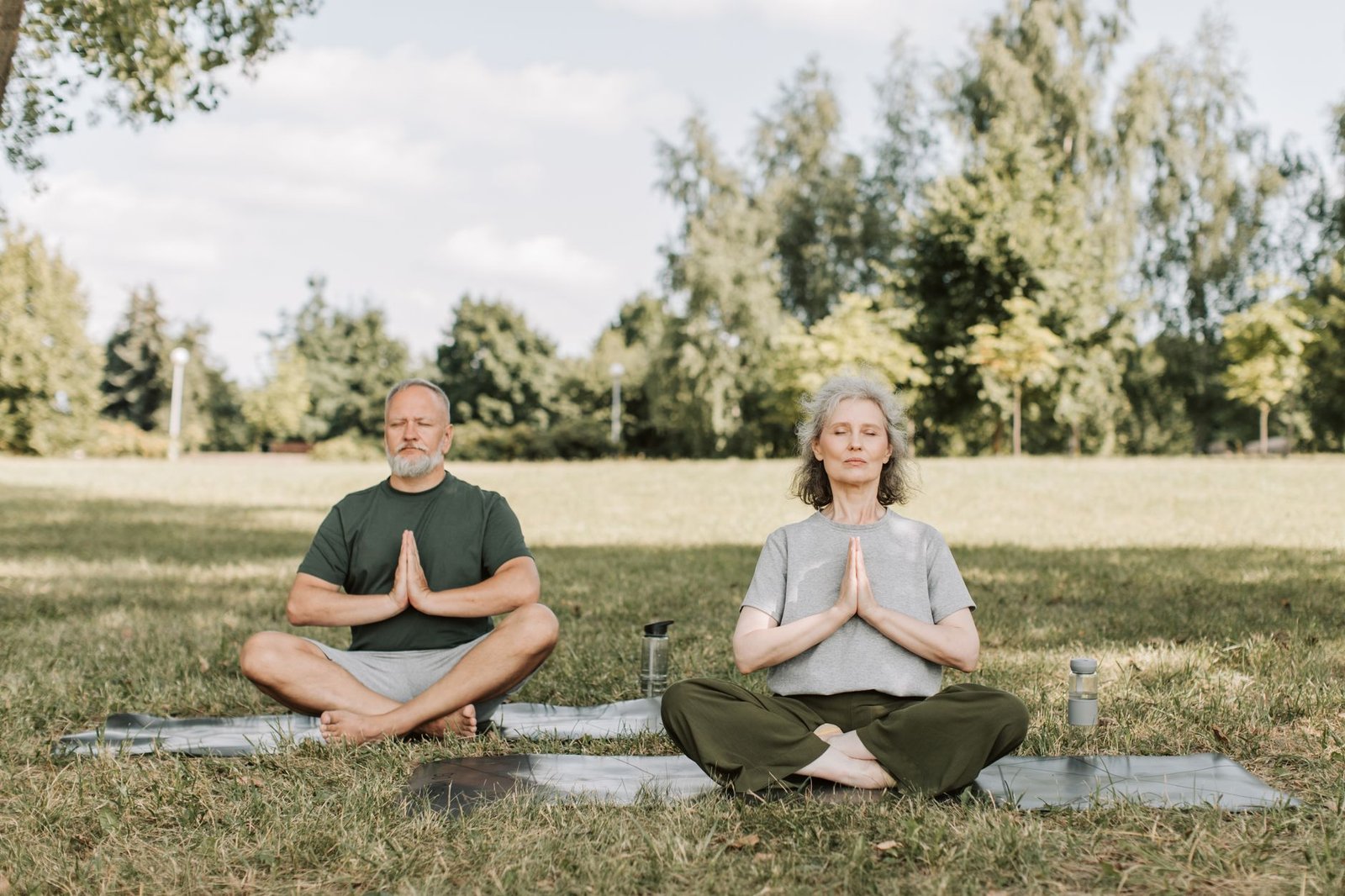
Youth mental health has become one of the defining public health challenges of this decade — and in 2026, the world is finally responding with something more ambitious than awareness campaigns. From classrooms in Helsinki to school districts in India and community programs across the United States, educators are now teaching mental fitness the way they teach math or physical education: as a trainable, measurable skill. The shift marks a profound change in how we think about youth mental health. Instead of waiting for young people to break down and then scrambling to treat them, schools, governments, and even corporations are investing in prevention — building psychological strength before crisis hits.
The numbers explain the urgency. The World Health Organization estimates that one in seven adolescents aged 10 to 19 experiences a mental disorder, and that suicide remains among the leading causes of death for young people aged 15 to 29. In the United States, CDC surveys have consistently shown that roughly 4 in 10 high school students report persistent feelings of sadness or hopelessness. Globally, anxiety and depression among youth surged during the pandemic years and never fully returned to baseline. Against that backdrop, 2026’s embrace of proactive mental fitness training may be the most consequential wellness trend of the year.
What Is Mental Fitness — and How Is It Different From Mental Health?
Mental health describes a state: how you are feeling and functioning right now. Mental fitness, by contrast, describes a capacity: the set of trainable skills — emotional regulation, attention control, cognitive flexibility, stress recovery, and self-awareness — that determine how well you handle whatever life throws at you. The analogy to physical fitness is deliberate. You don’t wait until you have heart disease to start exercising; you build cardiovascular strength in advance. Mental fitness applies the same logic to the mind.
This reframing matters enormously for young people, because it strips away stigma. A teenager may resist being told they need ‘mental health treatment,’ but almost every teenager understands the idea of training to get stronger. Programs built around mental fitness present skills like naming emotions, reframing negative thoughts, and practicing focused breathing as performance tools — the same ones elite athletes, musicians, and entrepreneurs use. In 2026, that framing has gone mainstream: companies like The Mind Company have rebranded around setting a ‘global standard for mental fitness in the digital age,’ and school curricula from Australia to the UAE now use the term explicitly.
Researchers point out that the skills underpinning mental fitness are well-evidenced even if the branding is new. Cognitive behavioral techniques, mindfulness-based stress reduction, and social-emotional learning (SEL) have decades of peer-reviewed support. A landmark meta-analysis of over 200 school-based SEL programs found an average 11-percentile-point gain in academic achievement alongside significant reductions in emotional distress — evidence that teaching the mind to manage itself pays dividends far beyond mood.
Why Youth Mental Health Reached a Tipping Point in 2026
Several forces converged to make this the year mental fitness entered the classroom at scale. The first is data. By 2026, longitudinal studies tracking the pandemic generation have made the costs of inaction impossible to ignore: higher dropout rates, rising emergency room visits for self-harm, and a youth loneliness epidemic that the WHO formally recognized as a global health threat. Policymakers who once treated student wellbeing as a soft issue now see it as an economic one — untreated mental health conditions are projected to cost the global economy up to $6 trillion annually by 2030, according to estimates from the Lancet Commission on global mental health.
The second force is the smartphone reckoning. Following the wave of research popularized by social psychologist Jonathan Haidt and others linking heavy social media use to adolescent anxiety, dozens of countries have introduced school phone bans or restrictions — Australia’s under-16 social media law, which took effect in late 2025, being the most sweeping. But educators quickly realized that removing phones is only half the equation. Students also need to be taught what to do with their attention, their boredom, and their emotions once the digital pacifier is gone. Mental fitness curricula fill exactly that gap.
The third force is the broader wellness economy. The Global Wellness Institute values the worldwide wellness market at more than $2 trillion, and 2026 trend reports consistently name prevention and personalization as its fastest-growing segments. Millennial and Gen Z parents — the first generations to grow up talking openly about therapy — are demanding that schools treat psychological skills as core education, not an optional extra. Where parents lead, education systems follow.
How Schools Are Teaching Mental Fitness in 2026
The most effective youth mental health programs in 2026 share a common architecture: short, frequent, skills-based practice embedded in the regular school day rather than one-off assemblies or awareness weeks. Here is what the leading models look like in practice:
- Daily micro-practices: Five-minute routines at the start of class — box breathing, gratitude journaling, or a quick ’emotional weather report’ — that normalize checking in with your own mind.
- Explicit skills instruction: Weekly lessons teaching students to identify cognitive distortions (‘everyone hates me’ vs. ‘two people were rude today’), regulate strong emotions, and recover from setbacks.
- Peer support structures: Trained student mentors and buddy systems, which research shows reach struggling teens who would never approach an adult first.
- Teacher training: Finland, Singapore, and several Indian states now require educators to complete mental health literacy modules, so the adults in the room can model the skills they teach.
- Screening and early referral: Brief, validated check-in tools that flag students who need more than universal programming — connecting them to counselors before problems escalate.
- Movement and sleep education: Because the evidence is unambiguous that exercise and adequate sleep are among the most powerful antidepressants available to adolescents.
India offers a striking case study in scale. The country’s National Education Policy pushed social-emotional learning into the mainstream curriculum, and initiatives tied to International Yoga Day 2026 — celebrated by institutions from schools to public-sector companies like RailTel — have woven breathwork and yoga into daily routines for millions of students. What was once dismissed as tradition is now being deployed, with scientific backing, as population-scale mental fitness infrastructure.
“We spent twenty years telling young people it’s okay to not be okay. That was necessary, but it was never sufficient. The next twenty years have to be about teaching them what to actually do — how to train attention, regulate emotion, and recover from failure. Mental fitness is not a luxury skill anymore. It is literacy for the digital age.” — Dr. Amara Chen, adolescent psychologist and school mental health researcher
The Youth Mental Health Skills Every Young Person Should Learn
Whether or not your local school has caught up with the trend, the core mental fitness skills are learnable at home. Experts consistently point to five foundational capacities that predict resilience in adolescents and young adults:
- Emotion labeling: Simply naming an emotion with precision (‘I’m anxious about being judged,’ not just ‘I feel bad’) measurably reduces its intensity — a phenomenon neuroscientists call ‘affect labeling.’
- Cognitive reframing: Learning to catch catastrophic thoughts and generate more accurate alternatives. This is the beating heart of cognitive behavioral therapy, and it can be taught to children as young as eight.
- Attention training: Regular mindfulness or focused-breathing practice — even 10 minutes a day — strengthens the brain’s ability to disengage from rumination and resist digital distraction.
- Stress recovery rituals: Physical exercise, time outdoors, and consistent sleep schedules are the non-negotiables. Studies show adolescents who get fewer than 8 hours of sleep report dramatically higher rates of hopelessness and risk behavior.
- Help-seeking fluency: Knowing when a problem exceeds self-management, and exactly whom to ask — a skill that quite literally saves lives.
For parents, the most practical starting point is modeling. Teenagers learn emotional regulation less from what adults say than from what adults do when the Wi-Fi drops, the traffic jams, or the bad news arrives. Narrating your own coping out loud — ‘I’m frustrated, so I’m going to take a walk before I answer that email’ — is one of the most underrated mental fitness interventions available, and it costs nothing.
Technology’s Double Role: Cause and Cure
It is one of 2026’s great ironies that the same devices implicated in the youth mental health crisis are now delivering part of the solution. Mental fitness apps aimed at teens have exploded, offering gamified CBT exercises, AI-guided journaling, and mood tracking. Digital mental health platforms attracted billions in venture funding through 2025, and school systems increasingly license clinically validated apps as an adjunct to in-person counseling — a pragmatic answer to the global shortage of child psychologists, which leaves some countries with fewer than one specialist per 100,000 children.
But experts urge caution. AI chatbots can offer psychoeducation and coping prompts, yet they are no substitute for human connection — and several high-profile incidents have pushed regulators to demand safety standards for AI companions marketed to minors. The emerging consensus in 2026 is a ‘stacked’ model: universal skills teaching for everyone, digital tools for reinforcement and access, and trained humans — counselors, teachers, parents, peers — as the irreplaceable core. Technology widens the front door; it should never be the whole house.
There is also a growing push for ‘digital fitness’ as a component of mental fitness itself: teaching young people to audit their screen time, curate their feeds, schedule offline hours, and recognize how algorithmic content affects their mood. Google Trends data for 2026 shows sustained global growth in searches for terms like ‘dopamine detox,’ ‘digital minimalism,’ and ‘mental fitness’ — evidence that young people themselves are actively looking for these skills, not merely having them imposed.
Conclusion: Prevention Is the New Cure for Youth Mental Health
The story of youth mental health in 2026 is ultimately a story about a change in posture — from reactive to proactive, from treatment to training, from stigma to skill-building. No single program will reverse a crisis years in the making, but the direction of travel is unmistakable: mental fitness is becoming a standard part of growing up, taught in classrooms, practiced at home, and reinforced by a wellness industry that has finally turned its attention to prevention.
Key takeaways:
- One in seven adolescents worldwide lives with a mental disorder — making youth mental health a top global priority in 2026.
- Mental fitness reframes psychological wellbeing as a trainable skill, reducing stigma and boosting engagement among young people.
- Evidence-based school programs combining daily micro-practices, explicit skills lessons, and early screening deliver both emotional and academic gains.
- Five core skills matter most: emotion labeling, cognitive reframing, attention training, stress recovery, and help-seeking fluency.
- Technology can extend access to support, but human connection — parents, teachers, counselors, and peers — remains the foundation of youth wellbeing.
The generation now in school will inherit an economy, a climate, and an information environment more volatile than any before it. Teaching them to strengthen their minds may prove to be the smartest investment the world makes this decade.