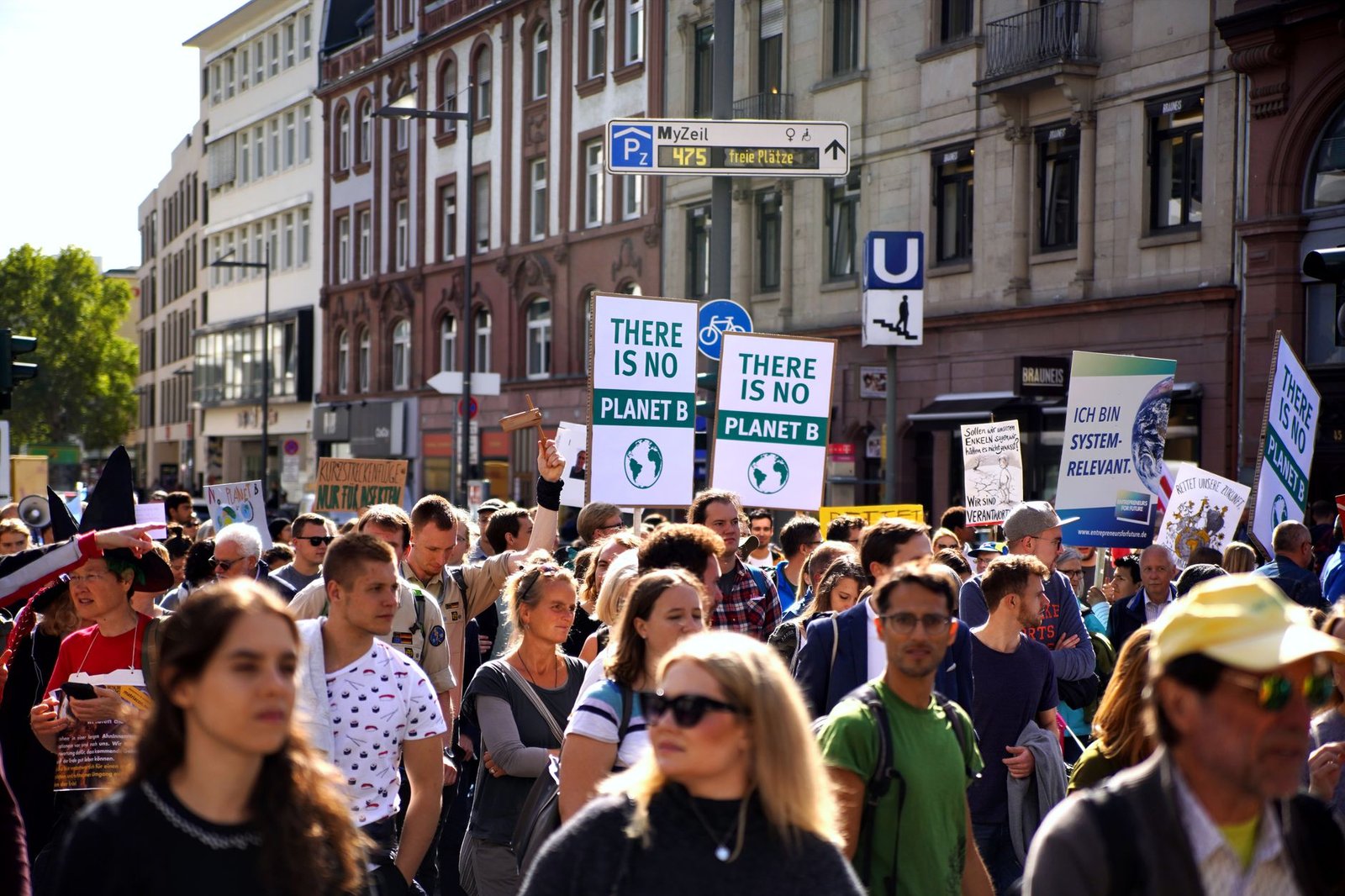
Sustainable fashion is no longer a fringe movement whispered about in organic cotton boutiques — it is now the defining force reshaping a $1.7 trillion global clothing industry. In 2026, consumers, brands, and governments are demanding transparency, circularity, and environmental accountability at a scale the fashion world has never seen before. From textile recycling breakthroughs to new legislation banning the destruction of unsold goods, the shift toward eco-friendly clothing is accelerating faster than even the most optimistic forecasters predicted just five years ago.
Yet the urgency behind sustainable fashion is grounded in sobering reality. The fashion industry remains responsible for roughly 8–10% of global carbon emissions, according to the United Nations Environment Programme — more than international flights and maritime shipping combined. It consumes an estimated 93 billion cubic meters of water annually and sends approximately 92 million tonnes of textile waste to landfills each year. As climate targets tighten and consumer awareness grows, the industry faces a reckoning: adapt or become one of the planet’s biggest liabilities.
Why Sustainable Fashion Matters More Than Ever in 2026
The environmental footprint of clothing production touches nearly every ecological system on Earth. Cotton farming accounts for 16% of global insecticide use and 7% of all herbicides, while polyester — the world’s most popular fabric — is derived from petroleum and sheds microplastics with every wash. A 2025 study published in Nature Sustainability found that microfiber pollution from synthetic textiles has increased by 40% over the past decade, contaminating oceans, freshwater systems, and even human bloodstreams.
In 2026, several converging forces have pushed sustainable fashion from aspiration to necessity. The European Union’s Strategy for Sustainable and Circular Textiles, which began phased implementation in 2025, now requires brands selling in the EU to meet minimum durability standards and provide digital product passports detailing a garment’s full supply chain. France has gone further, enforcing its anti-waste law that bans the destruction of unsold clothing and penalizes brands with fines of up to €15,000 per infraction. Meanwhile, New York State’s Fashion Sustainability and Social Accountability Act continues to gain legislative momentum, signaling that regulation is becoming a global trend rather than a European exception.
Consumer demand is equally powerful. A 2026 McKinsey survey found that 67% of global consumers now consider sustainability when making a fashion purchase, up from 52% in 2022. Among Gen Z shoppers — the cohort born between 1997 and 2012 — that figure climbs to 82%. These consumers are not just choosing greener options; they are actively boycotting brands perceived as greenwashing, creating reputational risks that boardrooms can no longer ignore.
The Rise of Eco-Friendly Clothing Materials
One of the most exciting frontiers in sustainable fashion is material innovation. Traditional fabrics like conventional cotton and polyester carry heavy environmental costs, but a new generation of textiles is offering credible alternatives. Organic cotton, grown without synthetic pesticides or fertilizers, now accounts for roughly 1.4% of global cotton production — a small share, but one that has doubled since 2020, according to Textile Exchange’s 2026 Preferred Fiber and Materials Report.
Beyond organic cotton, breakthrough materials are capturing industry attention. Mycelium-based leather, grown from mushroom root structures, has moved from laboratory curiosity to commercial viability. Brands like Stella McCartney and Hermès have integrated mycelium leather into mainline products, and the material uses 99% less water than traditional cattle leather while generating a fraction of the carbon emissions. Similarly, algae-based fabrics developed by startups like Algaeing and Vollebak are proving that clothing can be produced using regenerative biological processes that actually sequester carbon during manufacturing.
Recycled materials are also scaling rapidly. As of 2026, recycled polyester — made primarily from post-consumer PET bottles — represents approximately 15% of global polyester production, up from 8% in 2021. Companies like Patagonia, Adidas, and The North Face have committed to using 100% recycled or renewable materials across their product lines by 2030. Meanwhile, chemical recycling technologies from firms like Renewcell and Circ can now break down blended fabrics into their component fibers, solving what was long considered the industry’s most intractable waste problem: the 60% of textiles made from mixed-fiber compositions that were previously unrecyclable.
Sustainable Fashion Brands Leading the Change
The sustainable fashion movement is being driven by both legacy brands undergoing transformation and purpose-built companies that embedded sustainability into their DNA from day one. Patagonia remains the gold standard, with its Earth Fund ownership structure ensuring that 100% of profits go toward fighting climate change. In 2026, the brand reported that 87% of its materials come from recycled or regeneratively farmed sources, and its Worn Wear program has repaired or resold over 500,000 garments since its inception.
European brands are particularly aggressive in their sustainability commitments. Swedish giant H&M Group, long criticized for its fast-fashion volume, has invested over €500 million in its Looop garment-to-garment recycling system and aims to become fully circular by 2030. Eileen Fisher’s Renew program takes back used garments from customers, resells those in good condition, and upcycles damaged pieces into entirely new designs — diverting an estimated 1.5 million garments from landfills since the program launched. Smaller labels like Reformation, Veja, and Pangaia have demonstrated that transparency and eco-friendly practices can coexist with profitability and cultural relevance.
“The fashion industry is at an inflection point. Sustainability is no longer a marketing strategy — it is a business imperative. Brands that fail to decarbonize their supply chains and embrace circularity will face regulatory penalties, consumer abandonment, and investor scrutiny within this decade.” — François-Henri Pinault, Chairman and CEO of Kering Group
Luxury houses are also accelerating their timelines. LVMH’s LIFE 360 program has committed to sourcing 100% of strategic raw materials from certified sustainable sources by 2030, while Gucci achieved carbon neutrality across its full supply chain in 2023 and is now working toward net-negative emissions. These moves matter because luxury brands set aspirational standards that cascade through the entire industry.
Slow Fashion vs. Fast Fashion: The Battle for Your Wardrobe
At the heart of sustainable fashion lies a fundamental conflict with the fast-fashion business model. Companies like Shein, Temu, and ultra-fast retailers produce thousands of new styles weekly, selling garments at prices so low that consumers treat clothing as disposable. Shein alone was estimated to introduce over 6,000 new items per day in 2025, with average prices under $10. This model is ecologically devastating — a 2026 report by the Changing Markets Foundation found that fast-fashion garments are worn an average of just seven times before being discarded.
The slow fashion movement offers a deliberate counterpoint. Slow fashion emphasizes quality over quantity, timeless design over trend-chasing, and transparent supply chains over opaque mass production. In practical terms, this means buying fewer, better-made garments; choosing natural or recycled fabrics; supporting local and ethical manufacturers; and maintaining and repairing clothing rather than replacing it. The cost-per-wear equation actually favors slow fashion — a $120 jacket worn 200 times costs $0.60 per wear, while a $15 fast-fashion jacket worn 7 times costs $2.14 per wear.
Governments are beginning to tip the scales. France’s extended producer responsibility (EPR) scheme, operational since 2023, levies fees on fashion brands based on the environmental impact of their products, with higher charges for non-recyclable or short-lifespan garments. The UK is considering similar legislation following its Environmental Audit Committee’s recommendation that a penny-per-garment levy be imposed to fund textile recycling infrastructure. These regulatory interventions aim to make the true environmental cost of fast fashion visible in its price — something the market alone has failed to do.
How to Build a Sustainable Fashion Wardrobe
Transitioning to a sustainable wardrobe does not require discarding everything you own and starting over — in fact, that approach would be deeply unsustainable. Instead, the most impactful strategy is incremental: wear what you already have for longer, buy less, and make more intentional choices when you do purchase something new. Here are practical steps anyone can take immediately.
- Audit your existing wardrobe: Identify what you actually wear versus what sits untouched. Most people wear only 20% of their clothing 80% of the time. Donate, resell, or swap the rest rather than discarding it.
- Adopt the 30-wear rule: Before purchasing any garment, ask yourself if you will wear it at least 30 times. If the answer is no, walk away. This single habit eliminates most impulse purchases.
- Choose natural and certified fabrics: Look for GOTS (Global Organic Textile Standard), OEKO-TEX, or Bluesign certifications. These ensure the fabric meets rigorous environmental and social standards throughout production.
- Buy secondhand first: Platforms like ThredUp, Vinted, Depop, and The RealReal have made secondhand shopping convenient and destigmatized. The global secondhand clothing market is projected to reach $350 billion by 2028, according to ThredUp’s 2026 Resale Report.
- Learn basic repairs: Sewing a button, patching a hole, or fixing a hem extends a garment’s life significantly. Many cities now offer repair cafés and workshops, and YouTube tutorials make self-taught mending accessible to anyone.
- Wash clothes less and smarter: Washing at 30°C instead of 40°C reduces energy consumption by 40%. Using a Guppyfriend bag or Cora Ball captures microfibers before they enter waterways. Air-drying instead of tumble-drying cuts a garment’s carbon footprint by 67%.
- Support transparent brands: Use tools like Good On You, Fashion Revolution’s Fashion Transparency Index, or the Higg Index to evaluate brands’ environmental and labor practices before purchasing.
Building an eco-friendly wardrobe is also a financial win. The average American household spends approximately $1,800 per year on clothing, according to the Bureau of Labor Statistics. By buying fewer, higher-quality pieces and supplementing with secondhand finds, households can cut that figure by 30–50% while significantly reducing their environmental footprint.
The Role of Technology in Sustainable Fashion
Technology is enabling sustainability solutions that were impossible even a few years ago. Blockchain-based supply chain tracking allows consumers to scan a QR code on a garment and trace its journey from raw fiber to finished product, verifying claims about organic sourcing, fair labor, and carbon footprint. Brands like Chloé and Pangaia have implemented these digital product passports ahead of the EU’s mandatory 2027 deadline.
Artificial intelligence is transforming demand forecasting, helping brands produce closer to actual demand rather than overproducing and disposing of excess inventory. Overproduction is one of fashion’s dirtiest secrets — an estimated 30% of garments produced globally are never sold, according to the Ellen MacArthur Foundation. AI-driven analytics can reduce overproduction by up to 50%, according to a 2025 Boston Consulting Group study, translating directly into fewer wasted resources and lower emissions.
3D virtual sampling and digital fashion are eliminating the need for physical prototypes. Traditionally, developing a single garment required 15–20 physical samples before final production. Digital design tools from companies like CLO3D and Browzwear allow designers to create, fit, and approve garments entirely in virtual environments, saving fabric, water, energy, and shipping emissions associated with physical sample production. Major retailers including Tommy Hilfiger and PVH Corp have transitioned to 100% 3D design for initial sampling stages.
Circular Fashion: Closing the Loop on Textile Waste
The concept of circular fashion — designing garments to be reused, repaired, remanufactured, and ultimately recycled back into raw materials — represents the industry’s most transformative shift. Unlike the traditional linear model of take-make-dispose, a circular system keeps materials in use for as long as possible and recovers them at end of life. The Ellen MacArthur Foundation estimates that transitioning to a circular textile economy could generate $560 billion in value annually while dramatically reducing environmental impact.
Rental and subscription models are a key pillar of circularity. Companies like Rent the Runway, HURR, and Rotaro allow consumers to access high-quality fashion without permanent ownership, maximizing the number of times each garment is worn. The global fashion rental market was valued at $2.3 billion in 2025 and is projected to grow at 10.5% annually through 2030. Take-back programs, where brands accept used garments and channel them into resale, donation, or recycling streams, are another mechanism gaining traction. In 2026, over 180 major brands operate formal take-back schemes, compared to fewer than 50 in 2020.
Textile-to-textile recycling is the ultimate goal, and it is finally becoming viable at scale. Renewcell’s Circulose® dissolves old cotton garments into a pulp that becomes new viscose fiber, while Infinited Fiber Company’s Infinnaâ„¢ technology transforms cotton-rich textile waste into new cellulose carbamate fiber. These innovations could fundamentally reshape the economics of fashion by creating a closed loop where yesterday’s discarded clothing becomes tomorrow’s raw material, reducing dependence on virgin resources and landfill disposal simultaneously.
Conclusion: Your Wardrobe Choices Shape the Planet
Sustainable fashion in 2026 is not about perfection — it is about progress. Every garment worn longer, every secondhand purchase, and every brand held accountable contributes to an industry-wide transformation that is already underway. The convergence of consumer demand, regulatory pressure, and technological innovation is creating conditions for genuine systemic change in how clothing is designed, produced, consumed, and disposed of.
The most sustainable garment is the one you already own. But when you do buy something new, you have more power than ever to make choices that align your wardrobe with your values. By supporting ethical fashion brands, demanding transparency, embracing secondhand and circular options, and simply buying less, you become part of a movement that is proving fashion can be beautiful without being destructive.
- Key Takeaway 1: The fashion industry generates 8–10% of global carbon emissions, but regulatory action in the EU, France, and beyond is forcing rapid decarbonization.
- Key Takeaway 2: Material innovation — from mycelium leather to chemical textile recycling — is making eco-friendly clothing commercially viable at scale.
- Key Takeaway 3: Building a sustainable wardrobe starts with buying less, choosing quality, shopping secondhand, and supporting transparent brands.
- Key Takeaway 4: Circular fashion models including rental, resale, and textile-to-textile recycling are closing the loop on the industry’s massive waste problem.