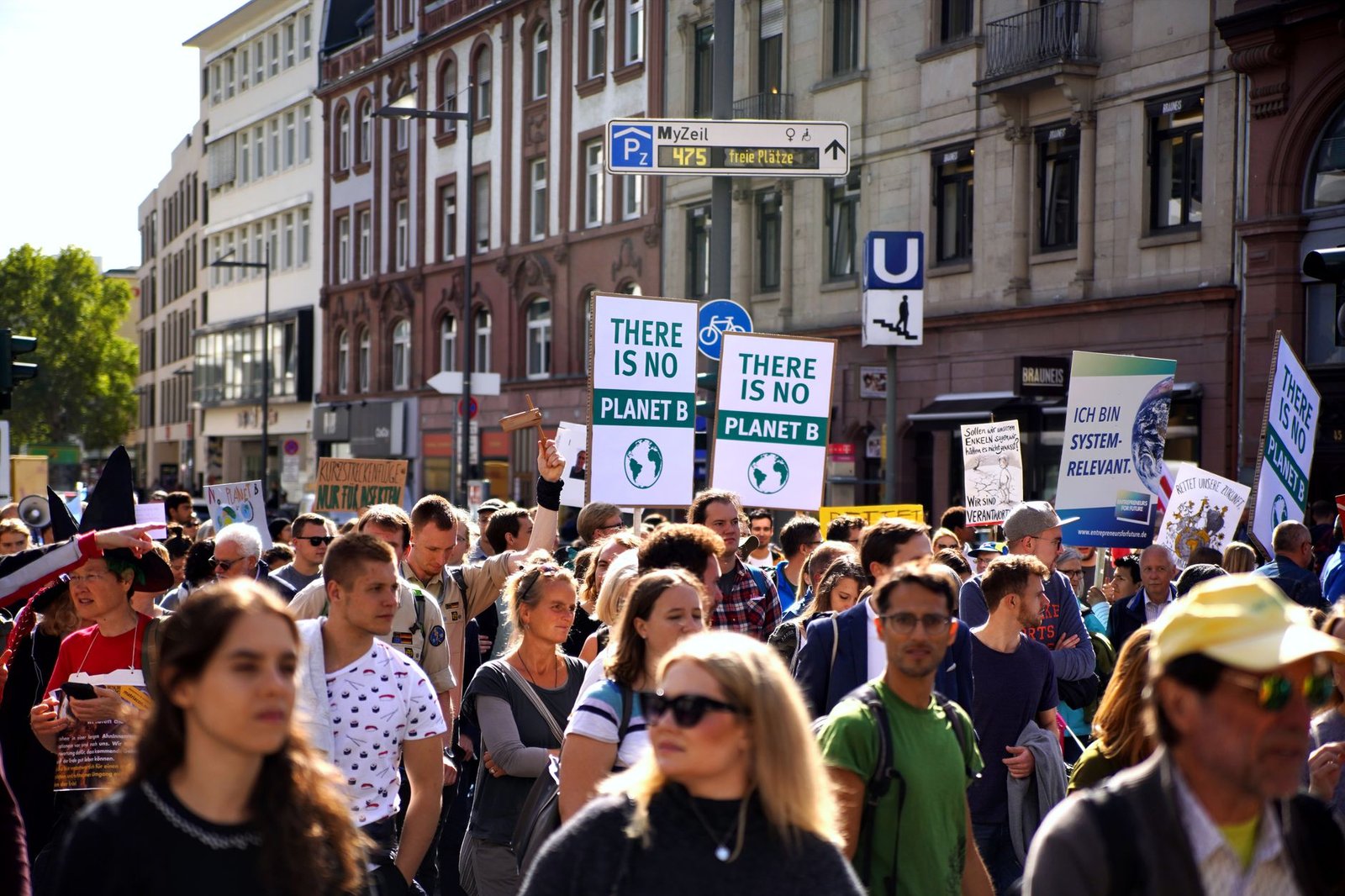
Sustainability education has quietly become one of the most consequential reforms in global schooling. In 2026, the International Conference on Sustainability Education (ICSE) in New Delhi brought together educators, policymakers and youth leaders under the theme of moving from classrooms to climate action, while a parallel wave of green campus conferences pushed universities to treat their own buildings, energy systems and food supply chains as living laboratories. The message from both gatherings was the same: teaching young people about the planet is no longer a nice-to-have elective. It is core infrastructure for the economy, public health and democratic resilience. This article explains what sustainability education actually means, why it is accelerating now, where it is working, and what parents, teachers and students can do today.
What Sustainability Education Means in 2026
Sustainability education, often called education for sustainable development (ESD) in policy circles, goes far beyond a chapter on recycling. UNESCO defines it as learning that equips people with the knowledge, skills, values and attitudes needed to make informed decisions about environmental integrity, economic viability and social justice. In practice that means climate science in physics and geography, resource economics in business studies, ethics and equity in the humanities, and hands-on projects that connect all of it to a student’s own community.
The concept has deep roots. The United Nations declared a Decade of Education for Sustainable Development from 2005 to 2014, and Sustainable Development Goal target 4.7, adopted in 2015, commits every country to ensuring learners acquire the knowledge needed to promote sustainable lifestyles by 2030. What changed in the 2020s is urgency. Record heat, floods and wildfires have turned an abstract policy target into a daily lived experience for students in Lagos, Lahore, Los Angeles and Lisbon alike.
The 2026 ICSE gathering, organised annually by the Mobius Foundation since 2019, framed the shift as a pipeline problem. Countries can build solar farms and electric buses, but without a generation that understands systems thinking, circular design and climate risk, the green transition stalls for lack of skilled workers and informed citizens.
The Data Behind the Sustainability Education Push
The numbers explain why governments are moving. A 2021 UNESCO review of national curricula in 100 countries found that nearly half made no reference to climate change at all, and only a fifth mentioned biodiversity. A related UNESCO survey of roughly 17,000 young people found that 70 percent could not explain climate change beyond its basic principles, yet more than 90 percent said they wanted to learn more. Teachers reported a similar gap: fewer than one in four felt confident explaining climate action in class.
The employment side of the ledger is equally striking. The International Labour Organization estimates that the transition to a green economy could create around 24 million new jobs globally by 2030, while LinkedIn’s Global Green Skills Report has repeatedly shown demand for green skills growing faster than the supply of workers who have them. In 2024 the report found job postings requiring at least one green skill were rising roughly twice as fast as the share of workers listing such skills.
Youth mental health data adds a third dimension. A landmark 2021 study in The Lancet Planetary Health surveyed 10,000 young people across ten countries and found that 59 percent were very or extremely worried about climate change, and 45 percent said those feelings affected daily life. Educators at ICSE 2026 argued that structured sustainability education is one of the few interventions that reliably converts climate anxiety into agency, because it pairs difficult facts with concrete things students can do.
How Countries Are Rewriting the Curriculum
Italy became the first country to make climate change education compulsory in 2019, requiring roughly 33 hours per year in every public school. New Jersey followed in 2020 as the first US state to embed climate change across all K-12 subject standards, and California passed legislation in 2023 requiring climate change instruction in science courses. India’s National Education Policy 2020 lists environmental awareness and sustainable living among its core curricular goals, which is one reason the ICSE series has found such a receptive home in New Delhi.
At the multilateral level, UNESCO launched the Greening Education Partnership at the 2022 Transforming Education Summit. Its targets are specific: by 2030, at least 50 percent of schools in every country should be green-accredited, climate education should appear in national curricula everywhere, and teacher training should include sustainability content. By 2025 more than 80 countries and over 1,000 organisations had joined, and the 2026 progress discussions focused on turning pledges into measurable classroom hours.
- Whole-school approach: The most effective programmes align what is taught with how the school operates, from energy use to canteen sourcing.
- Cross-curricular integration: Rather than a standalone subject, sustainability is woven into maths, language, art and economics.
- Local relevance: A coastal school studies sea level rise; a farming community studies soil health and water tables.
- Action projects: Students audit waste, design campaigns or partner with municipalities, producing real outcomes rather than worksheets.
The Green Campus Movement in Higher Education
Universities are where sustainability education meets sustainability practice most visibly. The 2026 green campuses conference advanced the idea of the smart campus, where sensors, digital twins and AI-driven energy management turn the institution itself into a teaching tool. Students in engineering, data science and public policy work on live problems such as cutting building emissions, optimising microgrids or redesigning procurement, and the results show up on the university’s own balance sheet.
Rankings have accelerated the trend. The UI GreenMetric World University Ranking, run from Indonesia since 2010, now assesses well over 1,000 institutions on infrastructure, energy, waste, water, transport and education. Universities such as Wageningen in the Netherlands and Nottingham Trent in the UK have used top placements as a recruiting tool, and the Times Higher Education Impact Rankings, which measure performance against the Sustainable Development Goals, attracted more than 2,000 participating universities by 2025.
The business case is straightforward. Campus energy is often the second-largest operating cost after salaries, so efficiency projects pay for themselves within a few years. Meanwhile surveys of prospective students consistently show that a majority consider an institution’s environmental commitments when choosing where to apply. A green campus is therefore simultaneously a cost-saving programme, a marketing asset and a curriculum.
Sustainability Education and the Skills Employers Want
Employers at ICSE 2026 were unusually direct about what they need. Renewable energy developers want technicians and project managers who understand grid integration. Banks want analysts who can read a climate risk disclosure under frameworks such as the International Sustainability Standards Board’s IFRS S2. Manufacturers want designers fluent in circular economy principles and lifecycle assessment. Even hospitality and retail firms increasingly ask for staff who can manage waste, energy and supply chain reporting.
This has pushed sustainability education upward into vocational training, apprenticeships and corporate learning. The European Union’s Green Deal skills agenda, India’s Skill Council for Green Jobs, and community college programmes across the United States now offer accredited pathways in solar installation, energy auditing, sustainable agriculture and environmental compliance. The World Economic Forum’s Future of Jobs Report 2025 listed environmental stewardship among the fastest-growing skill demands through 2030.
“We used to treat sustainability as a values conversation. In 2026 it is a competence conversation. A graduate who cannot read an emissions inventory or model a heat risk is missing a basic professional literacy, in the same way a graduate twenty years ago could not afford to be unable to use a spreadsheet.” — Dr. Ananya Rao, education policy researcher and ICSE 2026 panelist
Barriers Slowing Climate Education Worldwide
Progress is uneven, and the obstacles are real. The first is teacher capacity. Most working teachers trained before climate science entered the curriculum, and in many countries professional development budgets have shrunk. UNESCO’s own surveys suggest that a majority of teachers want to teach sustainability but feel underprepared, and without training the subject is often reduced to a single assembly or awareness day.
The second barrier is politics. Climate education has become contested in parts of the United States, Brazil and elsewhere, with some jurisdictions restricting how the topic is discussed. Governor Gavin Newsom’s 2026 announcement that California would join the International Union for Conservation of Nature, framed explicitly as a counterweight to federal rollbacks, illustrates how subnational governments and school districts are increasingly carrying the agenda when national leadership retreats.
The third is inequality. Well-funded schools can install solar panels, build gardens and hire sustainability coordinators. Under-resourced schools in the same city may lack reliable electricity or clean water, let alone a smart campus. Global South delegates at ICSE 2026 stressed that sustainability education must address adaptation, food security and disaster preparedness, not just emissions targets designed for wealthy economies.
Practical Steps for Parents, Teachers and Students
You do not need a national mandate to start. The programmes that scale best usually began with one motivated teacher or parent group. Here is what works, drawn from case studies presented at the 2026 conferences.
- Run a school audit. Have students measure energy, water and waste for one month. The data becomes a maths project, a science lesson and a persuasive writing task, and it usually finds savings worth 10 to 20 percent of utility costs.
- Adopt a whole-school policy. Ask governors or the parent-teacher association to commit to one measurable goal per year, such as eliminating single-use plastics or sourcing 30 percent of canteen food locally.
- Use free curriculum resources. UNESCO, NASA Climate Kids, the UN CC:Learn platform and national bodies such as Eco-Schools (active in more than 100 countries) publish lesson plans aligned to existing standards.
- Connect to local government. Many cities have climate action plans with youth engagement targets. Schools that partner with them gain access to data, speakers and sometimes funding.
- Prioritise teacher training. A single day of professional development on climate basics measurably increases how often and how confidently teachers cover the topic.
- Frame it around solutions. Research on climate anxiety shows that pairing every problem with an action students can take improves both wellbeing and learning outcomes.
For university students, the highest-leverage move is to join or start a campus sustainability committee, request that the institution publish its emissions data, and push for sustainability content in your own degree programme. Employers increasingly ask about this experience at interview.
Conclusion: Sustainability Education Is Climate Infrastructure
The 2026 conferences in New Delhi and on green campuses around the world confirmed a shift that has been building for a decade. Sustainability education is no longer an awareness campaign bolted onto the timetable. It is being treated as essential infrastructure for the green economy, for public health and for functioning democracies that must make hard collective decisions about energy, land and water. The evidence is clear that students want it, employers need it, and the countries embedding it fastest are building a durable advantage.
Key takeaways:
- Nearly half of national curricula reviewed by UNESCO still lack any reference to climate change, but the Greening Education Partnership targets universal coverage by 2030.
- Green skills demand is outpacing supply, making sustainability education an economic priority as much as an environmental one.
- Green campuses turn universities into living labs, cutting costs while training the next workforce.
- Teacher training, political resistance and funding gaps remain the biggest barriers.
- Individual schools, parents and students can start with audits, whole-school policies and free global resources today.