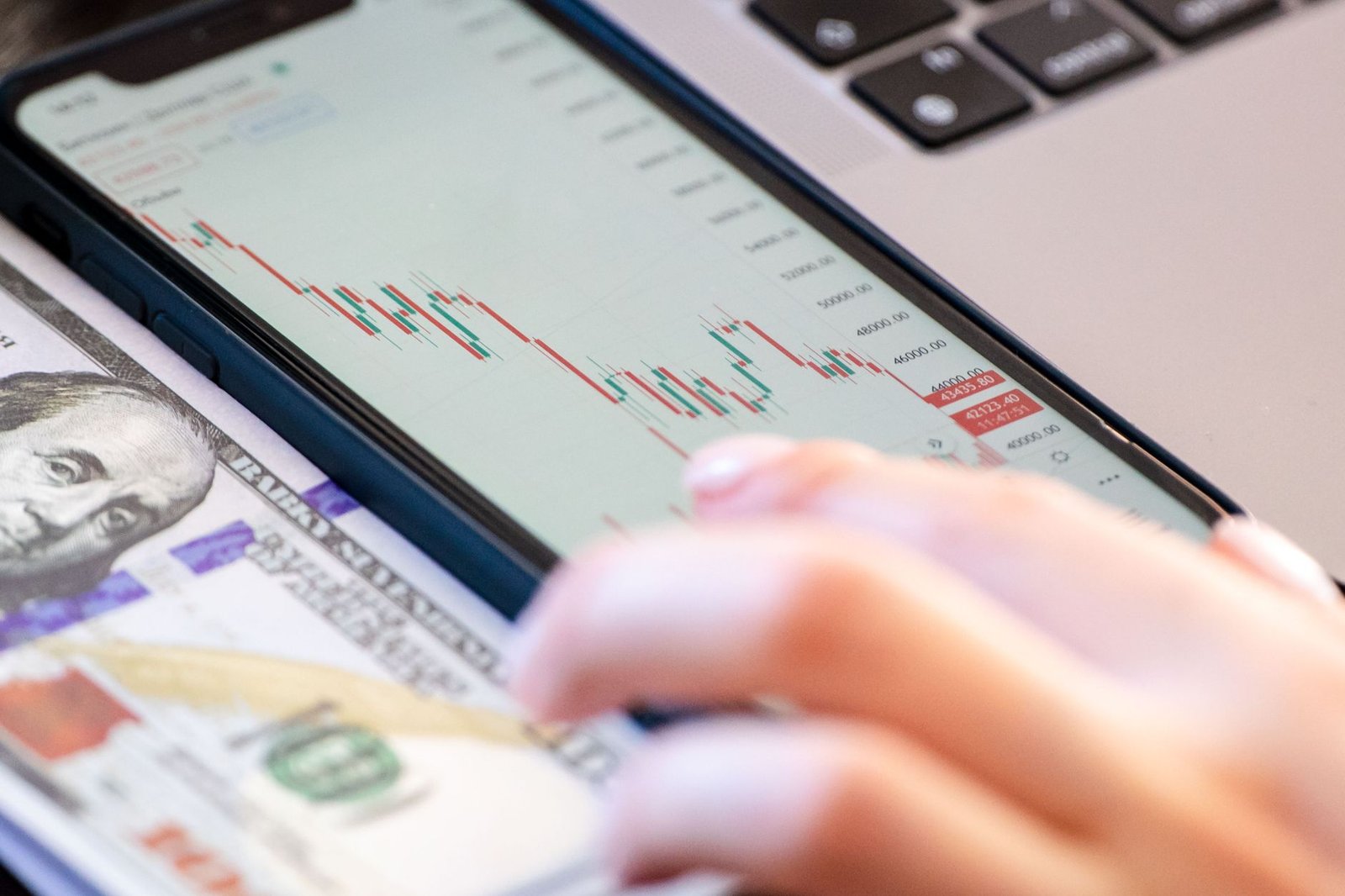
When the most powerful banker in the world says he wouldn’t buy stocks or Treasurys at today’s prices, investors everywhere sit up and listen. The latest Jamie Dimon market warning has done exactly that. Speaking as U.S. equity indexes hover near record highs in August 2026, the JPMorgan Chase CEO cautioned that markets are dangerously underestimating a convergence of risks — from sticky inflation and swollen government deficits to geopolitical flashpoints that remain unresolved. His message was blunt: at current valuations, the reward on offer simply does not compensate for the risk being taken. For a global audience of investors riding one of the longest bull runs in modern history, the question is unavoidable — is this just another cautious banker talking his book, or a signal worth acting on?
In this article, we unpack the Jamie Dimon market warning in full: what exactly he said, why he said it now, the data behind his concerns, how his past predictions have fared, and — most importantly — what practical steps everyday investors can take without panicking out of the market.
What the Jamie Dimon Market Warning Actually Says
Dimon’s comments were striking for their specificity. He didn’t merely say markets looked “frothy” — a word executives use when they want to sound prudent without committing to anything. He said he personally would not be a buyer of either U.S. stocks or Treasurys at prevailing prices. That is a rare double-barreled statement, because stocks and government bonds usually hedge one another. When the CEO of America’s largest bank, with roughly $4.5 trillion in assets under its roof, says both halves of the classic portfolio look unattractive, he is describing a market with no obvious safe harbor.
His reasoning rests on three pillars. First, equity valuations: the S&P 500 has been trading at a forward price-to-earnings ratio north of 22, well above its 30-year average of roughly 17, with the top ten stocks accounting for close to 40% of the index’s total value — a concentration level not seen since the dot-com era. Second, bond markets: with U.S. federal debt surpassing $38 trillion and annual interest costs now exceeding $1 trillion — more than the entire defense budget — Dimon argues that long-term Treasury yields do not adequately price the risk of persistent deficits and the possibility that inflation proves stickier than the market assumes. Third, geopolitics: unresolved tensions in the Middle East, an ongoing U.S.-China trade standoff, and fragile energy markets all sit uneasily beside equity indexes at all-time highs.
Why Is the Stock Market at Record Highs Despite the Risks?
Here lies the paradox that makes the Jamie Dimon market warning so uncomfortable. If the risks are so visible, why do markets keep climbing? Several forces explain the disconnect.
The first is the artificial intelligence investment supercycle. Capital expenditure on AI infrastructure — data centers, chips, and power — is running at an estimated $400 billion annually across the major technology companies, and that spending flows directly into corporate revenues across the supply chain. Earnings for the largest firms have, so far, largely justified enthusiasm, even as skeptics warn of bubble dynamics. The second force is liquidity: with central banks having eased policy through late 2025 and household cash still abundant, money continues to seek returns, and equities remain the default destination. The third is simple momentum and the fear of missing out — retail participation in markets from the United States to South Korea and India is at record levels, and dip-buying has been rewarded so consistently since 2023 that it has become reflexive behavior.
Dimon’s point is not that these forces are imaginary. It is that they are fully priced in, while the risks are not. Markets, he argues, are behaving as if soft landings, benign inflation, and geopolitical calm are guaranteed outcomes rather than hopeful scenarios. History suggests that when everyone is positioned for the best case, even a modestly bad outcome can trigger outsized corrections.
Jamie Dimon’s Track Record: Prophet or Perma-Bear?
Critics are quick to note that Dimon has issued warnings before that did not immediately materialize. In 2022 he famously predicted an economic “hurricane”; the U.S. economy instead delivered resilient growth and a booming stock market. In 2024 he flagged that he was “cautiously pessimistic,” yet indexes marched higher. So should investors discount this latest alarm?
Not so fast. Dimon’s defenders point out that his role is risk management, not market timing — JPMorgan famously navigated the 2008 global financial crisis better than any major U.S. bank precisely because Dimon fortified its balance sheet while competitors chased returns. His warnings are better understood as probability statements than predictions. And notably, some of his past concerns did play out, just later than expected: inflation proved stickier than consensus assumed through 2023-2024, long-term bond yields rose substantially as deficit fears grew, and regional bank stress in 2023 validated his warnings about rate risk in the banking system.
“The market is priced for perfection, and the world is not perfect. Asset prices today assume inflation comes down gently, deficits get resolved, and geopolitics stays contained. I would not bet my balance sheet on all three of those happening at once.” — a sentiment Dimon has repeated in various forms across recent earnings calls and interviews.
There is also an important distinction between “markets will crash tomorrow” and “expected returns from here are poor.” Research from Vanguard and other asset managers consistently shows that starting valuations are the single best predictor of ten-year returns. Buying the S&P 500 at a forward P/E above 22 has historically been followed by annualized real returns in the low single digits over the following decade — not necessarily a crash, but a long stretch of disappointment. That is arguably the true substance of the Jamie Dimon market warning.
The Risks Markets May Be Underestimating in 2026
Dimon’s caution becomes more concrete when you enumerate the specific risks he believes are underpriced:
- Fiscal dominance: With U.S. debt-to-GDP above 120% and interest costs compounding, bond investors may eventually demand a higher term premium, pushing long-term yields up and pressuring equity valuations that depend on low discount rates.
- Sticky inflation: Tariffs, deglobalization, defense spending, and the enormous energy demands of AI data centers are structurally inflationary forces. If inflation settles at 3% rather than 2%, the rate cuts markets expect may never fully arrive.
- Geopolitical escalation: Unresolved conflict risk in the Middle East threatens oil supply routes; a disruption pushing crude sustainably above $110 per barrel would ripple through every economy simultaneously.
- AI capex disappointment: If the return on hundreds of billions in AI infrastructure spending underwhelms, the concentrated leadership of equity markets becomes a concentrated vulnerability.
- Private credit opacity: The private credit market has swelled past $2 trillion globally, and Dimon has repeatedly warned that risk migrating outside regulated banks is harder to see — and harder to rescue — when stress arrives.
None of these risks is secret. What matters is that markets are assigning them near-zero probability, as evidenced by volatility indexes trading near multi-year lows and credit spreads at their tightest levels since 2007 — a comparison that should give any student of financial history pause.
Should You Buy Stocks Now? What Investors Can Actually Do
The worst possible reaction to the Jamie Dimon market warning is panic selling. The second-worst is ignoring it entirely. Market history is emphatic on one point: even accurate warnings tend to arrive early, and investors who fled to cash in 1996 — when Alan Greenspan warned of “irrational exuberance” — missed three more years of enormous gains before the dot-com bust. The rational response is not to predict the turn but to prepare for it. Here are practical steps to take today:
- Rebalance rather than retreat. If the equity rally has pushed your stock allocation from 60% to 75% of your portfolio, sell back to target. This mechanically takes profit from winners without requiring you to time the market.
- Check your concentration. If you own an S&P 500 index fund, nearly 40% of your money sits in ten companies. Consider complementing it with equal-weight funds, international equities (European and Asian markets trade at meaningful valuation discounts), or small-cap value exposure.
- Build a genuine cash buffer. With money market funds still yielding around 4%, holding six to twelve months of expenses in cash is no longer dead weight — it is paid optionality that lets you buy future dips instead of selling into them.
- Ladder your bond exposure. Dimon’s skepticism about long-dated Treasurys does not apply equally to short-term bills, which carry minimal duration risk. A ladder of short and intermediate maturities reduces exposure to a deficit-driven spike in long yields.
- Keep contributing, automatically. Dollar-cost averaging through retirement accounts remains the most reliable wealth-building tool ever devised precisely because it removes emotion — and it performs best when volatility eventually arrives.
- Stress-test your own finances. Ask the Dimon question personally: if stocks fell 30% and stayed down for two years, would your plans survive? If the answer is no, your allocation is wrong regardless of what the market does next.
What This Means for Global Investors
Although Dimon’s comments target U.S. assets, the implications are global. American equities now represent roughly 65% of world market capitalization, so a U.S. correction would ripple through every pension fund, sovereign wealth fund, and retail portfolio on the planet. Yet the warning also contains an implicit opportunity: if U.S. stocks and bonds are both expensive, relative value lies elsewhere. Japanese equities continue to benefit from corporate governance reform, South Korea’s market is being re-rated, Indian equities offer structural growth despite rich valuations, and European stocks trade at a near-record discount to their American peers. Gold, which has surged past $3,500 an ounce as central banks diversify reserves, has already become the hedge of choice for institutions that share Dimon’s fiscal concerns.
Currency dynamics matter too. Dimon’s worries about U.S. deficits align with a broader story of gradual dollar diversification — including China’s renewed push to internationalize the yuan. Global investors holding unhedged U.S. assets are therefore carrying two stacked risks: valuation risk and currency risk. Modest diversification across geographies and currencies addresses both.
Conclusion: Heed the Warning, Skip the Panic
The Jamie Dimon market warning is not a prophecy of imminent collapse — it is a sober assessment that today’s prices leave no margin for error in a world full of potential errors. Markets at record highs, volatility at lows, credit spreads at their tightest since 2007, and unresolved geopolitical risks make a combustible combination, even if nobody can say when or whether a spark arrives.
Key takeaways: valuations are historically stretched, and stretched valuations reliably predict poor long-run returns even without a crash; both stocks and long-term bonds look expensive simultaneously, which weakens the traditional 60/40 safety net; the rational response is rebalancing, diversification, and cash buffers — not market timing; global and non-dollar assets offer relative value for those willing to look beyond Wall Street; and finally, the investors who fare best after warnings like this are those who prepared while it was calm. Jamie Dimon has been early before. But in markets, as in banking, being early and prepared beats being late and leveraged — every single time.