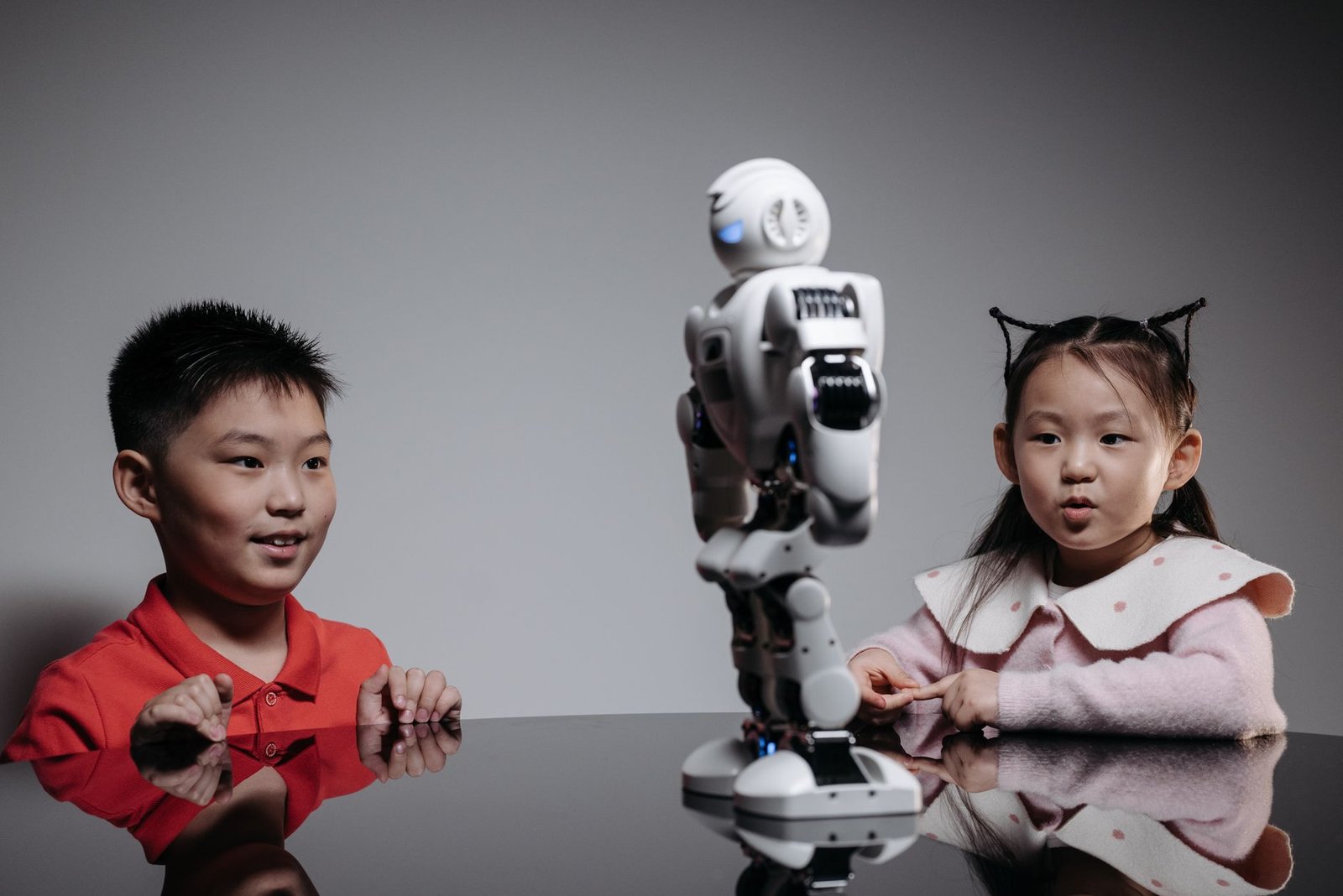
The humanoid robot boom is officially here — at least if you measure it in dollars, demo videos, and breathless keynote presentations. In 2026, billions in venture capital are pouring into startups building human-shaped machines designed to walk our warehouses, staff our factories, and eventually fold our laundry. Figure AI has been valued at a staggering $39 billion. Tesla’s Optimus program is central to Elon Musk’s claim that the company could someday be worth more than the next five largest firms combined. China has declared embodied AI a national priority, and Goldman Sachs projects the humanoid robot market could reach $38 billion by 2035. Yet here is the paradox defining this moment: some of Silicon Valley’s most respected investors — the very people who funded the last three technology revolutions — are quietly, and sometimes loudly, refusing to buy in. Understanding why reveals more about the future of robotics than any polished demo ever could.
The Humanoid Robot Boom by the Numbers
The scale of investment flowing into humanoid robotics in 2026 is genuinely historic. According to PitchBook data, funding for humanoid robot startups surpassed $7.2 billion globally in 2024, and 2025 blew past that figure as mega-rounds became routine. Figure AI raised over $1 billion in a single round backed by investors including Microsoft, Nvidia, and Jeff Bezos. Norway’s 1X Technologies, Apptronik in Austin, and China’s Unitree and UBTech have all raised massive war chests. Morgan Stanley analysts estimate the total addressable market for humanoids could hit $5 trillion by 2050 if the machines achieve general-purpose utility.
China’s role in the humanoid robot boom deserves special attention. Beijing has designated embodied AI a strategic frontier industry, and Chinese manufacturers now produce humanoid units at price points — some under $16,000 — that undercut Western competitors by a factor of five or more. Unitree’s G1 robot went viral for its agility, and Chinese state-backed funds have committed the equivalent of tens of billions of dollars to robotics supply chains. This mirrors the playbook China used to dominate solar panels, batteries, and electric vehicles: subsidize aggressively, scale manufacturing, and drive global prices down.
The demand-side story is also real. The world faces a genuine labor crunch. The U.S. manufacturing sector alone is projected to have 1.9 million unfilled jobs by 2033, according to Deloitte and the Manufacturing Institute. Japan’s working-age population is shrinking by hundreds of thousands of people per year. Aging societies, reshoring initiatives, and rising wages create an enormous theoretical market for machines that can do physical work. Nobody disputes the problem. The dispute is whether human-shaped robots are the solution.
Why Top Investors Aren’t Buying the Humanoid Hype
Talk to skeptical venture capitalists and a consistent set of objections emerges. The first is the gap between demos and deployments. Nearly every humanoid company has released stunning videos — robots doing backflips, sorting packages, making coffee. But investors who have done diligence report that many demos are teleoperated (controlled remotely by humans), heavily edited, or performed in carefully staged environments. When Figure or Agility Robotics deploy units in real warehouses, the numbers are typically in the dozens, not thousands, and the tasks are narrow: moving totes, shuttling bins. That is a far cry from the general-purpose laborer being priced into these valuations.
The second objection is economic. A humanoid robot today costs anywhere from $16,000 to well over $150,000 to build, requires ongoing maintenance, and works slower than a human at most tasks. Reliability is the killer metric: a warehouse robot that works 95% of the time sounds impressive until you realize the 5% failure rate means constant human supervision, which erases the labor savings. Veteran robotics investors point out that the most successful robots in history — industrial arms, robot vacuums, warehouse AGVs — succeeded precisely because they abandoned the human form and optimized for one job.
“The humanoid form factor is a solution in search of a problem. If you want to move boxes, wheels beat legs every time. We’re seeing valuations priced for a general-purpose labor revolution, while the actual deployments are pilot programs doing tasks a $50,000 conveyor system could handle. That gap has to close, or these valuations will.” — a partner at a leading Silicon Valley deep-tech venture firm
The third objection is about AI itself. The bull case for humanoids rests on the assumption that foundation models will soon give robots human-level dexterity and reasoning in the physical world. But physical intelligence has proven far harder than language. Large language models learned from the entire internet; there is no equivalent internet-scale dataset of physical manipulation. Companies like Physical Intelligence and Skild AI are working on “robot foundation models,” but even optimistic researchers admit that reliable, generalizable manipulation — handling a soft bag, an oddly shaped part, a slippery dish — remains years away. Skeptics argue investors are underwriting a research problem as if it were an engineering problem.
The Bull Case: What Humanoid Robot Believers See in 2026
To be fair to the optimists, their argument is not irrational. The case for the humanoid robot boom rests on three pillars. First, the world is built for humans — doorways, stairs, tools, vehicles — so a machine with a human form can theoretically slot into existing infrastructure without expensive retrofitting. Second, the cost curves are collapsing: actuators, sensors, and batteries have fallen in price by 50-80% over the past decade, largely thanks to the EV and smartphone supply chains. Third, AI progress, while uneven, has repeatedly embarrassed skeptics. The same experts who said language models would plateau in 2023 were proven wrong; humanoid bulls believe embodied AI will follow a similar trajectory.
There are also real commercial signals. BMW has run Figure robots in its Spartanburg plant. Mercedes-Benz partnered with Apptronik. Amazon has tested Agility’s Digit in its facilities. GXO Logistics, one of the world’s largest contract logistics firms, has active humanoid pilots. These are not gullible customers — they are sophisticated industrial operators spending real money to find out whether the technology works. Even a modest success in structured environments like warehouses could support a multi-billion-dollar industry, even if the household robot dream remains distant.
- Labor economics: At $25-30 per hour fully loaded for warehouse labor in the U.S., a $100,000 robot that works two shifts pays for itself in under two years — if it actually works reliably.
- Geopolitics: Western governments increasingly view robotics as strategic, meaning defense and reshoring subsidies could de-risk the sector the way they did for chips.
- Data flywheels: Every deployed robot generates training data, potentially creating compounding advantages for early leaders.
Lessons From Past Tech Bubbles: A Pattern Investors Recognize
Part of what makes veteran investors cautious is that they have seen this movie before. The pattern is familiar: a genuine technological breakthrough, a wave of capital chasing it, valuations that assume the end-state arrives on schedule, and then a brutal shakeout when timelines slip. Autonomous vehicles are the cautionary tale most often cited. In 2016, the industry consensus held that robotaxis would be ubiquitous by 2021. Tens of billions of dollars later, Waymo is finally succeeding — but a decade late, and after companies like Argo AI ($3.6 billion raised) shut down entirely. The technology was real; the timeline was fantasy.
The dot-com era offers the same lesson. The internet did transform commerce, exactly as the 1999 bulls predicted — but Pets.com still went to zero, because being right about the trend is not the same as being right about the company or the decade. Applied to humanoids, this suggests a likely outcome: the humanoid robot boom may produce one or two generational companies, dozens of spectacular failures, and a market that develops meaningfully slower than today’s valuations imply. Morgan Stanley’s own research notes that even in its bull case, fewer than 1 million humanoids will be deployed globally by 2030 — a rounding error against a global workforce of 3.5 billion people.
History also suggests where the durable value tends to accumulate: in the picks and shovels. During the AV winter, lidar makers, simulation software firms, and chip suppliers often fared better than the robotaxi companies themselves. In the humanoid race, that points to actuator manufacturers, tactile sensor makers, foundation-model labs, and — inevitably — Nvidia, whose Isaac robotics platform and GR00T models position it to profit regardless of which robot maker wins.
What the Humanoid Robot Boom Means for Businesses and Investors
For business leaders, the practical takeaway is to engage without overcommitting. Companies with large-scale repetitive physical operations — logistics, automotive, electronics assembly — should be running structured pilots now, not because humanoids are ready, but because the organizational learning curve is long and the labor shortage is not going away. The right questions to ask vendors are unglamorous: What is the mean time between failures? What percentage of demo tasks are autonomous versus teleoperated? What does total cost of ownership look like over five years, including maintenance and downtime?
For retail investors, direct exposure is limited — most humanoid startups are private — but indirect exposure is everywhere. Tesla, Nvidia, and several Asian component makers embed significant humanoid optionality in their valuations, which cuts both ways: you may already own more robot risk than you realize. Anyone tempted by robotics-themed ETFs should look at the actual holdings, which are often dominated by established industrial automation firms like Fanuc, Keyence, and ABB — solid businesses, but not pure plays on the humanoid thesis.
- If you run operations: Pilot narrow, structured tasks first (tote moving, machine tending); measure reliability obsessively; negotiate robotics-as-a-service pricing to shift risk to vendors.
- If you invest: Distinguish between the trend (physical AI, likely real) and the timeline (highly uncertain); favor companies with revenue from deployed units over demo-stage valuations.
- If you’re planning a career: Robotics engineering, machine learning for control systems, and robot fleet operations are among the fastest-growing job categories of the decade — the boom creates jobs long before it replaces them.
Conclusion: A Real Revolution on an Unreal Timeline
The humanoid robot boom of 2026 is neither pure hype nor imminent revolution — it is a genuine technological frontier wrapped in a speculative financial bubble, which is exactly how most transformative technologies arrive. The skeptical investors sitting out today’s mega-rounds are not betting against robots; they are betting against timelines and valuations that assume a research breakthrough on a venture fund’s schedule. The believers, meanwhile, are betting that whoever cracks physical intelligence first will own one of the largest markets in human history — a prize worth overpaying for.
Key takeaways: the money is real, with over $7 billion flowing into humanoid startups and China industrializing the sector at shocking price points; the deployments are still tiny, measured in dozens of robots doing narrow tasks under supervision; the core bottleneck is not hardware but reliable physical intelligence, which remains an unsolved research problem; and history suggests a shakeout is likely before the technology matures, with the durable profits accruing to component makers, AI platforms, and the one or two companies that survive the winter. Watch the boring metrics — robots deployed, hours worked autonomously, cost per task — and ignore the backflips. When the demo videos stop and the invoices start, you will know the humanoid robot boom has become a humanoid robot business.