The environmental movement was once the most formidable citizen force on the planet. It banned DDT, healed the ozone layer, pushed 195 nations to sign the Paris Agreement, and put millions of young people on the streets in 2019. Yet in 2026, the movement finds itself in an uncomfortable position: climate records keep shattering, but green political influence is visibly shrinking. From Washington to Brussels to Westminster, environmental regulations are being rolled back, green parties are bleeding votes, and polling shows climate slipping down the list of voter priorities even as ocean temperatures hit unprecedented highs. This week, commentators across major outlets are asking the same blunt question: how did the environmental movement lose its power — and can it get it back?
The answer matters far beyond activist circles. The decisions made this decade will lock in the climate trajectory for centuries. Understanding why the environmental movement stalled — and what a smarter, more durable version looks like — is one of the most consequential strategic questions of 2026.
The Rise and Stall of the Environmental Movement
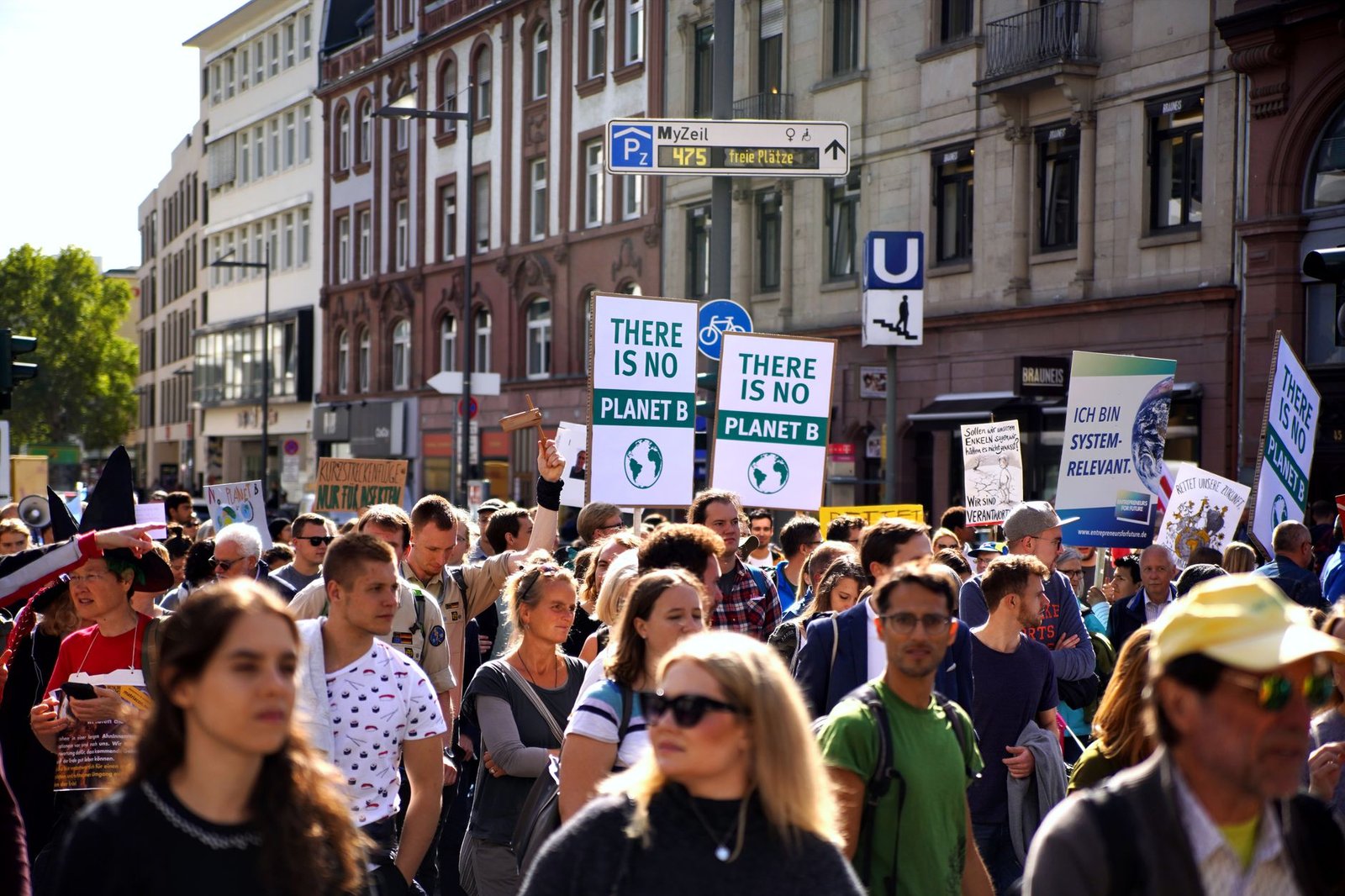
To understand the decline, you have to appreciate the peak. Between 2018 and 2021, climate activism achieved cultural saturation few social movements ever reach. The September 2019 global climate strikes drew an estimated 6 to 7.6 million participants across 185 countries — among the largest coordinated protests in human history. Greta Thunberg addressed the UN, ‘flight shame’ entered the vocabulary, and by 2021 net-zero pledges covered roughly 90% of global GDP. Green parties surged in the 2019 European Parliament elections, winning 74 seats.
Then the momentum broke. The 2024 European elections saw Green parties lose roughly a quarter of those seats. In the United States, 2025 brought sweeping rollbacks of clean energy incentives and the second withdrawal from the Paris Agreement. In the UK, net-zero policies became a partisan wedge issue rather than a shared national project — which is precisely why green groups are now publicly pressing regional leaders like Greater Manchester’s Andy Burnham to speak up on the climate crisis rather than stay quiet through a hostile political moment.
The paradox is stark: public concern hasn’t collapsed. Surveys such as the UN Development Programme’s Peoples’ Climate Vote, covering more than 75,000 people in 77 countries, found that around 80% of respondents want stronger climate action from their governments. The movement lost power not because people stopped caring, but because caring stopped translating into political consequence.
Five Reasons Climate Activism Lost Ground
Analysts of social movements point to a convergence of forces, some self-inflicted and some structural. The most important ones are worth naming clearly:
- Cost-of-living backlash. Post-pandemic inflation and the 2022 energy shock reframed green policy as a pocketbook threat. Farmers’ protests across Europe in 2024, fuelled partly by anger at environmental rules, showed how quickly climate regulation could be recast as elite imposition on ordinary workers.
- Tactical fatigue. Disruptive protest — soup on paintings, blocked motorways — kept climate in the headlines but polarized the public. YouGov polling in the UK repeatedly found strong majorities disapproving of disruptive tactics even among people who supported the underlying cause. Several countries responded with harsh anti-protest laws, raising the personal cost of activism.
- Organized counter-mobilization. Fossil fuel interests and allied political movements spent years building a coordinated response — from lobbying operations to legal challenges to culture-war framing of heat pumps and EVs. The environmental movement faced an opponent that had professionalized while parts of the movement stayed improvisational.
- Doom without a destination. Apocalyptic messaging mobilized the already-converted but exhausted everyone else. Psychologists tracking ‘climate anxiety’ found it rising sharply among young people — a 2021 Lancet Planetary Health study of 10,000 youth in 10 countries found 59% ‘very or extremely worried’ — yet fear rarely converted into sustained political engagement.
- Fragmentation. The movement splintered between insider NGOs negotiating incremental policy, radical flanks demanding system change, and a consumer-lifestyle wing focused on personal footprints. These wings often spent as much energy criticizing each other as pressuring polluters.
None of these alone would have been fatal. Together, they turned a cultural juggernaut into a movement playing defense.
What the Environmental Movement Still Gets Right
It would be a mistake to write the obituary. Beneath the political noise, the material world the movement fought for is arriving faster than most headlines admit. Global investment in the energy transition surpassed $2 trillion in 2024, roughly double the amount flowing into fossil fuels, according to the International Energy Agency. Solar power is now the cheapest electricity in history in most markets, and China alone installed more solar capacity in a single recent year than the entire world managed a few years earlier.
The movement’s quieter, less televised victories continue too. The 2026 Goldman Environmental Prize honored six women who won concrete battles — blocking destructive projects and protecting ecosystems through community organizing and courtroom persistence. The European Commission’s 2026 LIFE Awards celebrated grassroots projects restoring rivers, cutting waste, and protecting biodiversity across the continent. Litigation has become a genuine power center: the number of climate lawsuits worldwide has more than doubled since 2017 to well over 2,600 cases, and landmark rulings — from the European Court of Human Rights’ 2024 KlimaSeniorinnen decision to the International Court of Justice’s 2025 advisory opinion declaring states’ climate obligations under international law — have handed activists enforceable leverage that no protest ever could.
In other words, the environmental movement didn’t lose its ability to win. It lost its ability to set the political agenda — a different problem, with different solutions.
How the Environmental Movement Can Rebuild Its Power
Movement strategists, from veteran organizers to political scientists studying protest efficacy, are converging on a rough playbook for the next phase. The common thread: shift from moral spectacle to material coalition-building.
- Lead with cost, not carbon. The most durable climate policies are the ones voters experience as savings. Heat pumps, rooftop solar, and EVs win when framed as cheaper energy bills and energy independence, not sacrifice. Uruguay reached about 98% renewable electricity largely by making it the economically obvious choice.
- Rebuild the labor alliance. The clean energy economy already employs over 16 million people globally per IEA estimates. Movements that put union jobs, apprenticeships, and regional transition funds at the center — as Denmark and parts of Spain have done — turn potential opponents into stakeholders.
- Go local and stay local. National politics is gridlocked; city and state governments are not. Pressuring mayors and regional leaders — exactly the strategy behind the current campaign urging Andy Burnham to champion climate in Greater Manchester — delivers visible wins on transit, retrofits, and clean air that rebuild trust in green governance.
- Use the courts relentlessly. Legal strategy has the best win-per-dollar ratio in modern activism. Supporting climate litigation funds and enforcing existing law often achieves more than lobbying for new law.
- Tell better stories. Research on climate communication consistently shows that concrete, hopeful, locally rooted narratives outperform catastrophe framing. The growing wave of climate fiction and sustainability storytelling in 2026 reflects a movement relearning that people follow visions, not warnings.
There is also a harder internal task: tolerance for the movement’s own diversity. Historians of social change note that successful movements — abolition, suffrage, civil rights — always contained radical flanks and pragmatic insiders in productive tension. The environmental movement’s error was letting that tension become public warfare.
“Movements don’t win when they’re loudest — they win when they’re indispensable. The environmental movement’s next chapter is about becoming the coalition that delivers cheaper energy, better jobs, and cleaner air, so that opposing it becomes politically expensive again.” — Dr. Elena Marsh, political sociologist specializing in social movement strategy
What Individuals Can Actually Do in 2026
For readers who care but feel powerless watching the political pendulum swing, the evidence points toward a simple reallocation of effort: less guilt about personal consumption, more investment in collective leverage. Your individual carbon footprint matters, but your influence footprint matters more.
- Show up locally. Attend one city council or planning meeting per quarter. Local decisions on housing density, bus lanes, and building codes shape emissions for decades — and are often decided by a handful of voices.
- Move your money. Switching your bank or pension to a provider that doesn’t finance fossil fuel expansion is one of the highest-impact individual actions available; campaigns like Bank.Green make comparisons easy.
- Join something durable. A membership organization — a local conservation group, a renewable energy cooperative, a union green committee — outlasts any viral moment. Movements are rebuilt through institutions, not hashtags.
- Electrify opportunistically. When appliances or vehicles reach end of life, replace them with electric versions. This is when the switch is cheapest and the signal to markets strongest.
- Talk about it — carefully. Yale’s climate communication research shows most people underestimate how many of their neighbors share their concern. Simply making support visible corrects a ‘false social reality’ that suppresses action.
None of these require heroism. All of them compound — which is exactly how the environmental movement built its power the first time, decades before anyone glued themselves to a road.
Conclusion: A Movement Between Chapters, Not at an End
The story dominating environmental commentary in 2026 — that the environmental movement lost its power — is half true. It lost agenda-setting dominance to inflation politics, organized opposition, and its own tactical exhaustion. But it retains formidable assets: overwhelming public support for climate action, a legal machine winning landmark cases, a clean energy economy attracting $2 trillion a year, and a new generation of leaders — from Goldman Prize winners to LIFE Award grassroots projects — proving that concrete local victories are still very winnable.
The key takeaways: the movement’s decline was political, not popular; its comeback depends on coalitions built around jobs, costs, and local wins rather than moral spectacle; courts and city halls are now more productive arenas than motorway blockades; and individuals contribute most through institutions and money flows, not consumption guilt. Every major social movement in history has weathered a backlash phase before its deepest gains solidified. The question for the environmental movement in 2026 is not whether it can matter again — it is whether it can learn fast enough to matter in time.