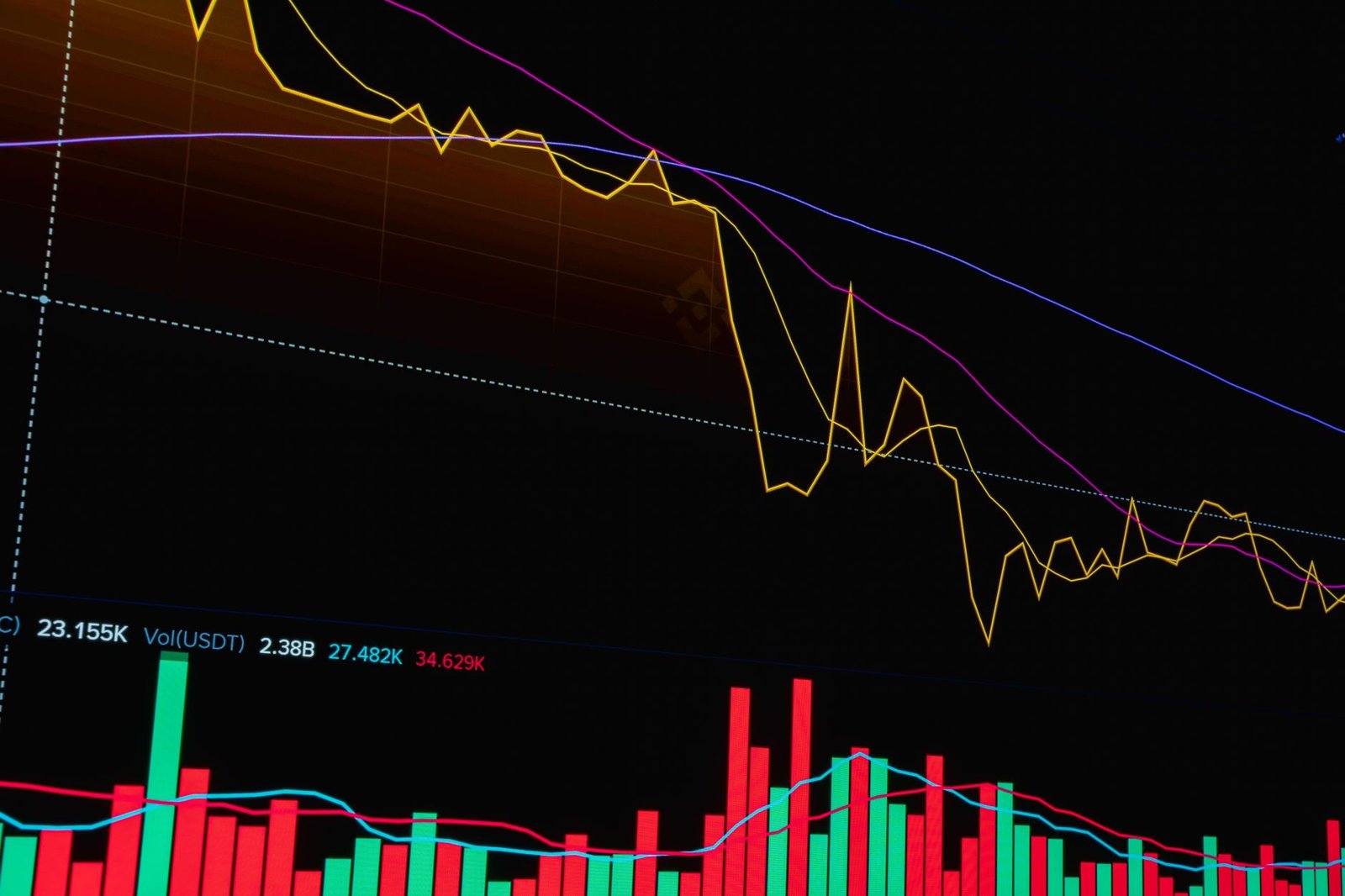
The bond market crash of 2026 is no longer a warning whispered by a few contrarian strategists. It is showing up in the numbers. Long-dated government bonds in the United States, Japan, the United Kingdom and France have sold off sharply since early summer, pushing borrowing costs to levels not seen in a generation. The yield on the 30-year US Treasury has pushed above 5.2 percent, Japan’s 30-year government bond has traded near 3.5 percent, and UK 30-year gilts have hovered around 5.7 percent, their highest since 1998. When several of the world’s largest sovereign debt markets dive at the same time, economists start using a phrase they normally avoid: a financial crisis trajectory. This article explains why bonds are falling, what the so-called Sell America trade means, how this episode compares with 2008, and what ordinary savers and investors can do right now.
Why the Bond Market Crash Is Happening Now
Bond prices fall when yields rise, and yields rise when investors demand more compensation for lending to governments. Three forces are pushing in the same direction in 2026. The first is supply. Governments are issuing debt at a record pace. The Institute of International Finance estimated global debt at roughly 338 trillion dollars in 2025, and the total has kept climbing. The United States alone carries federal debt above 38 trillion dollars, and its annual interest bill has surpassed 1.2 trillion dollars, more than it spends on defense. Investors know that every auction brings a bigger pile of paper, and they are pricing that in.
The second force is inflation that refuses to settle. The conflict involving Iran has kept energy prices volatile, and the tariff wave of 2025 raised import costs across developed economies. Core inflation in the US has been stuck near 3 percent, well above the Federal Reserve’s 2 percent target. That limits how far central banks can cut rates, which keeps short-term yields elevated and pulls long-term yields up with them.
The third force is a loss of confidence in fiscal discipline. Rating agencies stripped the United States of its last top-tier credit rating in 2025. France has cycled through governments unable to pass credible budgets. Japan’s new administration has promised fresh stimulus even as the Bank of Japan unwinds decades of bond buying. Markets are not panicking about any single country. They are repricing the idea that rich-world governments can borrow without limit.
The Sell America Trade Explained
Wall Street has a name for the dominant 2026 positioning: the Sell America trade. It describes investors simultaneously reducing exposure to US Treasuries, the US dollar and, in some portfolios, US equities in favor of gold, European assets, Asian equities and shorter-dated cash instruments. The dollar index has declined roughly 12 percent from its early 2025 peak. Foreign holdings of Treasuries have not collapsed, but the buyers have changed. Central banks in Asia and the Middle East have slowed their purchases, and hedge funds and leveraged buyers have taken their place. That shift makes the market more fragile, because leveraged holders sell quickly when volatility spikes.
Gold tells the same story from the other side. Central banks bought more than 1,000 tonnes of gold for a third consecutive year in 2025, and the metal has traded above 4,000 dollars an ounce for much of 2026. When the world’s official institutions prefer a yieldless metal to interest-bearing Treasuries, they are making a statement about the perceived safety of government debt.
It is important to keep perspective. The US Treasury market is still worth around 29 trillion dollars and remains the deepest pool of liquidity on earth. Sell America is a rotation at the margin, not an exodus. But at the margin is exactly where prices are set, and a small change in who shows up at an auction can move yields dramatically.
How a Bond Market Crash Becomes a Global Financial Crisis
Bonds are the foundation of the financial system. Banks hold them as capital, pension funds hold them to match future payouts, insurers hold them against policies, and every mortgage, corporate loan and government budget is priced off them. When bond prices fall fast, losses appear in places that are supposed to be safe. The 2023 collapse of Silicon Valley Bank was a preview: a bank that owned high-quality Treasuries went under because the value of those Treasuries dropped when rates rose. In 2022, the UK gilt crisis nearly toppled pension funds using liability-driven investment strategies within days.
The 2026 version is larger in scale. Unrealized losses on securities held by US banks were estimated near 400 billion dollars in mid-2026. Japanese life insurers, which hold enormous quantities of long-dated JGBs, face mark-to-market hits as yields climb. European banks carry heavy exposures to French and Italian sovereign debt. None of these institutions is insolvent today, but the buffer between a paper loss and a real one narrows with every basis point.
The transmission to the real economy runs through borrowing costs. The average 30-year US mortgage rate has drifted back toward 7 percent. Corporate borrowers refinancing debt issued at 2 percent in 2021 now face 6 to 8 percent coupons. Emerging market governments that borrow in dollars are squeezed twice, by higher rates and by the volatility of capital flows. The International Monetary Fund has warned that more than 50 developing countries are at or near debt distress. A shock in the core of the system reaches the periphery quickly.
Is This Worse Than the 2008 Global Financial Crisis?
Several commentators have argued that the current setup could prove more dangerous than 2008, and the argument deserves a fair hearing. In 2008 the problem was private debt, mainly mortgages, and governments had the balance sheets to absorb it. Public debt in advanced economies averaged about 70 percent of GDP. Today it exceeds 110 percent. The rescuer of last resort is the entity now under strain. Central banks, which bought trillions in bonds after 2008 and again in 2020, are running down those holdings rather than adding to them. The two tools that ended the last crisis are both constrained.
There are also reasons the comparison is overstated. Banks are far better capitalized than in 2008, with common equity ratios roughly double their pre-crisis levels. Households in most rich countries carry less debt relative to income. There is no equivalent of the opaque, mispriced subprime securities that sat at the heart of the last crash. Government bonds are transparent, and their risk is well understood. A slow repricing is painful but very different from a sudden discovery that assets are worthless.
Bond markets rarely crash the way stocks do. They grind. What we are watching in 2026 is a slow-motion loss of the fiscal free lunch that governments enjoyed for fifteen years. The danger is not a single day of panic but the cumulative weight of higher interest costs on budgets, banks and borrowers that were built for a world of near-zero rates.
Analyst commentary from a leading global fixed-income research desk, September 2026
The most honest answer is that the 2026 episode is a different kind of risk. It is less likely to produce a Lehman weekend and more likely to produce years of squeezed public spending, weaker growth and periodic flare-ups in whichever market is most exposed at the time.
Why Stocks Keep Rising During the Bond Market Crash
One of the strangest features of 2026 is that equity indexes in the US, Japan, South Korea and parts of Europe have set records while bonds fall. This divergence confuses many investors, but it has a logic. Rising yields hurt companies that depend on cheap borrowing, yet the largest listed firms are cash-rich technology companies with little debt and strong earnings growth from artificial intelligence spending. Investors are also treating equities as a partial inflation hedge, since companies can raise prices while bond coupons are fixed.
History suggests this cannot continue indefinitely. When the 10-year Treasury yield approaches or exceeds the earnings yield on the S&P 500, as it does now with both near 5 percent, the relative attraction of stocks weakens. Past episodes in 1987, 2000 and 2022 saw equities eventually catch down to bonds. The timing is unpredictable, but the pressure builds with every move higher in yields.
What Investors Should Do About the Bond Market Crash
A falling bond market is frightening, but it also creates the best income opportunities in nearly two decades. The key is to understand duration, which measures how sensitive a bond is to changes in interest rates. Long-dated bonds have taken the biggest losses precisely because their duration is high. Shorter maturities have been far more stable and now pay yields that comfortably beat inflation.
- Shorten duration. Treasury bills, short-term government bond funds and high-yield savings accounts pay 4 to 5 percent with minimal price risk. They are a reasonable home for cash you may need within three years.
- Ladder your bonds. Buying individual bonds maturing in one, two, three, four and five years means a portion comes due every year. If yields keep rising you reinvest at better rates; if they fall you have locked in today’s income.
- Consider inflation-linked bonds. US TIPS and UK index-linked gilts currently offer real yields above 2 percent, the highest since before 2008, and protect purchasing power if inflation surprises again.
- Do not abandon long bonds entirely. If a recession arrives, long-dated Treasuries are still the asset most likely to rally sharply. A modest allocation acts as insurance.
- Diversify across currencies and regions. The Sell America trade is a reminder that no single market is risk-free. Exposure to European, Asian and emerging market debt, hedged or unhedged depending on your view, spreads sovereign risk.
- Review your equity exposure honestly. With stocks at record valuations and bonds now offering real competition, rebalancing toward your long-term target rather than chasing gains is prudent.
For homeowners and borrowers, the practical advice is simpler. Lock in fixed rates where possible, pay down variable-rate debt such as credit cards, and avoid taking on new leverage that assumes rates will fall soon. The market is telling you they may not.
What Governments and Central Banks Can Do
Policymakers have fewer options than in past crises, but they are not powerless. Treasuries can shift issuance toward shorter maturities to relieve pressure on the long end, a tactic the US Treasury has already begun using. Central banks can slow or pause quantitative tightening, which the Federal Reserve did in late 2025, and could restart targeted purchases if market functioning breaks down, as the Bank of England did in 2022. Regulators can ease rules that force banks to hold Treasuries against capital, freeing balance sheets to absorb supply.
The harder fix is fiscal. Markets are asking governments to show that deficits will shrink over time. That means politically painful choices on taxes, entitlements and defense spending in an election-heavy period. Countries that produce credible multi-year plans, as Canada and Germany have attempted, have seen their borrowing costs stabilize faster than those that have not. The bond market is ultimately a referendum on credibility, and credibility is earned slowly.
Conclusion: Key Takeaways on the 2026 Bond Market Crash
The bond market crash of 2026 is the most important financial story of the year, even if stock market records grab the headlines. It reflects record government debt, sticky inflation, geopolitical risk and a slow erosion of faith in fiscal discipline across the developed world. Whether it becomes a full global financial crisis depends on how banks, insurers and governments manage losses that are still mostly on paper.
- Long-dated yields in the US, UK, Japan and France are at multi-decade highs as investors demand more compensation for record debt issuance.
- The Sell America trade is a marginal rotation out of Treasuries and the dollar into gold, cash and non-US assets, not a wholesale exit.
- Unlike 2008, the risk sits on government rather than private balance sheets, making a slow grind more likely than a sudden collapse.
- Stocks and bonds are diverging in a way that history suggests will not last, so rebalancing matters more than ever.
- Higher yields are a genuine opportunity for savers who shorten duration, ladder maturities and add inflation protection.
The comfortable era of free money is over. Investors who accept that reality and adjust their portfolios calmly will find that a bond market crash, for all its dangers, also hands them the best income environment in a generation.