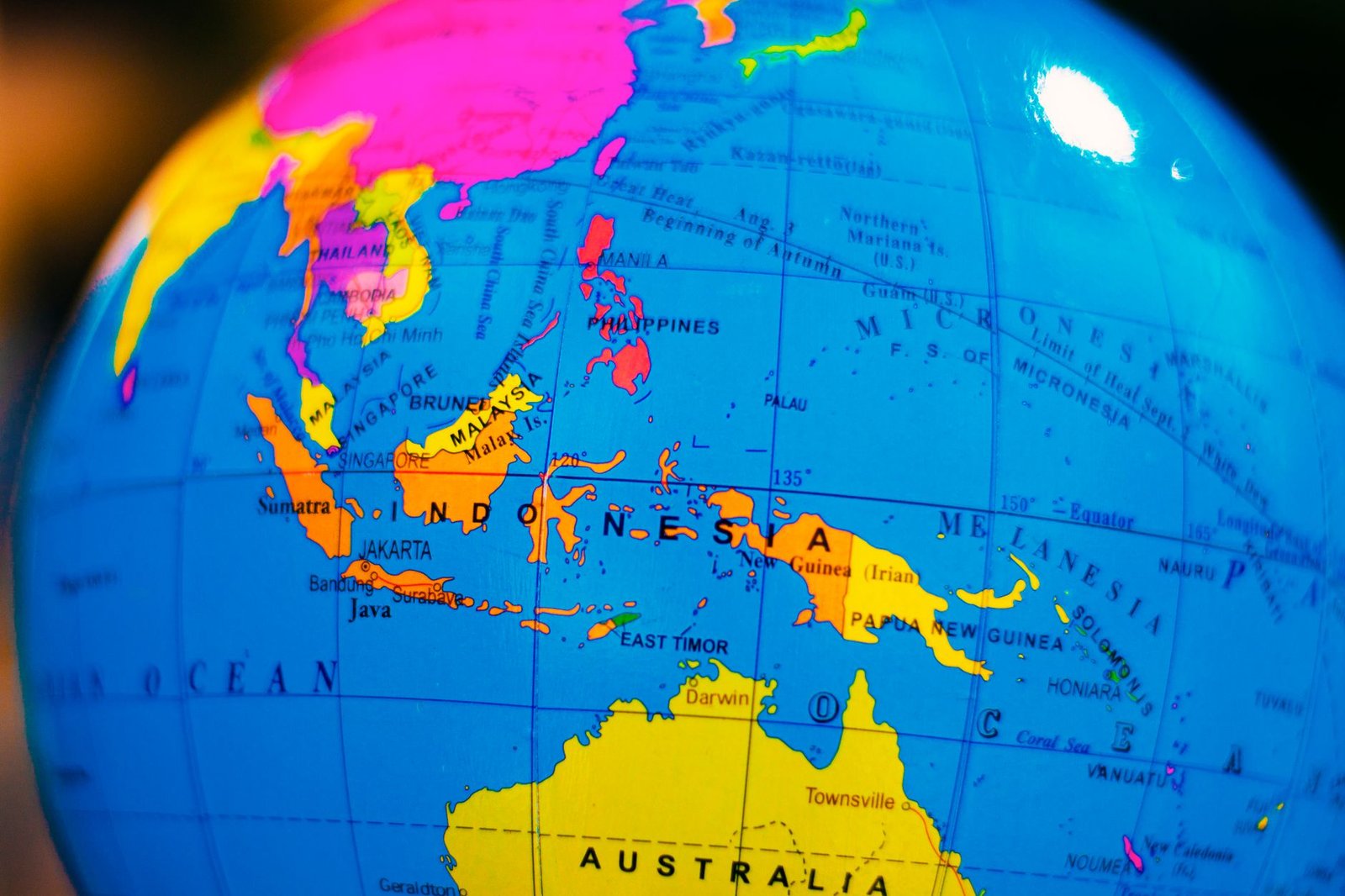
The world population 2026 figure has crossed 8.3 billion people, and a growing chorus of scientists says the planet is now paying the bill. New assessments published this week warn that human demand for food, water, energy and land is pushing Earth past several of its safe operating limits at once. The headline is stark, but the story underneath it is more complicated than a simple tale of too many people. Global birth rates are falling faster than almost anyone predicted, while consumption per person keeps rising in the wealthiest nations. This article breaks down what the latest data actually shows, which planetary boundaries have been breached, where population growth is still happening, and what governments, businesses and ordinary readers can do about it.
World Population 2026: Where the Numbers Stand
According to the United Nations World Population Prospects, humanity reached 8.2 billion in 2024 and is adding roughly 70 million people a year, putting the world population 2026 estimate at about 8.3 billion. India is the largest country at more than 1.46 billion, having overtaken China in 2023. China, now at around 1.41 billion, has recorded three consecutive years of population decline. The United States sits third at about 345 million, followed by Indonesia, Pakistan and Nigeria.
The UN’s medium projection has the global total peaking at around 10.3 billion in the mid-2080s before slowly declining. That peak is lower and earlier than forecasts made a decade ago, largely because fertility has dropped in nearly every region. The global average fertility rate now stands at about 2.25 births per woman, barely above the replacement level of 2.1. In 2024, the UN reported that more than half of all countries already sit below replacement level, including every country in Europe and East Asia.
So why do scientists still describe the situation as a breaking point? Because population is only one side of the equation. The other side is how much each person consumes, and that figure has grown far faster than headcount. The average person alive today uses roughly twice as much energy, three times as much water and more than four times as much material as a person in 1960.
Seven of Nine Planetary Boundaries Now Breached
The most cited framework for measuring Earth’s limits is the planetary boundaries model developed by the Stockholm Resilience Centre and the Potsdam Institute for Climate Impact Research. It identifies nine Earth-system processes that keep the planet stable, and sets a safe threshold for each. In 2009, three boundaries had been crossed. By 2023, that number had risen to six. The 2025 Planetary Health Check added a seventh, ocean acidification, after surface waters became corrosive enough to threaten shell-forming organisms across large parts of the polar oceans.
The seven breached boundaries are climate change, biosphere integrity, land-system change, freshwater change, biogeochemical flows of nitrogen and phosphorus, novel entities such as plastics and synthetic chemicals, and ocean acidification. Only stratospheric ozone and atmospheric aerosol loading remain within safe limits, and the ozone recovery is largely thanks to the 1987 Montreal Protocol, which shows that coordinated global action can work.
The scientists behind the framework stress that these boundaries interact. Deforestation for cropland weakens the biosphere, releases carbon, and disrupts regional rainfall, which then strains freshwater supplies. Fertiliser runoff from intensive agriculture creates dead zones in coastal waters, which compounds the pressure from acidification. The 2026 warning about population is really a warning about these feedback loops accelerating as demand grows.
Earth Overshoot Day and the 1.7 Planet Problem
A simpler way to visualise the pressure is Earth Overshoot Day, calculated each year by the Global Footprint Network. It marks the date when humanity has used up everything Earth’s ecosystems can regenerate in a full year. In 1971, that date fell on 25 December. In 2025, it fell on 24 July. Humanity is now consuming the equivalent of roughly 1.7 Earths every year, running an ecological deficit for five months out of twelve.
The national breakdown reveals the real driver. If everyone lived like the average resident of Qatar or Luxembourg, Overshoot Day would land in February. If everyone lived like the average resident of the United States, it would arrive in mid-March. If everyone lived like the average Indian, the date would fall in November, and for many sub-Saharan African countries humanity would not overshoot at all. This is why many demographers reject the word overpopulation as a stand-alone explanation. The countries adding the most people have the smallest footprints, while the countries adding the fewest people have the largest.
- High-income countries hold about 16 percent of the world population but account for roughly 40 percent of cumulative carbon emissions.
- Sub-Saharan Africa will contribute more than half of global population growth to 2050, yet its per-capita emissions are less than one tonne of CO2 per year, compared with about 14 tonnes in the US.
- The richest 10 percent of people are responsible for nearly half of consumption-based emissions, according to Oxfam and the Stockholm Environment Institute.
Where World Population Growth Is Still Happening
Population growth has become sharply uneven. The UN projects that just eight countries will account for more than half of all growth between now and 2050: the Democratic Republic of the Congo, Egypt, Ethiopia, India, Nigeria, Pakistan, the Philippines and Tanzania. Nigeria alone is expected to pass 375 million by mid-century and could overtake the United States to become the third most populous country in the world.
Meanwhile, 63 countries have already passed their population peak, including Japan, Germany, Italy, South Korea and China. South Korea’s fertility rate fell to a record low of 0.72 in 2023 before edging up slightly, and Japan recorded fewer than 700,000 births in 2024 for the first time since records began. These countries face a mirror-image challenge: shrinking workforces, ageing populations and pension systems built for a demographic pyramid that no longer exists.
The result is that two very different conversations about population are happening at once. In Lagos, Kinshasa and Karachi, the debate is about how to build enough schools, housing, jobs and water infrastructure for millions of young people. In Tokyo, Seoul and Rome, the debate is about how to sustain economies with fewer workers and more retirees. Both matter for the planet, because how growing cities are built and how wealthy nations consume will determine whether Earth’s boundaries stabilise or continue to erode.
Food, Water and Land: The Pressure Points of 2026
Feeding 8.3 billion people already uses about half of the world’s habitable land and roughly 70 percent of global freshwater withdrawals. The Food and Agriculture Organization estimates that food production will need to rise by around 50 percent by 2050 to meet demand driven by both population growth and dietary shifts toward more meat and dairy. Doing that with current methods would require clearing land the size of India, an outcome incompatible with any climate target.
Water stress is the most immediate flashpoint. The World Resources Institute reports that 25 countries, home to a quarter of the global population, face extremely high water stress every year, and about four billion people experience severe scarcity for at least one month annually. Cities including Cape Town, Chennai, Mexico City and Bogota have all faced day-zero style shortages in the past decade. The 2026 super El Nino forecast is expected to intensify droughts across southern Africa, India and Australia, layering climate volatility on top of chronic overdraw.
The good news is that the technical solutions largely exist. Reducing food waste, which currently swallows about a third of all food produced, would free up more calories than any new farmland. Shifting toward more plant-forward diets in wealthy countries would cut agricultural land use by up to 75 percent, according to a widely cited 2018 study in the journal Science. Precision irrigation, drought-resistant crops and wastewater recycling can stretch limited water further. The gap is not knowledge but deployment.
“The question is no longer whether Earth can support eight or ten billion people. It can, if those people live within the planet’s regenerative capacity. The question is whether the wealthiest two billion are willing to change how they consume, and whether we invest in the youngest two billion so they never have to repeat our mistakes.” — Dr. Johan Rockström, Director, Potsdam Institute for Climate Impact Research
What Actually Works: Proven Ways to Ease the Pressure
Decades of research point to a consistent set of interventions that slow population growth humanely while improving lives. None of them involve coercion, and all of them deliver benefits well beyond demographics. Girls’ education is the most powerful lever. Every additional year of secondary schooling for girls reduces fertility rates and raises lifetime earnings by roughly 10 to 20 percent. Bangladesh cut its fertility rate from 6.9 in 1970 to about 2.0 today largely by expanding female education and voluntary family planning access, and its economy grew faster than most of its neighbours as a result.
Access to modern contraception remains unmet for an estimated 218 million women in low- and middle-income countries who want to avoid pregnancy, according to the Guttmacher Institute. Closing that gap would prevent tens of millions of unintended pregnancies each year. Child survival matters too: when parents are confident their children will live, family sizes fall within a generation.
On the consumption side, policy has a bigger footprint than individual behaviour, but individual choices still add up and shape markets. Here are steps readers anywhere can take now:
- Cut food waste at home. Plan meals, store produce properly and use leftovers. The average household in high-income countries throws away about 79 kilograms of food per person each year.
- Shift your plate, not your whole diet. Replacing beef with chicken, beans or lentils just two days a week cuts your food-related emissions by roughly a quarter.
- Buy less, keep it longer. Material consumption is the boundary most directly tied to population and income. Repairing, sharing and buying second-hand keeps materials in use.
- Check your water footprint. A single cotton T-shirt takes about 2,700 litres of water to make. Choosing durable clothing matters more than shorter showers.
- Support organisations that fund girls’ education and health access. These are among the highest-impact charitable investments measured by long-term outcomes.
- Vote and advocate for systemic change. Carbon pricing, fertiliser regulation, land protection and public transport shift consumption at a scale no household can match.
The Business and Investment Angle
For companies and investors, the population-and-planet story is a map of where demand and risk are heading. The fastest-growing consumer markets of the next 25 years are in Africa and South Asia, where a young, urbanising population will need affordable housing, clean energy, sanitation and digital services. The International Energy Agency projects Africa’s electricity demand will more than double by 2040, and most of that capacity can be built with solar, wind and storage rather than coal.
At the same time, resource scarcity is becoming a material financial risk. Water shortages have already forced factory shutdowns in Taiwan’s semiconductor sector and India’s textile hubs. Insurers are repricing agricultural and property risk in drought-prone regions. Regulators in the EU, UK and increasingly Asia are requiring companies to disclose nature-related risks under frameworks such as the Taskforce on Nature-related Financial Disclosures. Businesses that reduce material intensity, secure water supplies and design for circularity are positioning themselves ahead of both regulation and scarcity.
Conclusion: A Breaking Point, But Not a Dead End
The world population 2026 milestone of 8.3 billion arrives alongside the clearest evidence yet that humanity is living beyond Earth’s means. Seven of nine planetary boundaries are breached, Overshoot Day falls in July, and freshwater, soil and ocean systems are showing strain. Yet the numbers also show that population growth is slowing on its own, that the heaviest footprint belongs to the wealthiest minority rather than the growing majority, and that the tools to close the gap already exist.
Key takeaways:
- The global population is about 8.3 billion and is projected to peak near 10.3 billion in the 2080s, earlier and lower than once feared.
- Seven of nine planetary boundaries have now been crossed, with ocean acidification the latest addition in 2025.
- Consumption, not headcount, is the dominant driver: high-income countries with stable populations account for the majority of resource use.
- Girls’ education, voluntary family planning and child health remain the most effective and humane ways to stabilise population.
- Food waste reduction, dietary shifts and circular material use offer the fastest wins on the consumption side.
- The Montreal Protocol proves that global cooperation can pull a boundary back into the safe zone. The same is possible for climate, land and water if action matches the evidence.
Earth may be at a breaking point, but a breaking point is a moment of decision, not an ending. The choices made in the next decade, by governments, businesses and the 8.3 billion people who share this planet, will determine which side of that line the world lands on.