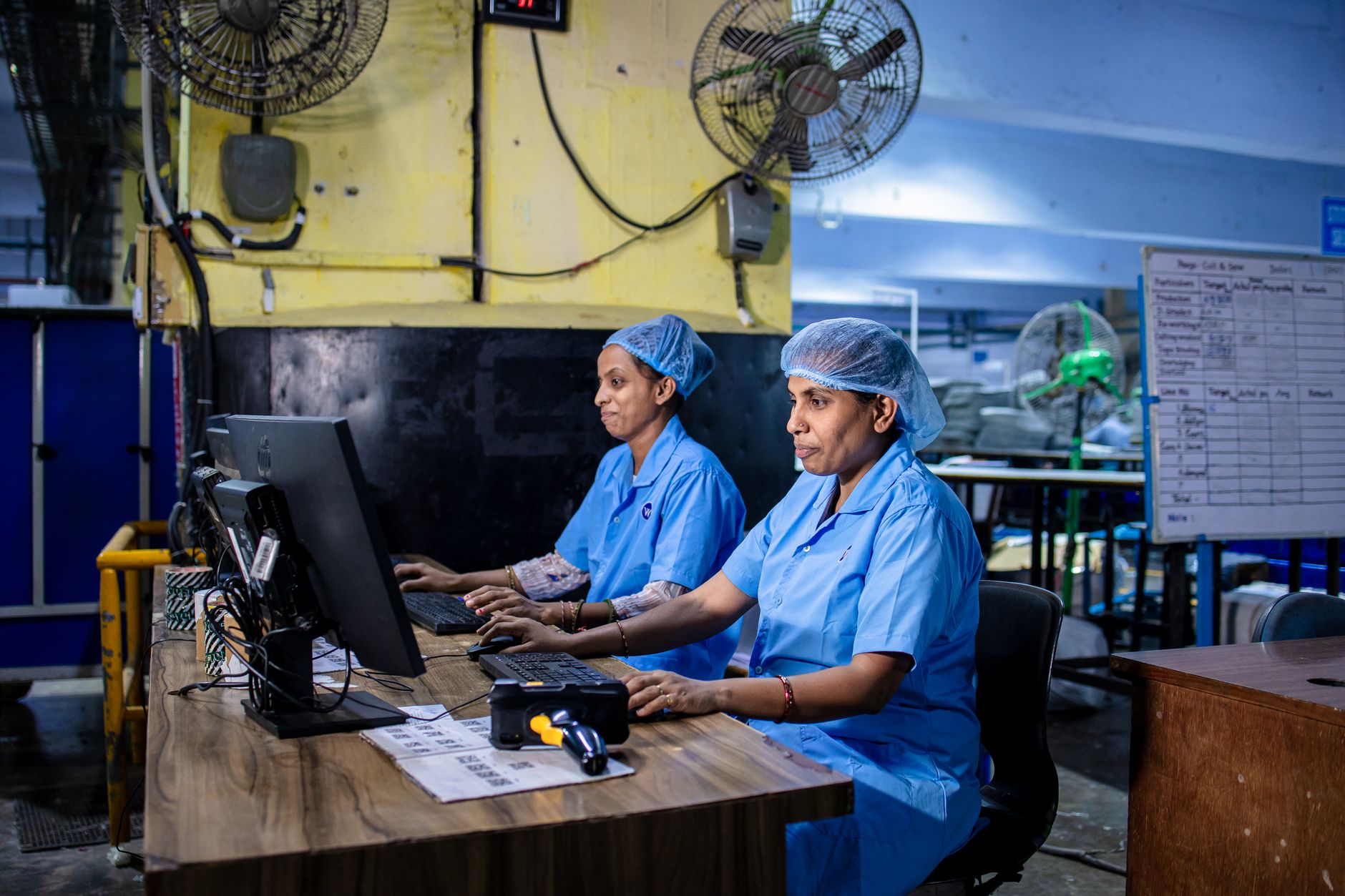
India’s Manufacturing Sector Is Having Its Best Year Yet — Here’s What’s Driving It
India’s manufacturing story in 2026 is no longer about ambition — it’s about execution. The sector’s contribution to GDP has crossed 17.5%, the highest in over a decade, and the Manufacturing PMI has stayed above 58 for five consecutive months. From semiconductors in Gujarat to EV batteries in Tamil Nadu, factory floors across the country are buzzing with activity.
But what’s truly different this time? It’s not just government push — global supply chains are actively pulling India in. The China+1 strategy has matured from boardroom talk to billion-dollar commitments, and India is the biggest beneficiary.
Let’s break down the five sectors leading this manufacturing surge and what it means for the Indian economy, jobs, and investors.
1. Electronics and Semiconductor Manufacturing
India’s electronics manufacturing output is projected to touch $115 billion in FY2026-27, up from $101 billion the previous year. The PLI scheme for electronics has been a game-changer, attracting heavyweights like Foxconn, Tata Electronics, and Micron Technology to set up or expand operations.
Key developments driving this growth:
- Semiconductor fabs: The Tata-PSMC fab in Dholera, Gujarat, is on track for commercial production by late 2026, marking India’s entry into chip manufacturing.
- Mobile phone exports: India exported smartphones worth over ₹1.2 lakh crore in FY2025-26, making it the world’s second-largest mobile phone exporter.
- Component ecosystem: Over 200 new component manufacturers have set up units in India since 2024, reducing import dependence on Chinese parts.
For investors, listed companies in the electronics manufacturing services (EMS) space — such as Dixon Technologies, Kaynes Technology, and Amber Enterprises — have delivered 40-60% returns over the past year.
2. Electric Vehicle and Battery Manufacturing
The EV manufacturing ecosystem in India has reached an inflection point. With the FAME III subsidy structure now stabilised and the ACC PLI scheme channelling ₹18,100 crore into battery cell manufacturing, India is building a vertically integrated EV supply chain.
Tamil Nadu, Karnataka, and Telangana have emerged as the EV manufacturing triangle. Ola Electric’s gigafactory in Krishnagiri, Exide Energy Solutions’ lithium-ion cell plant in Bengaluru, and Amara Raja’s facility in Mahbubnagar are all ramping up production.
India’s EV penetration in two-wheelers has crossed 12% in 2026, and the commercial vehicle segment is seeing rapid electrification in last-mile delivery. This isn’t just a consumer trend — it’s a ₹50,000 crore manufacturing opportunity.
3. Defence and Aerospace Manufacturing
India’s defence exports touched ₹23,000 crore in FY2025-26, a figure that was barely ₹1,500 crore five years ago. The government’s push toward self-reliance (Atmanirbhar Bharat) in defence has unlocked private sector participation like never before.
Major milestones include:
- Hindustan Aeronautics Limited (HAL) delivering Tejas Mark 1A fighters at scale
- Private players like Bharat Forge, L&T, and Adani Defence winning export orders from Southeast Asian and Middle Eastern countries
- The drone manufacturing ecosystem growing to over 300 DGCA-certified manufacturers
The defence manufacturing corridor in Uttar Pradesh and Tamil Nadu is attracting investments worth ₹15,000 crore, creating over 50,000 direct jobs in 2026 alone.
4. Pharmaceuticals and Medical Devices
India has long been the “pharmacy of the world,” but 2026 marks its serious entry into high-value pharmaceutical manufacturing. The PLI scheme for pharma, with an outlay of ₹15,000 crore, is incentivising production of complex generics, biosimilars, and active pharmaceutical ingredients (APIs) domestically.
The medical devices sector is the quieter success story. India’s medical device market is expected to reach $20 billion by 2027, and domestic manufacturing now covers 65% of demand — up from 40% just three years ago. Companies like Trivitron Healthcare, Poly Medicure, and Meril Life Sciences are scaling up production of everything from stents to MRI machines.
This is strategically critical. The pandemic exposed India’s over-dependence on Chinese APIs and medical equipment. That vulnerability is now being systematically addressed.
5. Green Energy Equipment Manufacturing
India’s renewable energy targets — 500 GW of non-fossil fuel capacity by 2030 — have created a massive domestic market for solar panels, wind turbines, and green hydrogen electrolysers.
Solar module manufacturing capacity in India has crossed 60 GW in 2026, with companies like Adani Solar, Tata Power Solar, and Waaree Energies leading the charge. The Approved List of Models and Manufacturers (ALMM) mandate has ensured that domestic manufacturers get priority in government tenders.
Green hydrogen is the next frontier. Reliance Industries, Indian Oil Corporation, and NTPC are investing a combined ₹75,000 crore in electrolyser manufacturing and green hydrogen production facilities.
What’s Making This Manufacturing Boom Different?
India has had manufacturing pushes before — so why is 2026 different? Several structural factors are converging:
- Infrastructure upgrade: The PM Gati Shakti national master plan has improved logistics connectivity. Dedicated freight corridors, new expressways, and expanded port capacity have reduced manufacturing costs by an estimated 8-12%.
- Skill development at scale: ITI modernisation and industry-linked skilling programs are producing a workforce that matches factory requirements.
- Policy consistency: Unlike past initiatives, PLI schemes have maintained consistent disbursement, building business confidence.
- Global tailwinds: Geopolitical tensions and supply chain diversification away from China are structural, not cyclical. This shift will play out over a decade.
What Should Investors Watch?
For investors looking to ride India’s manufacturing wave, here are key metrics to track:
- Manufacturing PMI: Sustained readings above 55 signal expansion. Watch for any dip below 52.
- PLI disbursement data: Released quarterly by DPIIT — actual disbursements matter more than scheme announcements.
- FDI in manufacturing: Track quarterly FDI inflows specifically into the manufacturing sector via RBI data.
- Order books of capital goods companies: Companies like Siemens India, ABB India, and L&T reflect ground-level manufacturing capex.
The Bottom Line
India’s manufacturing sector is no longer a story of potential — it’s delivering real output, real exports, and real jobs. The convergence of PLI incentives, global supply chain shifts, infrastructure improvements, and a young workforce is creating a manufacturing ecosystem that can compete globally.
For businesses, this means new opportunities across the value chain. For investors, manufacturing-linked stocks and ETFs deserve a closer look. And for the Indian economy, a strong manufacturing base is the missing piece that can push GDP growth sustainably above 7%.
The factory floor is where India’s next growth chapter is being written — and 2026 is just the beginning.