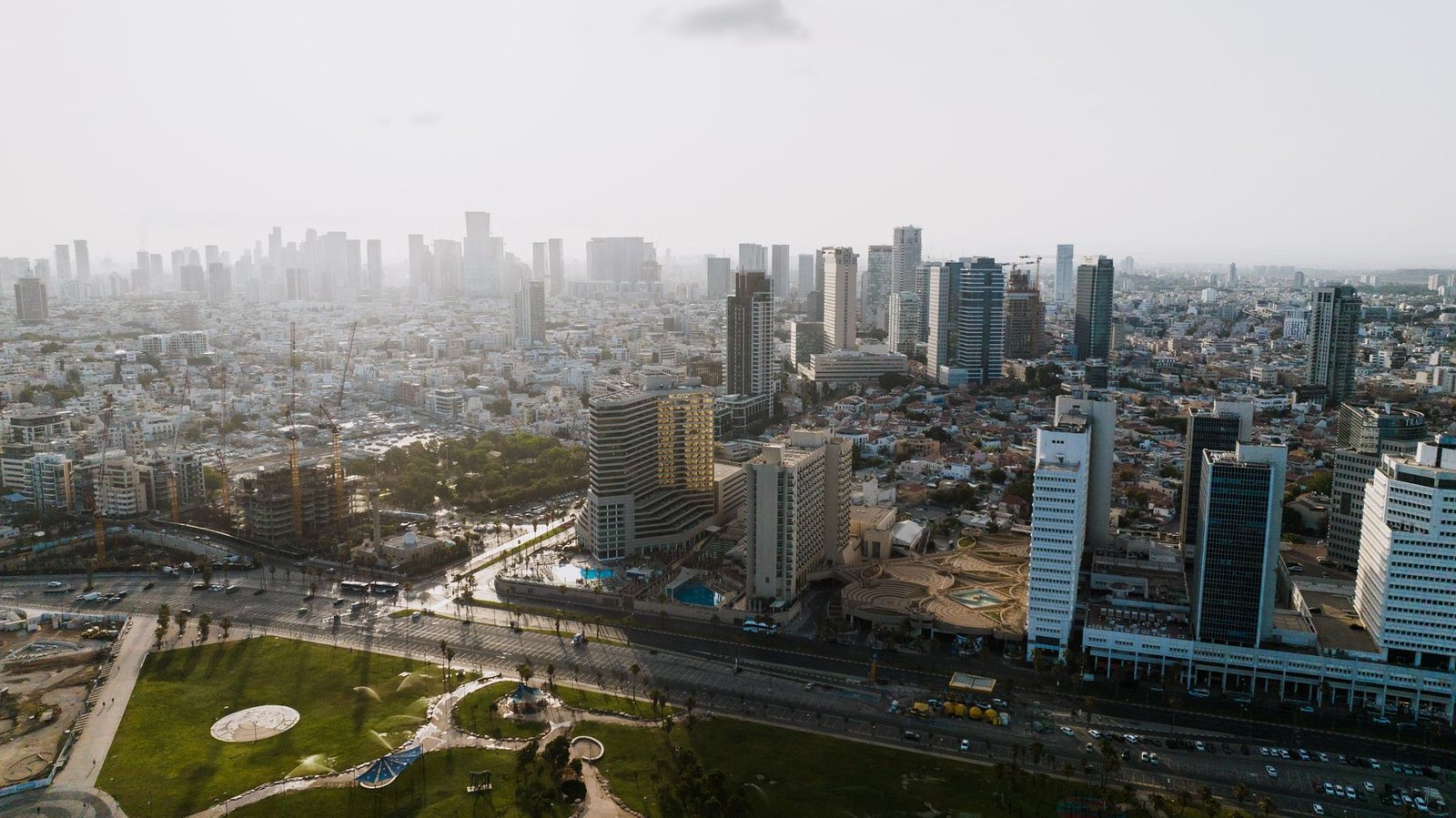
If you have spent any time in founder circles this year, you have heard the question: how do you actually start a business in Dubai? The emirate has spent a decade building an answer, and in 2026 it is making its boldest pitch yet — a dedicated startup campus designed to be what officials call the “front door” for founders arriving from Bangalore, Lagos, London, São Paulo and Silicon Valley. The promise is simple and aggressive: land in Dubai, walk into one building, and leave with a licence, a visa pathway, a bank introduction and a desk. For anyone who has fought through six months of paperwork in another jurisdiction, that pitch lands hard.
Behind the marketing sits real momentum. Dubai’s Department of Economy and Tourism reported more than 70,000 new business licences issued in a single year, a pace that has held since 2023. The UAE now hosts well over 5,000 active startups, and the country has produced a string of billion-dollar exits — Careem’s $3.1 billion sale to Uber in 2019 remains the reference point, but Kitopi, Tabby and Property Finder have all cleared unicorn or near-unicorn valuations since. Dubai consistently ranks inside the global top 25 startup ecosystems and first in the Middle East and North Africa.
This guide walks through what the new campus actually offers, what it costs to set up, how the tax and visa rules really work in 2026, and where the genuine friction still lies.
Why Dubai Wants to Be the Front Door for Founders
Dubai’s startup strategy is not a vanity project — it is industrial policy. Oil and gas account for a small and shrinking share of the emirate’s GDP, well under 1 percent by most estimates, with the economy resting instead on trade, logistics, tourism, real estate and financial services. The D33 agenda, launched in 2023, set the target of doubling the size of Dubai’s economy by 2033 and putting the city inside the world’s top three business destinations. Technology entrepreneurship is the lever officials keep reaching for.
The new startup campus consolidates what used to be scattered across a dozen agencies. Historically a founder had to navigate a free zone authority for the licence, immigration for the visa, a separate regulator if the business touched payments or health, and then a banking system notoriously slow to onboard new companies. The campus model bundles licensing desks, immigration processing, investor relations, accelerator programming and shared workspace into a single physical and digital point of entry.
It also reflects competitive pressure. Saudi Arabia has poured capital into Riyadh and now leads MENA in total venture funding in several recent quarters. Abu Dhabi’s Hub71 offers cash incentive packages worth hundreds of thousands of dollars. Qatar, Bahrain and Egypt are all courting the same founders. Dubai’s differentiator has never been the cheapest subsidy — it is speed, liveability and the density of people already there.
Free Zone vs Mainland: The First Real Decision
Every founder who sets out to start a business in Dubai hits this fork within the first week, and getting it wrong is expensive to reverse.
A free zone company is registered inside one of roughly 30 special economic zones — DMCC, Dubai Internet City, DIFC, Dubai South and others. You get 100 percent foreign ownership, straightforward repatriation of capital and profits, and a package that usually bundles the licence, a flexi-desk and a set number of visa quotas. The historical trade-off was that a free zone entity could not sell directly into the UAE domestic market without a local distributor or a branch.
A mainland company, licensed by the Department of Economy and Tourism, can trade anywhere in the UAE, bid for government contracts and open offices wherever it likes. Since the 2021 amendments to the Commercial Companies Law, most mainland activities also allow 100 percent foreign ownership — the old requirement for a 51 percent Emirati partner was removed for hundreds of activity categories, though a strategic-impact list still carries restrictions.
- Choose a free zone if your customers are international, you are raising from foreign VCs, you want a fast and predictable setup, or you need a specific regulatory wrapper such as DIFC for fintech and fund structures.
- Choose mainland if you are selling to UAE consumers or companies, need to win public-sector contracts, or plan physical retail and multiple branches.
- Check the activity list first. Your licensed activity determines everything downstream — visa quota, office requirements, banking risk rating.
- Do not over-buy visas. Quotas are usually tied to office space; take what you need this year, not what you hope to need in three.
What It Actually Costs to Start a Business in Dubai
Cost is where marketing copy and reality diverge most, so here are realistic 2026 ranges rather than headline teaser prices.
A basic free zone licence with a flexi-desk and one visa allocation typically runs from roughly AED 12,000 to AED 25,000 per year (about $3,300 to $6,800) in the more affordable zones. Premium zones such as DIFC or Dubai Internet City can run several times higher, with DIFC entities often budgeting $10,000–$25,000 annually once registration, data protection and office costs are included. Mainland setup usually starts around AED 15,000–30,000 for the licence, plus rent for a physical Ejari-registered premises, which is the line item that catches people out.
Then add the recurring items founders routinely underestimate: establishment card and immigration file fees, residence visa and medical testing per employee (AED 3,500–7,000 each), mandatory health insurance, corporate bank account minimum balances that can reach AED 50,000 at some institutions, and accounting and audit fees now that corporate tax filing is in force. A realistic all-in first-year budget for a small tech company with two founder visas sits in the $12,000–$20,000 range, not the $3,000 advertised on billboards.
On tax, the picture changed in June 2023. The UAE introduced a federal corporate tax of 9 percent on taxable profits above AED 375,000, with profits below that threshold taxed at zero. A Small Business Relief regime allows qualifying companies under AED 3 million in revenue to elect out of corporate tax entirely through the end of 2026. Qualifying Free Zone Persons can still access a 0 percent rate on qualifying income, but the conditions — adequate substance, qualifying activities, transfer pricing compliance — are genuinely technical. VAT remains at 5 percent with a mandatory registration threshold of AED 375,000 in taxable supplies. There is still no personal income tax, which is the single biggest draw for founders and senior talent.
“Founders come for the zero personal income tax and stay for the proximity. In one week in Dubai you can meet a sovereign fund, a family office, a distributor for Africa and a technical co-founder who just relocated from Bangalore. That density is the real product — the licence is just the entry ticket. What I tell every founder is to treat the first six months as market validation, not admin. If you spend them on paperwork, you have already lost the advantage you came for.” — a Dubai-based venture partner who has backed more than 40 MENA startups
Visas, Talent and the Golden Visa Route
Residency is the piece that turns a shell company into an actual base of operations. Standard investor and employment visas are now typically issued for two years in free zones, renewable, with the process anchored to your company’s immigration file and Emirates ID enrolment.
The Dubai golden visa changed the calculus for serious founders. The 10-year residence permit is available to entrepreneurs whose project is valued above AED 500,000 and approved by an accredited incubator or auditor, to investors in property worth AED 2 million or more, and to specialists in science, medicine, AI and other priority fields. A five-year green visa covers skilled employees and freelancers without requiring an employer sponsor — a meaningful shift, since it decouples residency from a single company. The UAE also runs a one-year virtual working programme for remote employees of foreign companies earning above roughly $3,500 a month.
- Get your Emirates ID early. Almost every other step — banking, telecom, leases, school enrolment — keys off it.
- Open the bank account in parallel, not after. Compliance review on a new company can take four to ten weeks; start it the day your licence is issued.
- Prepare a substance file. Lease, local staff, board minutes and a real office address matter for both tax and banking.
- Budget for dependants. Sponsoring a spouse and children adds visa, insurance and schooling costs; international school fees commonly run AED 40,000–90,000 per child per year.
The Honest Risks Before You Start a Business in Dubai
No serious guide to how to start a business in Dubai should skip the downsides, and there are real ones.
The domestic market is small. The UAE has roughly 11 million residents; Dubai itself is under 4 million. Any consumer startup that models Dubai as its total addressable market will hit a ceiling fast. The companies that scale treat the emirate as a hub for the wider Gulf, South Asia and Africa — a combined market of well over two billion people within a four-hour flight radius.
Costs are high and rising. Residential rents in prime Dubai districts climbed sharply through 2024 and 2025, and office rents in Grade A towers followed. The zero-income-tax advantage erodes quickly if your cost of living doubles. Early-stage capital is also thinner than the headlines suggest: seed rounds are plentiful, but Series B and C funding often still requires courting investors in London, New York or Singapore. And while the regulatory environment is business-friendly, it moves — corporate tax, economic substance rules and ultimate beneficial ownership reporting all arrived within a few years, and compliance obligations are now real.
Finally, competition for the same founders is fierce. Riyadh, Abu Dhabi, Lisbon, Singapore and Bangalore are all running variations of the same playbook. The startup campus is Dubai’s bet that convenience and speed win — but a campus is only as good as the companies that come out of it three years later.
Conclusion: Is Dubai the Right Base for Your Startup?
Dubai’s new startup campus is a genuine step forward in reducing the administrative drag that has always been the gap between the city’s ambition and its execution. For founders building for emerging markets, for fintech and logistics companies that need a neutral hub between East and West, and for teams whose economics improve meaningfully without personal income tax, the case is strong — and stronger in 2026 than it was even two years ago.
For a pure domestic-market consumer play, or for a deep-tech company that needs a specific research cluster, the answer may still be somewhere else. The right move is to test before you commit: spend a month in the city on a visit visa, take fifty meetings, and only then decide whether to sign a lease.
Key Takeaways
- Dubai’s startup campus consolidates licensing, visas, investor access and workspace into one entry point — the city’s answer to setup friction.
- Free zone suits international and VC-backed businesses; mainland suits domestic sales and government contracts. Decide before you register.
- Budget $12,000–$20,000 all-in for a realistic first year with two founder visas, not the advertised headline licence price.
- Corporate tax is 9 percent above AED 375,000 in profit, VAT is 5 percent, and personal income tax remains zero.
- The golden visa gives 10-year residency to approved entrepreneurs; the green visa decouples residency from an employer.
- Treat Dubai as a hub for the Gulf, Africa and South Asia — the local market alone is too small to build a large company on.