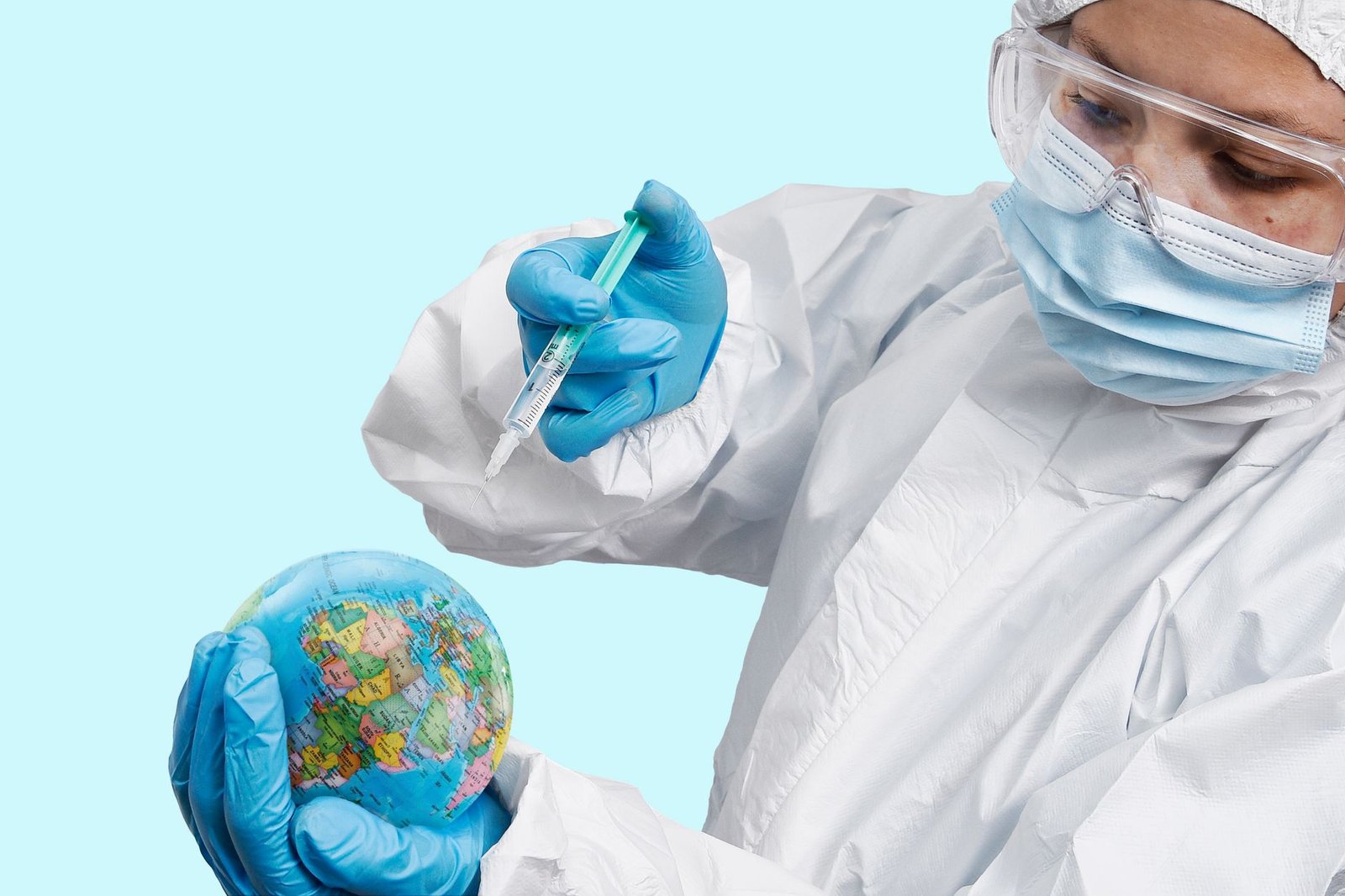
The first patients have been enrolled in the largest Ebola treatment trial ever conducted, marking a turning point in the decades-long fight against one of the world’s deadliest viruses. Launched in the Democratic Republic of the Congo (DRC), the study brings together the World Health Organization (WHO), the Congolese National Institute of Biomedical Research (INRB), and an international consortium of research partners to test next-generation therapies during an active outbreak. For a disease that once killed up to 90% of those infected, the Ebola treatment trial of 2026 could redefine what survival looks like — not just in Central Africa, but for global health security everywhere.
Why This Ebola Treatment Trial Is Record-Breaking
Previous Ebola trials were constrained by the chaotic nature of outbreaks. The landmark PALM trial, run in the DRC between 2018 and 2019, enrolled 681 patients — at the time a remarkable feat — and produced the first two approved Ebola treatments, the monoclonal antibodies Inmazeb (REGN-EB3) and Ebanga (mAb114). Those therapies cut mortality among treated patients to roughly 35%, and to around 10% when patients arrived early with low viral loads.
The 2026 Ebola treatment trial is designed to go far beyond that. It is structured as an adaptive platform trial, meaning multiple experimental arms can be added or dropped as evidence accumulates, and it is built to enroll patients across several outbreak sites simultaneously rather than in a single province. Investigators have designed it to be the largest Ebola therapeutics study by enrollment, with pre-positioned protocols, trained staff, and supply chains that can be activated within days of a confirmed case cluster.
Crucially, the trial was pre-approved by Congolese ethics boards and the WHO before the current outbreak began. That preparation is the real breakthrough: instead of losing weeks negotiating protocols while patients die, research started almost as soon as treatment centers opened.
The Ebola Outbreak 2026: Where Things Stand in the DRC
The DRC has recorded more Ebola outbreaks than any other country — 16 since the virus was first identified near the Ebola River in 1976. The 2018–2020 epidemic in North Kivu and Ituri was the second-largest in history, with 3,470 cases and 2,287 deaths, and it unfolded in an active conflict zone where treatment centers were repeatedly attacked.
The current outbreak, confirmed by Congolese health authorities earlier this year, again involves the Zaire ebolavirus species, the most lethal of the six known strains. Health officials have reported cases spreading across multiple health zones, prompting a rapid response that includes ring vaccination with the Ervebo vaccine, contact tracing, and the deployment of mobile laboratories. The WHO has classified the risk as high at the national level and moderate regionally, given cross-border movement with Uganda, Rwanda, Burundi, and South Sudan.
What makes 2026 different is the infrastructure. The DRC now has more than a dozen trained Ebola response teams, a national genomic sequencing capacity that can identify a strain within 48 hours, and community health networks built up during the COVID-19 pandemic and the 2024–2025 mpox emergency. The Ebola treatment trial is plugging directly into that system.
What the Ebola Treatment Trial Is Actually Testing
The study compares the current standard of care — Inmazeb or Ebanga combined with aggressive supportive treatment — against several new and combination approaches. While full protocol details are being released in stages, researchers have outlined the main scientific questions:
- Combination antibody therapy: Whether pairing two monoclonal antibodies that target different parts of the Ebola glycoprotein reduces the risk of viral escape and improves survival in late-presenting patients.
- Oral antivirals: Small-molecule drugs such as obeldesivir (an oral version of remdesivir) that could be taken as pills, dramatically simplifying treatment in remote areas without cold-chain infrastructure.
- Early post-exposure treatment: Giving therapy to high-risk contacts before symptoms appear, a strategy that showed promise in primate studies but has never been tested at scale in humans.
- Optimized supportive care: Standardized fluid replacement, electrolyte management, and monitoring protocols that alone may cut mortality by several percentage points.
- Long-term survivor outcomes: Tracking whether treatments reduce persistent viral reservoirs in the eyes, central nervous system, and semen, which have caused flare-ups years after outbreaks ended.
The trial’s adaptive design means that if one arm shows a clear survival benefit, it can be rapidly adopted as the new standard for all patients while other arms continue to be evaluated. This mirrors the RECOVERY trial model used in the UK during COVID-19, which identified dexamethasone as a lifesaving treatment within months.
How Far Ebola Cure Research Has Come
For nearly four decades after its discovery, Ebola had no vaccine and no treatment. The 2014–2016 West Africa epidemic, which infected 28,600 people and killed 11,325 in Guinea, Liberia, and Sierra Leone, changed everything. The scale of that crisis forced the scientific community to fast-track candidate products that had been sitting in laboratories for years.
The results came quickly. The Ervebo vaccine, approved in 2019, is roughly 97.5% effective at preventing disease when given as part of a ring vaccination strategy. Then the PALM trial established that monoclonal antibodies work. By 2020, a disease that had been almost universally fatal in early outbreaks had become survivable for most patients who reached care early.
Yet major gaps remain. Existing antibody treatments require intravenous infusion in a treatment center — a serious barrier when the nearest facility may be a day’s journey away. They are also expensive to produce and store. They work only against the Zaire strain, leaving no approved treatment for Sudan ebolavirus, which caused a deadly outbreak in Uganda in 2022 and again in 2025. And late-presenting patients with high viral loads still face mortality rates above 50%. The 2026 Ebola treatment trial directly targets each of these weaknesses.
“For the first time, we are running research at the pace of the outbreak rather than behind it. Every patient enrolled today is not only receiving the best available care — they are generating the evidence that will save the next patient, the next village, and the next country. That is what preparedness actually looks like.” — Dr. Jean-Jacques Muyembe-Tamfum, Director-General, Institut National de Recherche Biomédicale, Kinshasa
Why the World Should Care About the DRC Ebola Response
It is tempting for readers in Europe, Asia, or the Americas to view Ebola as a distant problem. The 2014 epidemic proved otherwise: cases were treated in the United States, Spain, the UK, Germany, and Italy, and the global economic cost was estimated by the World Bank at $53 billion when health and productivity losses were combined. A single infected traveler on a commercial flight can turn a regional outbreak into an international emergency.
There is also a broader lesson about how science is funded. The ring-vaccination trials, the PALM study, and the current Ebola treatment trial all rely on a mix of funding from the WHO, the US National Institutes of Health, the Coalition for Epidemic Preparedness Innovations (CEPI), and European research agencies. Cuts to global health budgets in several donor countries during 2025 raised concern that this kind of outbreak research would stall. The fact that the 2026 trial launched on schedule is partly a testament to African-led institutions, particularly the INRB and the Africa Centres for Disease Control and Prevention, taking a greater leadership role.
Finally, the platform being built for Ebola is transferable. The same trial networks, laboratories, and trained staff can pivot to Marburg virus, Lassa fever, mpox, or an unknown “Disease X.” Investing in the DRC Ebola response is, in practical terms, investing in humanity’s early-warning system.
Ebola Vaccine, Treatment, and Prevention: What Travelers Should Know
Ebola spreads through direct contact with the blood or bodily fluids of an infected person, or with contaminated objects — not through the air. That means the risk to ordinary travelers, even in affected countries, is low provided basic precautions are followed. Practical steps include:
- Check WHO and national travel advisories before visiting eastern DRC or neighboring border regions, and register with your embassy on arrival.
- Avoid contact with anyone showing symptoms such as sudden fever, severe headache, muscle pain, vomiting, or unexplained bleeding, and do not attend funerals or handle bodies in affected areas.
- Do not touch or eat bushmeat, and avoid contact with bats and non-human primates, the suspected natural reservoirs of the virus.
- Practice rigorous hand hygiene and follow the guidance of local health workers at screening checkpoints.
- Healthcare and aid workers deploying to outbreak zones should ask about pre-deployment Ervebo vaccination, which is recommended by the WHO for frontline responders.
- If you develop fever within 21 days of leaving an affected area, contact health services by phone before visiting a clinic so they can isolate and test you safely.
For the general public, the most valuable action is supporting evidence-based information. Misinformation about Ebola treatments — including claims that vaccines spread the disease — fueled violent attacks on health workers during the 2018–2020 outbreak and cost lives. Sharing verified updates from the WHO, Africa CDC, and reputable news outlets helps counter that.
What Happens Next in the Ebola Treatment Trial
Interim results from the 2026 study are expected to be reviewed by an independent data safety monitoring board at regular intervals, with the first public analysis likely within months rather than years. If an oral antiviral proves effective, it could be stockpiled and distributed through community health workers — a genuine game-changer for rural areas. If pre-symptomatic treatment of contacts works, outbreak control could shift from reactive to preventive.
Longer term, researchers hope the trial will generate enough data to secure regulatory approval for treatments that work across multiple Ebola species, and to establish a permanent, standing clinical research network in Central Africa. That would mean the next outbreak — and there will be a next outbreak — is met with a fully operational research system from day one.
Conclusion: Key Takeaways
The record-breaking Ebola treatment trial launched in the DRC represents the most ambitious effort yet to turn a historically fatal disease into a treatable one. Here is what matters most:
- The 2026 trial is the largest Ebola therapeutics study ever, using an adaptive platform design pre-approved before the outbreak began.
- It is testing combination antibodies, oral antivirals, preventive treatment for contacts, and improved supportive care.
- Existing treatments already cut mortality from 70–90% to around 35%, but late-presenting patients and non-Zaire strains remain major challenges.
- African-led institutions such as the INRB and Africa CDC are now driving outbreak research, reducing dependence on delayed international funding.
- The infrastructure built for Ebola strengthens the world’s defenses against Marburg, Lassa, mpox, and future unknown pathogens.
Ebola will not be eradicated by a single study. But if the 2026 Ebola treatment trial delivers even one of its hoped-for breakthroughs, it will move the world closer to a future where an Ebola diagnosis is no longer a death sentence — and where outbreak science keeps pace with the outbreak itself.