The sports fashion trend of 2026 is no longer a niche for gym-goers or die-hard fans. In a summer defined by the first 48-team FIFA World Cup across the United States, Canada and Mexico, football jerseys became office wear, retro trainers dominated city sidewalks, and department stores such as Nordstrom turned their floors into immersive fan zones. What began as tournament fever has hardened into a lasting shift in how people around the world dress, shop and express identity. This article unpacks why the sports fashion trend exploded in 2026, what the data says about its scale, and how you can wear it well without looking like you just left the stadium.
Why the Sports Fashion Trend Peaked in 2026
Timing explains much of it. The 2026 World Cup, staged from June 11 to July 19 across 16 host cities, was the most-watched sporting event in history, with FIFA projecting a cumulative audience above 6 billion viewers. Unlike Qatar 2022, this tournament unfolded in the northern-hemisphere summer, in the world’s largest consumer market, at the exact moment retailers stock their high-season collections. Jerseys, scarves and national-colour accessories flooded feeds at the same time that Pinterest’s Summer 2026 Trend Report recorded a 340% year-on-year rise in searches for “sporty street style” and a 210% rise for “jersey outfit”.
The second driver is cultural. Fashion’s biggest houses had already been circling sport: Louis Vuitton’s Pharrell Williams collaborated with the NBA, Prada dressed China’s national women’s team, and Adidas reissued the Samba, Gazelle and SL 72 into what analysts call the “terrace shoe” boom. By 2026 the barrier between luxury and locker room had effectively dissolved. Wearing a football shirt with tailored trousers stopped reading as ironic and started reading as simply modern.
Third, the post-pandemic comfort economy never went away. Global athleisure sales reached an estimated $411 billion in 2025, according to Grand View Research, and are forecast to grow roughly 9% annually through 2030. Consumers who spent years in leggings and hoodies did not return to stiff denim and structured blazers; they upgraded their sportswear instead.
Sports Fashion Trend by the Numbers
The scale of the movement shows up clearly in retail and search data from the first eight months of 2026:
- Jersey sales: Fanatics reported record World Cup merchandise revenue, with national-team shirt sales up more than 70% versus the 2022 tournament, led by the USA, Mexico, Argentina, Spain and, surprisingly, debutants Cape Verde.
- Footwear: Retro football-inspired trainers accounted for an estimated one in four sneaker units sold in Europe in H1 2026, per Circana, with Adidas’ “terrace” franchise alone exceeding $2 billion in annual sales.
- Search behaviour: Google Trends showed “football jersey outfit” hitting its highest global interest ever in July 2026, outpacing “summer dress” for the first time.
- Resale: Vintage-shirt platforms such as Classic Football Shirts and Depop recorded triple-digit growth in listings for 1990s kits, with rare Nigeria 1994 and Netherlands 1988 shirts fetching over $1,000.
- Women’s market: Women’s sportswear grew nearly twice as fast as men’s in 2025-26, driven by the rise of women’s football, the WNBA and brands such as Nike’s dedicated women’s football line.
These are not vanity metrics. They reflect a structural reallocation of wardrobe spending toward performance-inspired pieces that can be worn from morning commute to evening dinner.
How Retailers Turned Sport Into Experience
Perhaps the most important business story of the sports fashion trend is how retailers sold it. Nordstrom’s World Cup activation, rolled out in flagship stores in New York, Los Angeles, Toronto and Seattle, replaced traditional mannequin displays with immersive pop-ups: five-a-side pitches on the shop floor, customisation bars where shoppers heat-pressed names onto shirts, live match screenings, and limited collaborations with designers such as Martine Rose and Wales Bonner. The retailer reported that pop-up visitors spent, on average, 2.4 times longer in store and converted at nearly double the rate of regular foot traffic.
The lesson has spread quickly. Selfridges in London hosted a “Sports Hall” concept; Galeries Lafayette in Paris ran a padel-and-fashion residency; and Lululemon, Alo and On opened studio-style stores where classes, not clothes, are the headline. Retail analysts call this “sports lifestyle retail”: selling a way of living rather than a product. It solves a real problem for physical stores, which need reasons for people to show up in an era when a jersey is one click away on any app.
“Sport is the last truly global language, and in 2026 fashion finally learned to speak it fluently. The winners aren’t the brands selling the most jerseys; they’re the ones turning a store visit into something you’d tell a friend about,” says Marguerite Le Rolland, head of apparel and footwear research at Euromonitor International.
The Sports Fashion Trend Goes Global
What makes 2026 different from earlier athleisure waves is that the trend is no longer American- or European-led. In Japan, the Blokecore aesthetic, vintage football shirts with baggy jeans and Sambas, merged with Tokyo’s streetwear culture to create a distinctly local look championed by labels like Sacai and Kolor. In India, the ISL’s growing profile and the country’s estimated ₹5,000 crore World Cup fan economy drove a surge in jersey-and-kurta hybrids and cricket-to-football crossover merchandise. In West Africa, Cape Verde’s historic World Cup run and Nigeria’s cult 1990s kits turned national jerseys into status symbols from Lagos to Lisbon.
South Korea and the Philippines added a K-pop layer. Groups such as Katseye and BINI, who topped Google’s worldwide search trends this summer, styled entire comeback eras around sports references: numbered jerseys, cycling shorts, sweatbands and varsity jackets. Their fandoms, tens of millions strong across Southeast Asia and Latin America, translated that imagery into everyday outfits within days.
Meanwhile the Middle East, buoyed by Saudi Arabia’s preparations to host the 2034 World Cup and the NEOM sports investments, saw luxury sportswear boutiques open across Riyadh and Dubai, catering to a consumer who wants heritage football references rendered in premium fabrics.
Key Pieces Defining Sports Style in 2026
If you want to participate in the sports fashion trend without buying an entire new wardrobe, these are the items doing the heavy lifting this year:
- The heritage jersey: Retro national kits, ideally from the 1990s, or modern shirts with minimalist crests. Oversized fits are preferred; tucking one side into trousers is the styling move of the season.
- Terrace trainers: Adidas Samba, Gazelle, SL 72 and Spezial; Puma Palermo; Nike Field General. Slim, low-profile and worn with wide-leg trousers.
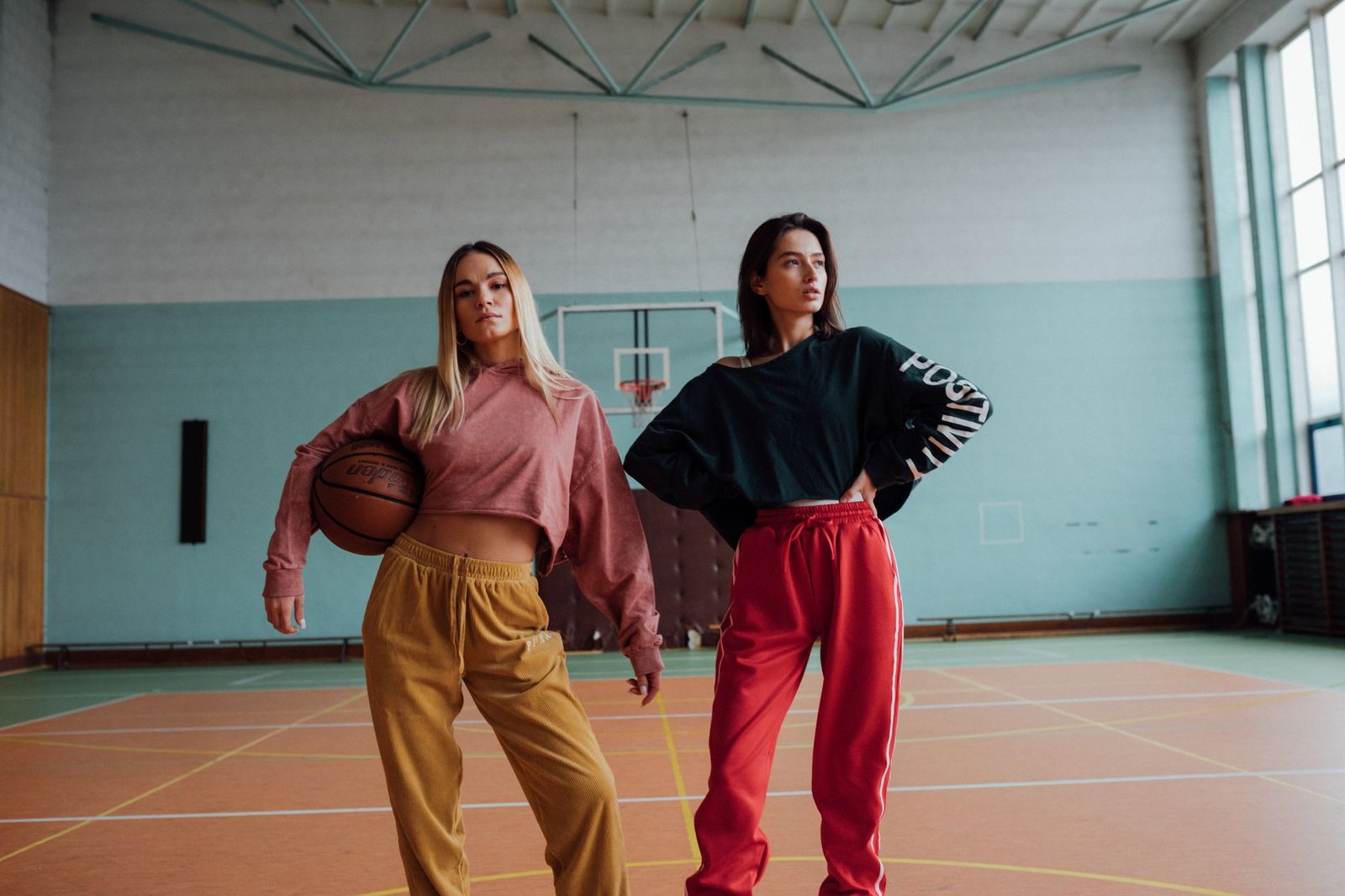
- Track pants and popper trousers: Three-stripe or contrast-piped, paired with a blazer or a cashmere knit for high-low contrast.
- Football scarves: Worn indoors as a statement accessory, a trick borrowed from Wales Bonner’s runway.
- Cycling shorts and tennis skirts: The women’s-wear counterpart, styled with oversized shirts or tailored jackets.
- Technical outerwear: Lightweight shell jackets from Arc’teryx, Salomon and Stone Island bridging hiking, city and stadium.
The unifying principle is contrast. A jersey with tailored trousers, trainers with a midi skirt, a track jacket over a dress: the sporting element works precisely because it is set against something polished.
How to Wear the Sports Fashion Trend Well
Stylists consistently point to three rules. First, pick one sports piece per outfit. A full kit is fan wear; a single jersey with everyday clothes is fashion. Second, respect proportion. Because most sports pieces are oversized, balance them with something fitted or structured. Third, invest in quality where it shows: shoes and outerwear age gracefully, while cheap synthetic jerseys pill and fade after a season.
Practical steps you can take this week:
- Shop secondhand first. Vintage kits are more sustainable, often better made, and carry authentic stories. Check the wash label and stitching to avoid counterfeits, which flooded the market during the World Cup.
- Choose colours that work with your existing wardrobe. Navy, cream and forest green jerseys are far easier to style than neon.
- Try the “half-tuck” with a jersey and pleated trousers for a look that transitions from work to evening.
- Use a football scarf or cap as the single sports reference in an otherwise classic outfit if you’re new to the trend.
- Buy trainers in the late summer sales; retailers over-ordered terrace styles for the tournament, and discounts of 30-40% are common in September.
The Sustainability Question
The sports fashion trend has a shadow. Polyester jerseys are among the least recyclable garments in fashion, and tournament-driven demand encourages exactly the kind of short-life impulse purchase the industry has pledged to reduce. Around 60% of sportswear globally is still made from virgin polyester, according to Textile Exchange’s 2025 report. Brands are responding: Adidas says over 90% of its polyester is now recycled, Nike’s Move to Zero programme has cut per-unit emissions, and Puma has piloted biodegradable fibres. Still, the most sustainable jersey remains the one already hanging in a vintage shop, which is one reason the resale boom is such good news.
Consumers are noticing. Surveys by McKinsey in 2026 found that 58% of Gen Z shoppers considered resale before buying new sportswear, up from 37% in 2023. Expect brands to lean harder into repair services, take-back schemes and made-to-order customisation to capture that demand.
What Comes Next for Sports Fashion
The World Cup has ended, but the calendar keeps feeding the trend. The 2026 Asian Games in Nagoya, the 2027 Women’s World Cup in Brazil and the 2028 Los Angeles Olympics give brands a continuous runway of global moments. Analysts expect the next wave to shift from football toward tennis, running and padel, sports whose aesthetics are cleaner and more adaptable to office wear. Luxury will keep pushing in: expect more designer-and-federation collaborations, higher-priced “fashion kits” released alongside official ones, and sports retail experiences that resemble members’ clubs more than shops.
The deeper change is attitudinal. A generation raised on athlete-as-celebrity, from Messi’s Miami move to Caitlin Clark’s WNBA effect, sees sport not as a hobby but as a core part of identity. Clothing follows identity. That is why the sports fashion trend is likely to prove more durable than most summer crazes.
Conclusion: Key Takeaways
The sports fashion trend of 2026 is the product of perfect timing, a record-breaking World Cup, and a decade-long merger between luxury, streetwear and athletic performance. It is global in a way earlier athleisure waves never were, and it has reshaped retail by turning stores into experiences.
- Sports style is now mainstream fashion, not fan wear; the World Cup accelerated a shift that was already underway.
- Retailers like Nordstrom proved immersive pop-ups can double conversion and restore purpose to physical stores.
- Heritage jerseys, terrace trainers and track pants are the defining pieces; style one sports item against polished basics.
- Buy secondhand where possible, invest in shoes and outerwear, and shop the late-summer sales for the best value.
- Upcoming global events guarantee the trend evolves rather than fades, with tennis, running and padel next in line.
Whether you watched every match or none at all, the way the world dresses has changed this summer. The smart move is to adopt the pieces that fit your life and let the rest of the hype play out.